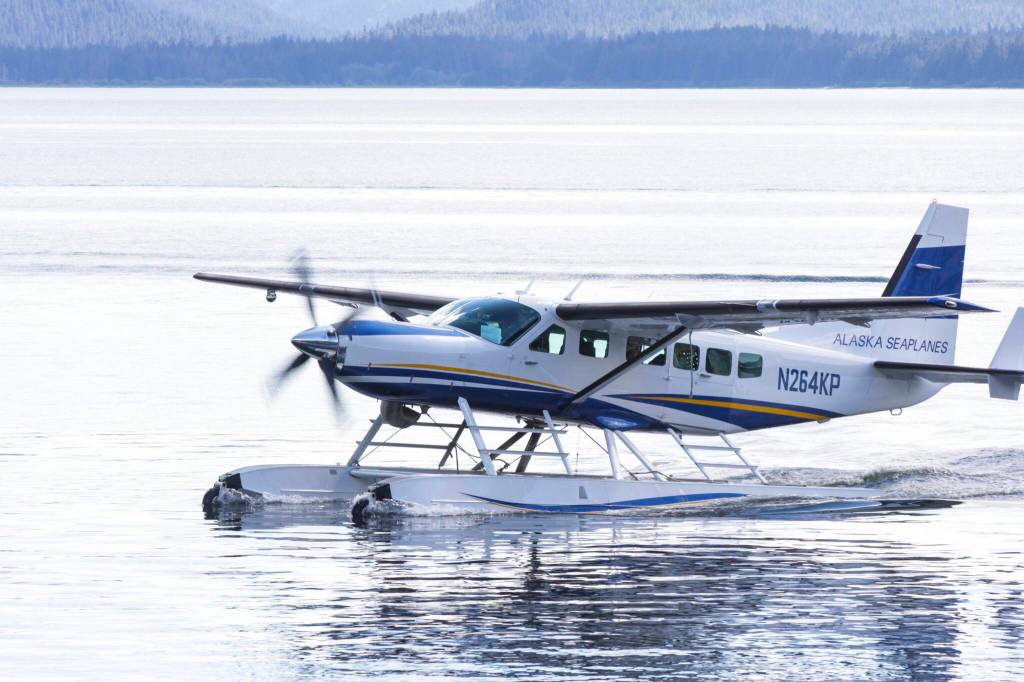
A plan to change how Juneau International Airport divides its operating costs has drawn objections from Alaska Seaplanes, which warns that shifting more expenses onto smaller airplanes could make flights more expensive for Southeast Alaska communities that depend on air travel.
In a Sept. 10 letter to the Airport Board, Alaska Seaplanes President Jodi Garza urged officials to postpone up to $100,000 in consulting work intended to overhaul the airport’s financial model and negotiate new agreements with major carriers.
Her concerns center on a longstanding arrangement that assigns 85% of certain airport costs to larger commercial airlines and 15% to smaller operators and general aviation. Changing that formula could affect what regional carriers pay to operate in Juneau, although no replacement allocation has been selected.
Alaska Seaplanes provides scheduled connections from Juneau to destinations including Haines, Gustavus, Hoonah, Kake and other communities where air transportation supports essential travel and the movement of goods.
Despite the objection, the board unanimously authorized the consulting expenditure Sept. 10. The city subsequently issued a request for proposals Sept. 30, seeking an outside firm to evaluate the airport’s finances and help negotiate new agreements with Alaska Airlines and Delta Air Lines.
Garza’s letter drew renewed attention to how the proposed changes could affect passenger service between Juneau and communities with limited transportation alternatives.
For Alaska Seaplanes, which carries passengers, freight, mail and people traveling for medical appointments throughout Southeast Alaska, the financial implications extend well past the airport’s property lines.
A disagreement over who pays
At issue is the formula Juneau International Airport uses to distribute operating expenses among the businesses that depend on its facilities.
The existing financial model generally assigns 85% of shared costs to larger carriers operating under Federal Aviation Administration Part 121 regulations, with the remaining 15% attributed to smaller Part 135 operators and general aviation.
Part 121 primarily covers larger scheduled airline operations, while Part 135 includes commuter and on-demand services such as those operated by Alaska Seaplanes.
Major airlines operate larger aircraft and rely heavily on passenger terminal facilities, including ticket counters, baggage-handling areas and boarding bridges. Smaller regional companies typically use different aircraft, facilities and operating arrangements, although they share portions of the airport’s infrastructure. A financial model determines how eligible costs are attributed to each group before individual rates and charges are calculated.
During September’s board discussions, the existing percentage split was described as lacking a clearly documented contractual basis. Airport official Andres Delgado said the allocation appeared arbitrary because no written agreement formally established the percentages.
Garza questioned whether the airport should proceed with a review capable of changing those allocations without first consulting the smaller operators potentially affected. Her letter emphasized the importance of affordable regional service, particularly for Southeast communities that cannot be reached by road.
However, the letter does not establish that fares will increase. Any effect on ticket prices would depend on the final allocation formula, the resulting costs to individual airlines and whether those businesses pass additional expenses on to passengers.
No publicly verified comparison of the current and potential replacement models has established what the changes would cost Alaska Seaplanes, Alaska Airlines or Delta.
The board moves forward
In early 2025, airport officials projected a $400,453 budget shortfall for fiscal year 2026.
Proposed increases to landing, fuel and passenger screening fees failed to gain sufficient support during the Airport Board’s rate-setting process, but ultimately, the board elected to adopt a budget without those increases, leaving the projected deficit to be covered through airport reserves.
The Juneau Assembly removed two Airport Board members in February 2025, following the stalled budget discussions during which cost allocation between larger and smaller operators was a recurring concern. By late 2025, officials had begun reviewing alternatives intended to simplify how expenses were assigned and fees calculated.
Another round of rate changes was proposed in February 2026, with the airport estimating the adjustments would generate approximately $1.26 million in additional annual revenue.
Those proposals included changes to landing charges, fuel flowage fees and security screening charges, reflecting the airport’s ongoing efforts to cover its operating expenses, whereas the current consulting initiative is a separate effort intended to modernize the underlying financial framework and develop new airline agreements.
Officials have identified July 1, 2027, as the target implementation date, aligning the changes with the city’s 2028 fiscal year. That schedule would allow the airport to revise its financial model while negotiating the terms under which major airlines lease and use airport facilities.
Alaska Airlines approached airport officials in late August about renegotiating its agreement, and Delta is included in the broader effort to develop updated airline-use arrangements. The airport’s Finance Committee reviewed the consulting project’s framework Sept. 25, including the intended scope of work, stakeholder engagement and schedule.
Five days later, the city released Request for Proposals No. 27-101, seeking a consultant experienced in airline negotiations and airport financial modeling. The solicitation calls for a standardized airline agreement and an updated methodology for rates and cost allocation.
Proposals are due Oct. 26 at 2 p.m. Alaska time, and the issuance of the solicitation indicates that the airport has moved ahead with seeking consulting services, despite Alaska Seaplanes’ request to delay the work.
Questions about a public notice
Garza’s correspondence raised a separate concern about the process used to authorize the consulting expense. She questioned whether the Sept. 10 board meeting had been properly advertised, writing that she received notice of the August meeting but not the September session.
The letter was sent at 5:08 p.m., less than an hour before the board’s scheduled 6 p.m. meeting.
Garza argued that the lack of notification raised questions about the validity of actions taken at the meeting. The City and Borough of Juneau had moved to a centralized online public notice system effective Aug. 3, directing residents to its website for municipal announcements and meeting information. Whether that system satisfied the applicable notice requirements for the September meeting is a separate question from if Garza personally received notification.
The available record does not establish that the board’s approval was legally invalid, and no determination overturning the authorization has been identified.
The Oct. 8 meeting packet listed her correspondence but did not identify the letter as a separate action item requiring a board decision.
Where airport revenue can go now
A Sept. 15 memorandum from the city attorney’s office addressed how Juneau’s charter governs revenue generated by municipal enterprise operations, including the circumstances under which money may be available for other government purposes.
Section 9.16 of the CBJ Charter requires enterprise revenue to be used first for the enterprise’s own expenses, including debt retirement, construction, maintenance and capital improvements. But Juneau International Airport faces an additional set of restrictions because it receives federal aviation funding.
Under federal law and FAA Grant Assurance 25, revenue generated by a federally obligated airport generally must support airport operations, the airport system or other facilities directly and substantially related to air transportation. Limited exceptions exist for certain older legal or financing arrangements, but the municipal charter provision does not independently establish that an unrestricted transfer of airport money would comply with those requirements.
The distinction matters when evaluating whether money collected from airline users could support city services unrelated to aviation. The October materials raise the question, but no specific proposed transfer from the airport’s enterprise fund to the city’s general fund has been established.
Regional services at stake
The financial review comes as Juneau International Airport continues balancing the needs of large commercial airlines with those of smaller operators serving Southeast Alaska.
Unlike airports connected to extensive road networks, Juneau functions as a transportation hub for communities where residents frequently depend on aircraft or ferries to travel for work, education and medical appointments. Alaska Seaplanes is among the businesses providing those connections, while Alaska Airlines supplies larger-scale passenger and cargo transportation linking Juneau with Anchorage, Seattle and other destinations.
The unresolved issue is how those expenses around maintaining runways, terminals and safety equipment should be distributed among airlines that satisfy applicable federal requirements, whose aircraft, facilities and customers differ substantially.
With consultant proposals due later this month, for Alaska Seaplanes, the central concern is whether smaller carriers will have meaningful input before the airport changes a formula that helps determine the cost of providing service across Southeast Alaska.