Countries of the Eastern Mediterranean Region have just endorsed the multi-communicable disease elimination approach.
The multi-communicable disease elimination (MCDE) approach was declared during the 73rd session of the World Health Organization (WHO) Regional Committee for the Eastern Mediterranean.
The approach aims to accelerate the elimination of 14 priority communicable diseases and support countries in reaching their 2030 targets.
The MCDE approach builds on existing disease-specific programmes by strengthening synergies and shared functions, improving efficiencies and reinforcing common health system platforms, while maintaining disease-specific accountability.
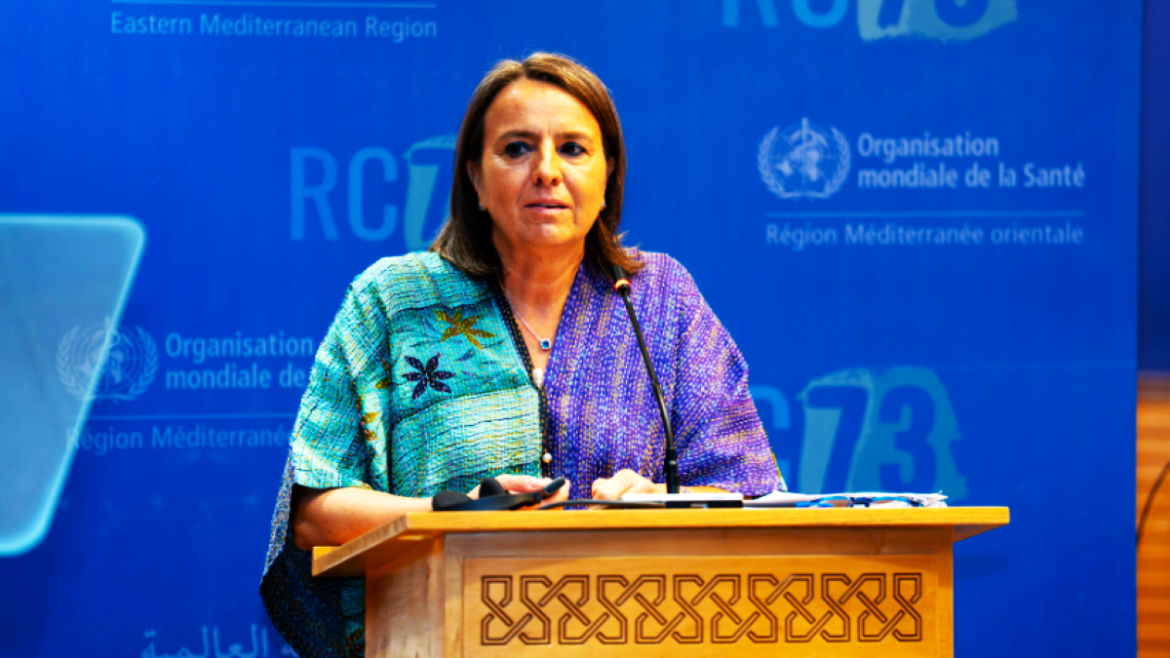
“Today, we have an opportunity to turn our collective ambition into stronger, more coordinated action,” said Dr Adham Ismail, Officer-in-Charge, WHO Regional Office for the Eastern Mediterranean.
“The multi-communicable disease elimination approach recognizes the progress already made across our Region and provides countries with a flexible, country-led approach to go further and faster. With this initiative we can protect communities, strengthen health systems and make elimination a reality.”
The need for accelerated action remains urgent. Communicable diseases continue to place a significant burden on the Eastern Mediterranean Region.
In 2023, hepatitis B, HIV, malaria, neglected tropical diseases, sexually transmitted infections and tuberculosis together accounted for more than 8 million disability-adjusted life years.
In 2024, an estimated 920 000 people fell ill with tuberculosis and more than 86 000 people died from the disease.
Malaria accounted for an estimated 11.1 million cases and 22 100 deaths, while an estimated 610 000 people were living with HIV.
The incidence of malaria and HIV has more than doubled in the Region over the past decade.
Around 28 million people live with chronic hepatitis B or C, and 77 million people require interventions against neglected tropical diseases.
At the same time, countries across the Region have demonstrated that elimination can be achieved and sustained.
Egypt, Morocco and the United Arab Emirates have been certified by WHO as malaria-free.
So far, nine countries, among them Egypt, the Islamic Republic of Iran, Iraq, Libya, Morocco, Oman, Pakistan, Saudi Arabia and Tunisia, have been validated by the World Health Organization (WHO) as having eliminated trachoma as a public health problem.
Egypt and Yemen have eliminated lymphatic filariasis as a public health problem.
Jordan became the first country in the world to be verified by WHO for the elimination of leprosy, while Oman became the first country in the Region to be validated for eliminating mother-to-child transmission of both HIV and syphilis.
The MCDE approach prioritizes 14 communicable diseases for elimination: hepatitis B (including mother-to-child transmission), hepatitis C, HIV (mother-to-child transmission), leprosy, lymphatic filariasis, malaria, onchocerciasis, rabies, schistosomiasis, soil-transmitted helminthiases, Syphilis (mother-to-child transmission), trachoma, tuberculosis and visceral leishmaniasis.
Rather than prescribing a single pathway for all countries, the initiative recognizes that countries are at different stages of elimination and face different operational realities.
Countries will adapt the approach to their national and local contexts, according to disease burden, epidemiological patterns, stage of elimination and health system capacity.
The MCDE initiative will strengthen shared health system functions, including surveillance, laboratories, supply chains, workforce and service delivery.
It will also use common platforms – within the health system, across sectors and in communities – to deliver integrated, people-centred services and surveillance, while addressing the social and environmental determinants that affect disease transmission.
By strengthening functions shared across disease programmes, MCDE can make better use of available resources, reduce unnecessary duplication and improve operational efficiency, while preserving disease-specific strategies.
“Reaching elimination is a major achievement,” said Dr Adham Ismail. “Sustaining it requires continued commitment. Through stronger regional cooperation, country leadership and investment, we can accelerate disease control and elimination – and protect the gains we make today to benefit the generations to come.”
Following the endorsement of the MCDE approach by Member States, the World Health Organization will work with countries and partners to put the new approach into action, accelerating progress towards the 2030 elimination goals while sustaining achievements already attained.