Asian countries must remind themselves about what happened during the region’s financial crisis in the late 1990s and guard against a recurrence of such shocks, the head of the Philippine central bank said on Wednesday.
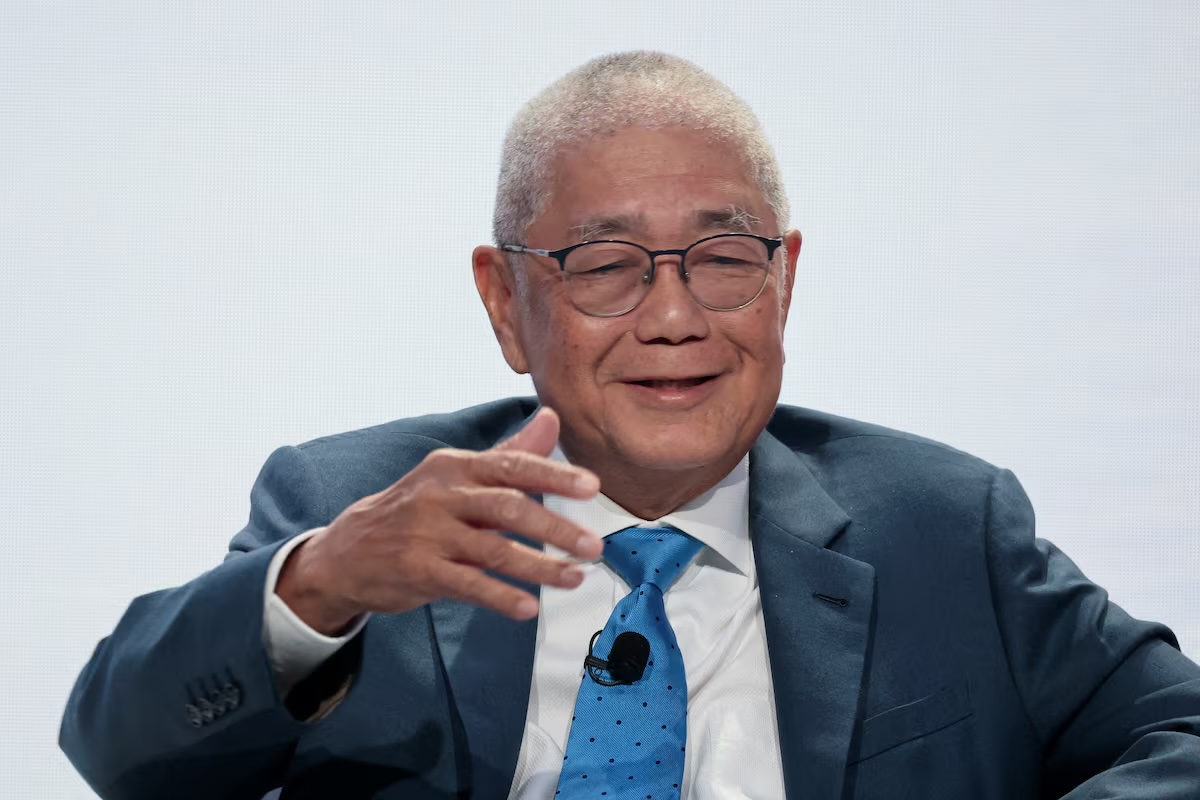
Before the Asian financial crisis started in 1997, regional economies saw huge capital inflows that prompted the World Bank to describe it as the “East Asian miracle,” Eli Remolona, governor of the Bangko Sentral ng Philippines, said in an IMF panel on the outlook for the Association of Southeast Asian Nations (ASEAN).
“Investment poured into Asia, and then you had the crisis because it wasn’t really a miracle. I think we have to remind ourselves about that.
We have to guard against that kind of crisis,” he said. “We have not really been making a lot of effort looking at that kind of crisis.”
The remarks came at the annual meetings of the IMF and World Bank being held in Bangkok, Thailand, which was an epicentre of the Asian financial crisis.
Krishna Srinivasan, director of the IMF’s Asia and Pacific Department, pushed back against the view, arguing in the panel discussion that the IMF has made progress assessing financial vulnerabilities and potential spillovers among each economy.
“We have taken (the crisis) to heart, and we’ve dealt with a framework to talk about how should countries deal with volatile capital flows in terms … such as when should they intervene in foreign exchange markets and so on,” Srinivasan said.
Srinivasan also said while ASEAN economies have weathered the trade tensions caused by US tariffs fairly well, their energy intensity could be among risks to the outlook as some countries rely heavily on oil and gas imports.
Atsushi Mimura, Japan’s vice finance minister for international affairs, also cited the energy shock from the Middle East conflict, as well as rising inflation, as among short-term risks to the region’s outlook.
“Of course, we all know that [fiscal support] should be ‘triple T’ – targeted, tailored and temporary,” Mimura said on how economies should exercise discipline in delivering spending to cushion the blow to households and firms from the energy shock.
As many countries face competitive pressure from China, ASEAN countries should focus on further strengthening investment to diversify supply chains in critical minerals and energy, Mimura said, a drive Japan was willing to support.
“All ASEAN countries should definitely further invest so that they can always catch up with AI and innovation,” Mimura told the panel. “At the same time, I think ASEAN countries are really well positioned in the supply chain for digitalisation because they’re producing critical minerals.”
The 11-member ASEAN bloc comprises Brunei, Cambodia, East Timor, Indonesia, Laos, Malaysia, Myanmar, the Philippines, Singapore, Thailand and Vietnam.
REUTERS