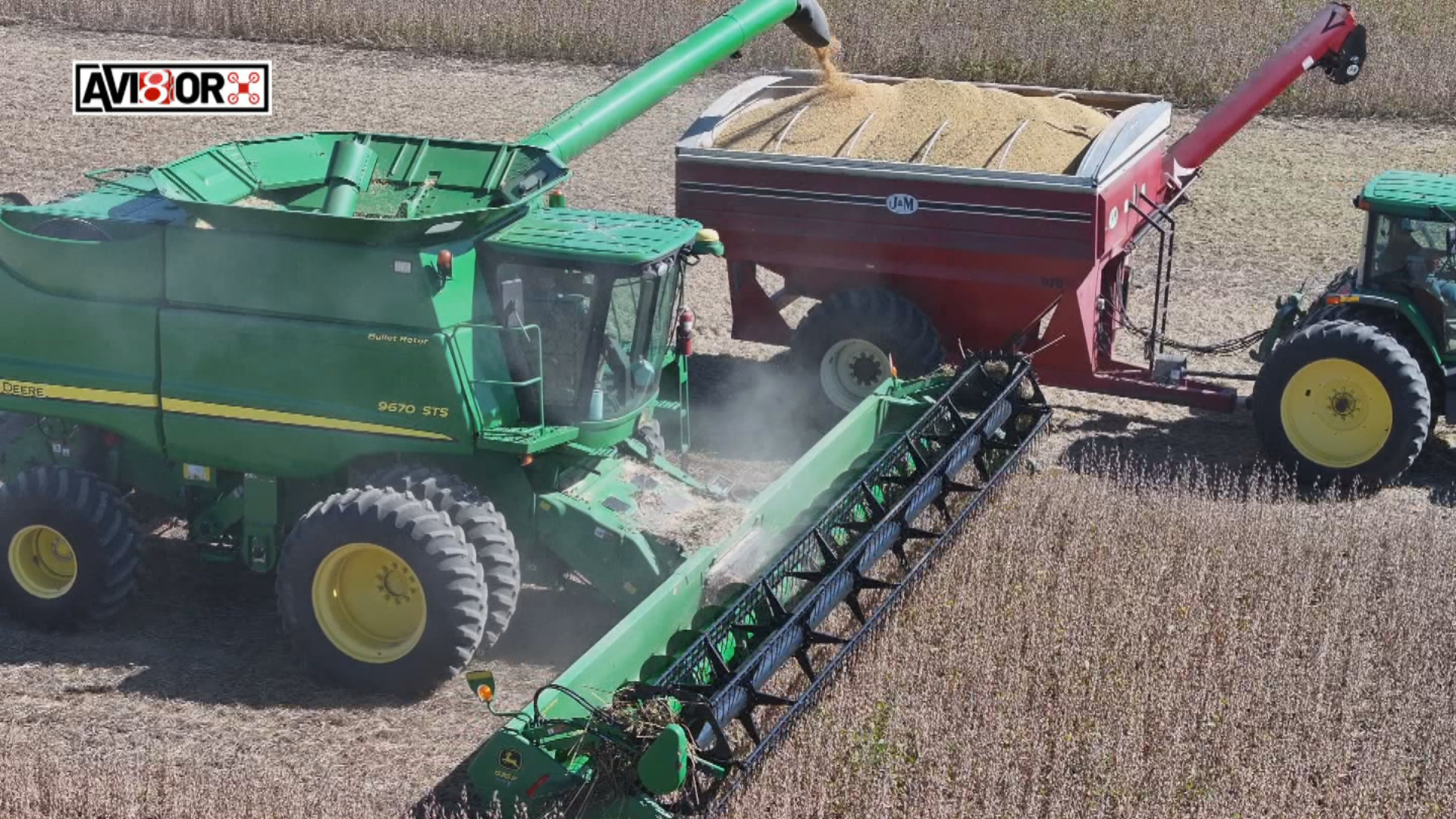
KNIGHTSTOWN, Ind. — Dustin Ripberger started harvesting soybeans during the last week of September, taking advantage of favorable conditions to gather the crop outside Knightstown.
“We’re harvesting soybeans trying to get them done while the weather is good,” Ripberger said.
The harvest has progressed well overall, though the season began with challenges. Tough green stems slowed early progress across the 117-acre field, which requires nearly a full day of work to complete.
“It’s a lot of fun to sit in the seat like this when things are going good, but when the weather is a struggle, or the market dynamics of crops can be tough and stressful,” Ripberger said.
Operating a combine through the field requires careful management of speed due to lingering moisture in the plants.
“I mean, you can see some of the green in the stems. It’s been really, like they’re tough beans this year. It’s been kind of slow going,” Ripberger said.
He noted that a killing frost would typically remove the green material and allow for faster harvesting speeds, but current conditions limit the combine to just over three miles per hour instead of four and a half.
“I yeah I don’t know if we can quite get it done today um there’s a chance uh it’s. If we had already had like a killing frost, it would take all this green out of these beans. I’m going a little over three mile an hour. If we didn’t have the green in them, I could be going four and a half probably. And then we could probably get this done today. This isn’t the world’s biggest combine. So for our combine, getting 120 acres of beans in a day is a pretty good day,” Ripberger said.
Once harvested, the non-GMO soybeans move to a grain bin for storage until buyers request delivery for a specific premium program.
“These are actually being non-GMO beans. They’re like what’s called a buyer’s call program. So to get my premium, I can’t just haul them in and deliver them any time. I have to wait until they’re ready for them. And they’ll call me and then we’ll haul them out,” Ripberger said.
Between crop management, livestock care and equipment maintenance, Ripberger spends long hours in the cab of his combine as the season winds down.
“With us doing pigs and then crops and then me working on equipment, it’s like not very many days are the same. So if you get tired of something, well, a couple more days you’ll be doing something completely different,” Ripberger said.