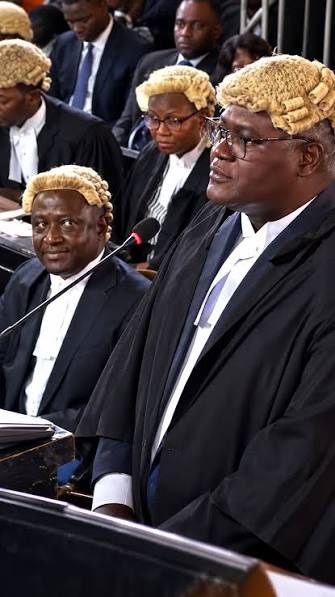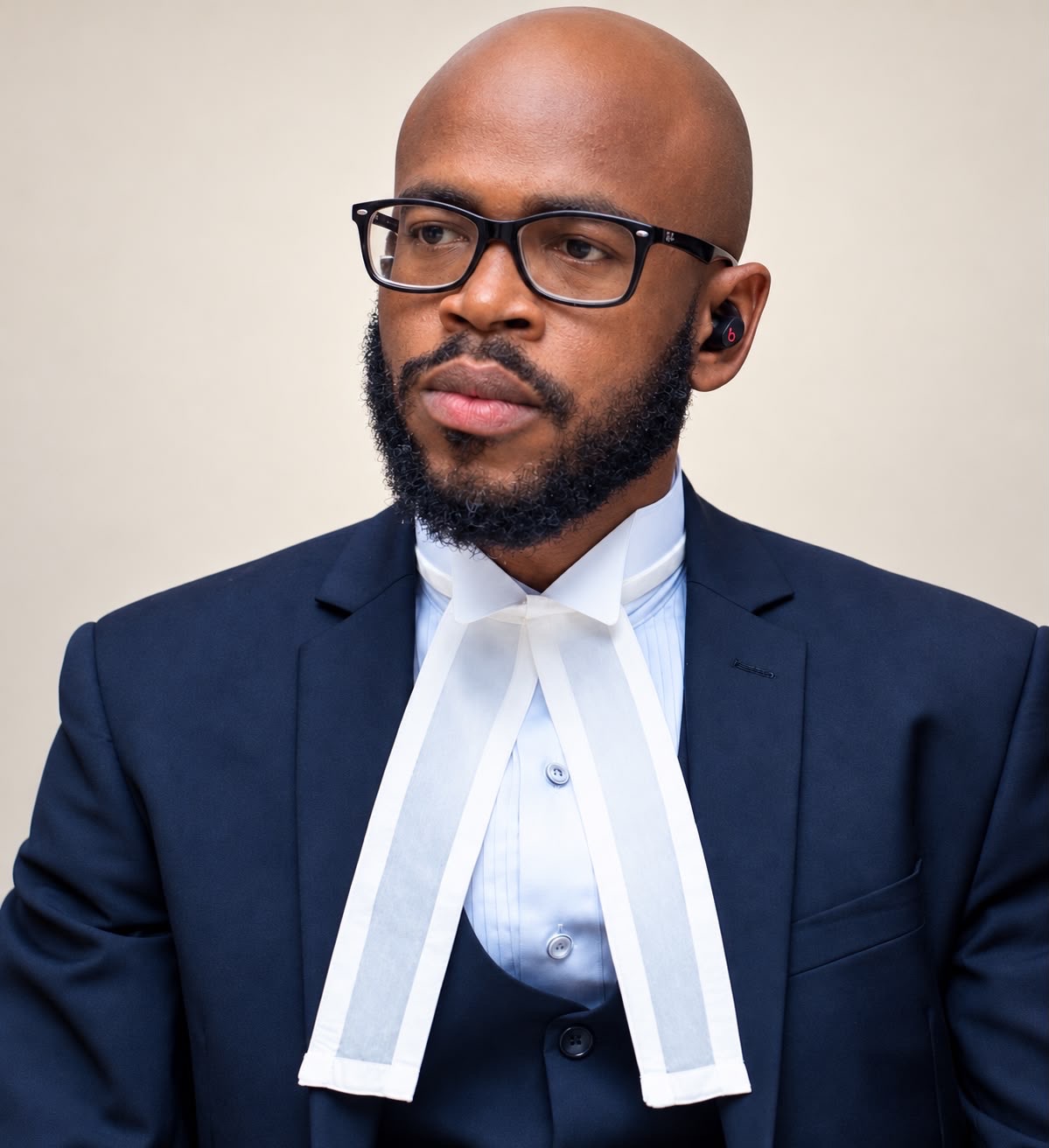
The JFK–Chief Justice Controversy and the Limits of the Summary Power ·
Samuel Alfred Olivant, Esq.
October 11, 2026
INTRODUCTION
The committal of Joseph Fitzgerald Kamara (JFK) to Pademba Road Prison on 8 October 2026 raises a question far greater than the confrontation between a lawyer and the Chief Justice of Sierra Leone. It strikes at the heart of constitutional governance: how far may a court go in defending its authority before the exercise of that authority itself demands the closest scrutiny?
With the greatest respect to the Bench, three fundamental principles must remain beyond dispute: judicial authority is not judicial infallibility; fearless advocacy is not, without more, contempt of court; and criticism of judicial conduct, however unwelcome, must not automatically be equated with an attack on the administration of justice.
No lawyer stands above the law, and no advocate enjoys immunity from legitimate disciplinary or contempt proceedings by virtue of seniority, political prominence or former public office. Equally, however, the power to deprive a person of liberty for contempt—particularly through summary proceedings—must be exercised with scrupulous regard for due process, proportionality and the requirements of a fair hearing. Where the alleged contempt arises from words directed at the very judge who invokes that power, the need for procedural fairness and demonstrable impartiality becomes especially compelling.
This is not an argument for judicial weakness, nor an invitation to undermine the dignity of the Supreme Court. It is an argument for judicial power exercised within the law. The authority of a constitutional court is not diminished when its decisions are subjected to principled legal scrutiny; rather, public confidence in the judiciary depends upon the assurance that even its most formidable powers are exercised according to established legal standards.
I write as a member of the Bar who recognises and respects the constitutional office of the Chief Justice. I do not seek to impugn the integrity of any judicial officer, prejudge disputed facts or excuse conduct that the law properly regards as contemptuous. My concern is narrower, but fundamental: whether the circumstances surrounding JFK’s committal satisfied the legal and procedural safeguards governing the exercise of the power to punish for contempt.
That question cannot responsibly be answered by emotion, political allegiance or personal loyalty to either the advocate or the Bench. It must be answered by the applicable law, the established principles of natural justice, the requirements of judicial impartiality and, ultimately, the authoritative record of what occurred.
The central issue, therefore, is not whether the courts must command respect. They must. It is whether the defence of judicial authority in this case was conducted in a manner consistent with the very rule of law that the judiciary exists to uphold.
WHAT REPORTEDLY HAPPENED
The confrontation arose during the Supreme Court’s hearing of the challenge to the Constitution of Sierra Leone (Amendment) Bill, in which JFK reportedly appeared as lead counsel. The account below is drawn from press reports. At the time of writing, the official record has not been published, and the reports differ on certain material details.
JFK reportedly objected that the Attorney-General’s Office had not properly filed its Statement of Case. During the ensuing exchange, he remarked that the Chief Justice was “showing his hand too early.” The Chief Justice responded: “Mind your language, this court is not a political theater.” JFK maintained that he was citing the law, not engaging in politics, and the Chief Justice cannot talk to him like that, and asked to be permitted to present his case. The Court reportedly stood down briefly before allowing the substantive hearing to continue.
JFK subsequently gave a media interview in which he reportedly defended his conduct as consistent with the adversarial system of justice.
The following day, according to press accounts, the Chief Justice raised the matter in court, described the previous day’s remarks as gravely degrading to the President of the Court, and directed JFK to apologise and retract his words, warning that failure to do so could lead to contempt proceedings and possible restriction of his audience before the Court.
JFK reportedly apologised, explaining that his conduct was motivated by his duty to his client and his defence of the Constitution. Following a recess of approximately 15 minutes, he reportedly apologised again. The Chief Justice considered the apology insufficiently sincere, directed JFK to remove his wig and enter the dock, and ordered that he be taken to Pademba Road Prison. Further proceedings were reportedly adjourned to a later date.
Where a person’s liberty has been taken away through contempt proceedings, accuracy about the facts and precision about the applicable law are not optional; they are indispensable to determining whether the power was lawfully exercised.
THE CONSTITUTIONAL FRAMEWORK IN SIERRA LEONE
The CONSTITUTION OF SIERRA LEONE, (ACT NO. 6 OF 1991) expressly recognises contempt as a lawful ground for deprivation of liberty. But it recognises it within a structure of rights, not as an exception to them.
1. SECTION 17(1)(C) permits deprivation of liberty, “as may be authorised by law”, in execution of an order of the High Court, Court of Appeal or Supreme Court on the grounds of contempt. The power exists; the qualifier “as may be authorised by law” means it must be exercised according to law.
2. SECTION 17(2)(A) requires that any person arrested or detained be informed in writing, or in a language he understands, of the facts and grounds of his detention, at the time and in any event within twenty-four hours.
3. SECTION 23(1) guarantees anyone charged with a criminal offence a fair hearing by an independent and impartial court.
4. SECTION 23(4) AND (5) guarantee the presumption of innocence and the right to be informed in detail of the nature of the charge, to adequate time and facilities to prepare a defence, and to be represented by a legal practitioner of one’s choice.
5. SECTION 25(2) permits limits on freedom of expression for maintaining the authority and independence of the courts, but only so far as they are reasonably justifiable in a democratic society.
The decisive link is that criminal contempt is treated in our law as a criminal matter. IN IN RE MANNI (1964–66) ALR (SL) 557, THE COURT OF APPEAL held that a committal for criminal contempt amounts to a conviction. The Supreme Court endorsed that view in ISATU KAMARA V ATTORNEY-GENERAL [1992] SLSC 1. If committal is a conviction, then the guarantees of SECTION 23 are engaged, and summary procedure must be reconciled with them rather than allowed to displace them.
There is a further structural point. When the summary power is exercised by a trial court, an appellate court stands behind it. When it is exercised by the Supreme Court, presided over by the Chief Justice, there is no higher domestic court to review the order. The absence of an appellate safety net is not a licence for informality. It is the strongest possible reason for meticulous observance of the safeguards at the first and only stage.
FAIR CRITICISM AND CONTEMPT: THE COMMON-LAW LINE
The common law has always drawn a line between conduct that obstructs justice and words that merely wound judicial pride. The leading authorities place that line in the same place.
R V GRAY [1900] 2 QB 36 confirmed that scandalising the court is a recognised form of contempt; the editor in that case was in fact convicted for scurrilous personal abuse of a judge. But Lord Russell CJ was careful to add that reasonable argument or expostulation against a judicial act, as contrary to law or the public good, is no contempt at all. Gray is therefore authority for both propositions: abuse may be punished, criticism may not.
In AMBARD V ATTORNEY-GENERAL FOR TRINIDAD AND TOBAGO [1936] AC 322, THE PRIVY COUNCIL set aside a contempt conviction arising from published criticism of sentencing. LORD ATKIN’Sstatement that justice is not a cloistered virtue has become the classic expression of the principle that courts must tolerate respectful, even outspoken, comment, provided it is made in good faith and without imputing improper motives.
In R V METROPOLITAN POLICE COMMISSIONER, EX PARTE BLACKBURN (NO 2) [1968] 2 QB 150, LORD DENNING MR explained that the English courts would not use the contempt jurisdiction to uphold their own dignity, because their authority rests on surer foundations. The point is not that judges must endure anything. It is that the purpose of contempt is to protect the administration of justice, not the feelings of the individual judge.
Two further authorities frame what counsel was entitled to raise. R V SUSSEX JUSTICES, EX PARTE MCCARTHY[1924] 1 KB 256 established that justice must manifestly and undoubtedly be seen to be done. PORTER V MAGILL[2001] UKHL 67, [2002] 2 AC 357 settled the modern test for apparent bias: whether a fair-minded and informed observer would conclude that there was a real possibility of bias. A submission that a court appears to have prejudged an issue is, in principle, the raising of exactly that question.
None of this licenses counsel to address the Bench in any manner they choose. It establishes the starting point: the question is never simply whether words were disrespectful, but whether they interfered, or were calculated to interfere, with the due administration of justice.
DUE PROCESS IN SUMMARY CONTEMPT
The procedural requirements for summary committal are not foreign imports. They are settled Sierra Leonean law.
In JOHNSON V R (1970–71) ALR (SL), CR. APP. NO. 18/70, SIR SAMUEL BANKOLE JONES P,delivering the judgment of the Court of Appeal, stated two conditions that every summary committal must satisfy. First, the judge must make the person aware of the pith of the charge. Second, the person must be given an opportunity to show cause why he should not be committed, whether by excuse, explanation or correction of any misapprehension about what was said or done. The Court added that unless this opportunity is given, the committal is unlawful.
The Supreme Court applied that passage in ISATU KAMARA V ATTORNEY-GENERAL [1992] SLSC 1. A witness had been sent to Pademba Road by a commission of inquiry without being heard; the Court, presided over by KUTUBU CJ, quashed the order on certiorari and directed her immediate release, holding that a decision reached in breach of the rule that no one should be condemned unheard could not stand. The parallel with the present facts in name and place is coincidental; the principle is not.
The common-law lineage is long. IN RE POLLARD (1868) LR 2 PC 106 established that no one should be punished for contempt without a specific charge and an opportunity to answer it. IN MAHARAJ V ATTORNEY-GENERAL OF TRINIDAD AND TOBAGO, a barrister was committed for seven days by the judge before whom he was appearing. The Privy Council set the committal aside because the judge had not identified the specific contempt with sufficient particularity ([1977] 1 All ER 411), and then held that this failure deprived him of liberty without due process under the Constitution, entitling him to redress (MAHARAJ (NO 2) [1979] AC 385).
Finally, BALOGH V ST ALBANS CROWN COURT[1975] QB 73 confines the summary power to cases where it is urgent and imperative to act immediately to protect the proceedings. Where the court can continue, and has in fact continued, the ordinary course is to refer the matter for proper proceedings rather than to try and punish it on the spot.
Measured against these authorities, four questions arise on the reported facts.
• WAS A SPECIFIC CHARGE FORMULATED?The reports describe a demand to apologise, followed by a finding that the apology was insincere. They do not show a charge identifying which words, on which day, constituted the contempt.
• WAS THERE A HEARING ON THAT CHARGE? The reported hearing on apology and bail did not proceed. An opportunity to apologise is not the same thing as an opportunity to show cause.
• WAS IMMEDIATE ACTION NECESSARY? The Court had itself allowed the substantive hearing to continue on 7 October. That choice is difficult to reconcile with the urgency that alone justifies summary committal.
• WERE THE SECTION 17(2) REQUIREMENTS MET? Whether JFK received written grounds of detention within twenty-four hours is a matter the record should disclose.
WHEN THE JUDGE IS ALSO THE OFFENDED PARTY
The most delicate feature of this case is that the remark complained of was directed at the Chief Justice personally, and it was the Chief Justice who determined that it was contemptuous, rejected the apology and ordered the committal. THE MAXIM THAT NO ONE SHOULD BE A JUDGE IN HIS OWN CAUSE, NEMO JUDEX IN CAUSA SUA, does not disappear because the cause is contempt.
The clearest modern authority is KYPRIANOU V CYPRUS(GRAND CHAMBER, APPLICATION NO. 73797/01, 15 DECEMBER 2005). A senior advocate, interrupted during cross-examination in a murder trial, protested to the bench in heated terms. After short breaks, the same judges convicted him of contempt and sentenced him to five days’ imprisonment, enforced immediately. The Grand Chamber found a violation of the right to an impartial tribunal: the judges had combined the roles of complainant, witness, prosecutor and judge, and their own language showed they had made up their minds before hearing him. It also found the immediate custodial sentence disproportionate, noting that less drastic measures such as admonition or a disciplinary referral were available.
The UNITED STATES SUPREME COURT reached comparable conclusions under its own due-process clause. IN OFFUTT V UNITED STATES, 348 U.S. 11 (1954), it set aside a lawyer’s contempt conviction and directed a rehearing before a different judge, because the trial judge had become personally embroiled with counsel. In MAYBERRY V PENNSYLVANIA, 400 U.S. 455 (1971), concerning a defendant who had grossly insulted the trial judge, it held that a judge so vilified should not sit in judgment on the contempt after trial. And in HOLT V VIRGINIA, 381 U.S. 131 (1965),it reversed the contempt convictions of lawyers who had alleged, in a motion for change of venue, that the trial judge was biased; raising judicial bias through proper legal channels could not, of itself, be punished as contempt.
These decisions do not bind Sierra Leonean courts, and the American cases arise under a different constitutional text. But they are persuasive for a simple reason: they apply a principle that our own Constitution states in SECTION 23(1), the guarantee of an impartial court. THE BANGALORE PRINCIPLES OF JUDICIAL CONDUCT (2002),which Commonwealth judiciaries have widely endorsed, point the same way, requiring a judge to stand aside where a reasonable observer might doubt his ability to decide impartially.
The practical alternatives were real. The Chief Justice could have referred the matter to a differently constituted panel of the Court, to the General Legal Council for disciplinary consideration, or to the Attorney-General for ordinary proceedings. Any of these would have vindicated the Court’s authority without exposing its order to the charge that the affronted judge had sat in his own cause.
WAS THE REMARK ITSELF CONTEMPT?
Honesty requires saying that the remark was ill-judged. To tell a presiding judge, in open court, that he is “showing his hand too early” is to suggest prejudgment, and in a case of acute political sensitivity that suggestion carries weight. Counsel of JFK’s experience will know that an objection to apparent bias should be made formally, with grounds, and in measured language, not as an aside in the heat of argument. On that, the Bench was entitled to rebuke him, and did.
But rebuke and imprisonment are different responses to different wrongs. Several features of the context point away from punishable contempt.
• IT WAS MADE IN THE COURSE OF A LEGAL SUBMISSION. The remark accompanied an objection about compliance with the Rules by the Attorney-General’s Office, a matter plainly within counsel’s duty to raise.
• IT CONCERNED THE APPEARANCE OF FAIRNESS, NOT THE JUDGE’S PRIVATE CHARACTER. It imputed no corruption or personal dishonesty. Its substance, if crudely expressed, was an apparent-bias concern of the kind PORTER V MAGILL INVITES.
• THE COURT DID NOT TREAT IT AS AN OBSTRUCTION AT THE TIME. Proceedings continued. The matter was revived the next day, after the media interview.
• IT WAS WITHDRAWN. On the reported facts, JFK apologised.
That last sequence raises a question of its own. If what moved the Court on 8 October was the interview rather than the courtroom remark, the alleged contempt changes character. Out-of-court comment by counsel ENGAGES SECTION 25 of the Constitution and the AMBARD LINE OF AUTHORITY far more directly, and it is precisely the kind of matter that calls for a written charge and a proper hearing rather than summary disposal.
There is, however, one version of the facts that would change the analysis. If JFK did refuse a direct order of the Court to remove his wig and enter the dock, that refusal is itself capable of being contempt, independent of anything said on 7 October. Disobedience of a lawful judicial direction in the face of the court is the paradigm case for the summary power. Even then, Johnson v R would require that the charge be put and that he be heard on it.
THE APOLOGY AND THE COMMITTAL
An apology does not automatically purge a contempt, and a court is entitled to judge whether contrition is genuine. That is settled. But the law asks what an apology is for. In contempt, the object is to restore respect for the court’s authority and to secure the proper continuation of proceedings. Where counsel has twice apologised and withdrawn the offending words, and the hearing can proceed, the case for a custodial response becomes very hard to make out. KYPRIANOU treats immediate imprisonment of an advocate, where admonition or disciplinary referral would suffice, as disproportionate.
The manner of the committal also deserves comment. Directing a senior advocate to remove his wig and enter the dock is not merely a procedural step. In our tradition the wig marks counsel’s standing as an officer of the court; its removal before the Bar and the public carries a symbolic weight that a court exercising restraint would weigh carefully, particularly before any charge has been formally determined.
The record, when available, should answer the following.
1. WHAT EXACTLY WAS THE CONTEMPT?The remark of 7 October, the media interview, the perceived insincerity of the apology, or the refusal of a direction on 8 October.
2. WHAT IS THE LEGAL CHARACTER OF THE DETENTION? Is it punishment upon a finding of contempt, which Manni treats as a conviction, or custody pending determination of a charge yet to be tried? Each carries different consequences, including for bail.
3. WHAT PROCEDURAL SAFEGUARDS WERE AFFORDED? A written charge, an opportunity to show cause, time to prepare, and representation by counsel of his choice, as section 23(5)requires.
4. WAS RECUSAL OR REFERRAL CONSIDERED? Given the Chief Justice’s personal involvement, was any thought given to another panel or another forum?
5. WERE LESS RESTRICTIVE MEASURES CONSIDERED? Admonition, an undertaking, restriction of audience, or referral to the General Legal Council.
Without the formal order, the full transcript and the stated legal basis, it would be premature to conclude that the Chief Justice acted unlawfully, just as it would be premature to conclude that JFK’s conduct could not amount to contempt. What is legitimate, and indeed necessary, is to ask whether the legal threshold and the procedural safeguards were met. Asking that question is not an attack on the judiciary. It is how a mature legal system holds all its officers, on the Bench and at the Bar, to the same law.
WHAT THE BAR OWES IN RETURN
A defence of the Bar’s independence that says nothing about the Bar’s obligations is only half an argument. The United Nations Basic Principles on the Role of Lawyers (1990) protect advocates from penal sanction for relevant statements made in good faith in their professional appearances before a court. The same Principles require lawyers to uphold the law and the recognised standards of the profession at all times.
For counsel, the lessons of this episode are plain. An allegation of apparent bias is among the gravest submissions an advocate can make. It should be made by formal application, supported by grounds, and couched in language that addresses the appearance of justice rather than the person of the judge. Matters arising in court are best answered in court, not in the media while proceedings are live. And seniority enlarges, rather than reduces, the duty of restraint, because younger members of the Bar take their cue from those who lead them.
Fearless advocacy and courteous advocacy are not opposites. The finest advocates of our tradition have been both.
CONCLUSION
Judicial independence is a constitutional necessity; judicial infallibility is a legal fiction. Respect for the Bench does not preclude scrutiny of judicial conduct, just as fearless advocacy does not excuse discourtesy or contempt.
The power to commit for contempt is an essential safeguard of the administration of justice. Precisely because it is so formidable, Sierra Leonean law, from JOHNSON V R TO ISATU KAMARA, has insisted that it be exercised only upon a specific charge, after a genuine opportunity to answer, and only where nothing less will do. Comparative authority from MAHARAJ TO KYPRIANOU adds a further caution: the judge who is the object of the alleged contempt should, wherever possible, leave its determination to another.
When the matter returns on 13 October, the Court has an opportunity that serves everyone’s interest: to state the precise charge, to hear counsel on it, to consider whether the apologies already given suffice, and, if any punishment is warranted, to choose the least restrictive measure that will protect the Court’s authority. A course of that kind would not diminish the Bench. It would demonstrate the very qualities on which its authority rests.
The dignity of the Bench must be preserved and the independence of the Bar protected, and both must remain subject to the Constitution. The true strength of judicial authority lies not in the power to punish, but in the fairness, impartiality and restraint with which that power is exercised.
Samuel Alfred Olivant, Esq
LLM, BL
LEGAL CONSULTANT
HUMAN RIGHTS OFFICER
INFORMATION SECURITY COMPLIANT EXPERT
UNITED STATES OF AMERICA