by Paul Monies, Oklahoma Watch
October 12, 2026
A second company is challenging a new state law that regulates proxy advisers when they oppose public company management on shareholder resolutions.
Glass, Lewis & Co. LLC, one of the two main proxy advisory firms, wants a federal judge to issue a preliminary injunction against House Bill 4429, the Proxy Advisor Transparency Act. Institutional Shareholder Services Inc. filed a lawsuit against the law in August.
The law, which takes effect Nov. 1, is a model bill that four other states passed this year. Republican lawmakers in those states said the bill was meant to address shareholder resolutions advocating for environmental, social and governance goals.
Oklahoma’s pension systems and trust funds for the Tobacco Settlement Endowment Trust and the Commissioners of the Land Office collectively own millions of shares in publicly traded companies. That gives them the right to vote on shareholder resolutions at annual meetings. The volume of votes gave rise to proxy advisory firms like Glass Lewis that provide research and voting recommendations to large institutional investors such as pension funds.
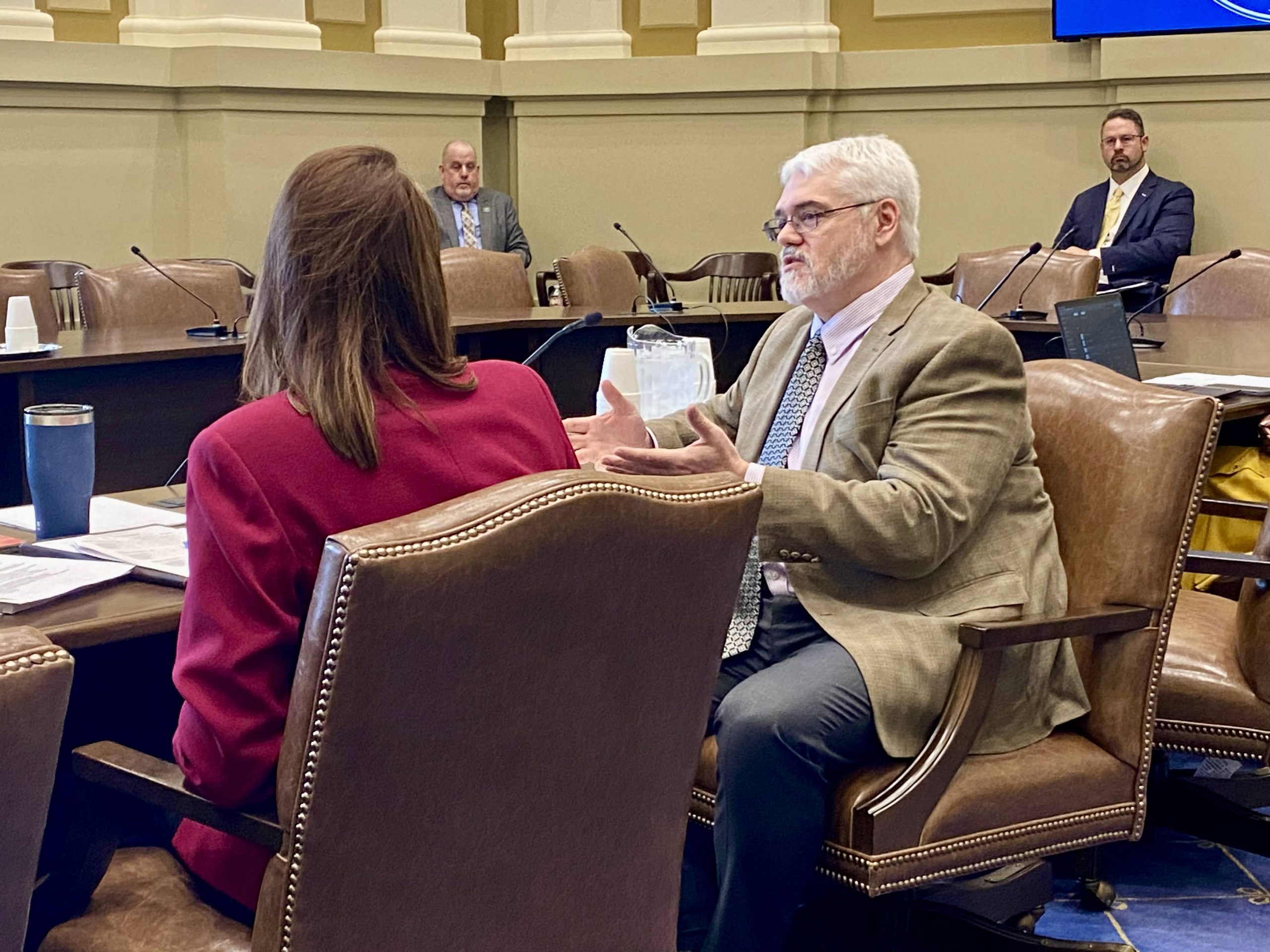
In a hearing Thursday, attorneys for Glass Lewis and ISS told U.S. District Judge Patrick Wyrick that HB 4429 infringed on the companies’ free speech rights. They said the law imposed additional burdens on proxy advisory firms that other entities involved in shareholder votes, including company boards, shareholders, and nonprofits, do not face.
“This law regulates and burdens our speech,” said Bruce Oaley, an attorney for ISS. “It is designed to stifle dissent from company management.”
Oakley said the law constitutes classic government viewpoint discrimination and deserves strict scrutiny, a legal standard that applies when fundamental constitutional rights are at stake.
He said the law requires proxy advisory firms to perform a financial analysis of their position only if they disagree with company management on a particular shareholder resolution. Nothing happens if the proxy advisory firms agree with management.
“If the law is viewpoint discrimination, then strict scrutiny applies,” Oakley said. “Viewpoint restrictions are a particularly egregious restraint.”
To survive strict scrutiny, the law has to be narrowly tailored to address a specific problem. Oakley said many of the legislative deliberations referenced broad objections to ESG practices or goals.
Mallory Shamoon, an assistant attorney general, said HB 4429 didn’t take any position on the content of resolutions supported by company management. Instead, the law required proxy advisors to tell clients whether they conducted a financial analysis in opposition to management. She said such disclosures were common in the securities industry and were consistent with securities regulation.
“The advice they give can have an impact on the value of a stock,” Shamoon said of firms like Glass Lewis or ISS.
“This law regulates and burdens our speech. It is designed to stifle dissent from company management.”
Bruce Oakley, attorney for ISS
Grant Martinez, an attorney for Glass Lewis, said proxy advisory firms were several steps removed from stock trading. Clients can always ignore their recommendations, he said.
Proxy advisory firms provide voting advice to a variety of clients, including custom policies for religious beliefs, labor unions, and environmental issues. Among ISS’ newest offerings is a proxy voting policy for those skeptical of ESG issues. That policy uses a framework developed by Bowyer Research, already used by the investment board of the Oklahoma Tobacco Settlement Endowment Trust.
Consumers Defense, a Virginia-based nonprofit that said it fights ESG principles and so-called woke capitalism, pushed the model legislation for HB 4419.
Federal judges in Texas, Indiana and Kansas have temporarily blocked enforcement of similar laws regulating proxy advisory firms. Another federal case filed by ISS and Glass Lewis in Kentucky remains pending.
The federal judges who have issued preliminary injunctions so far were appointed by presidents from both parties. President Trump nominated Wyrick, a former justice on the Oklahoma Supreme Court, in 2019.
Wyrick assured all parties at Thursday’s hearing he would issue a decision on the preliminary injunction before the Nov. 1 effective date of HB 4429.
This <a target=”_blank” href=”https://oklahomawatch.org/2026/10/12/a-second-proxy-advisory-firm-is-suing-oklahoma-over-its-new-anti-esg-law/”>article</a> first appeared on <a target=”_blank” href=”https://oklahomawatch.org”>Oklahoma Watch</a> and is republished here under a <a target=”_blank” href=”https://creativecommons.org/licenses/by-nd/4.0/”>Creative Commons Attribution-NoDerivatives 4.0 International License</a>.<img src=”https://i0.wp.com/oklahomawatch.org/wp-content/uploads/2019/10/okwatch-icon.png?fit=150%2C150&ssl=1″ style=”width:1em;height:1em;margin-left:10px;”>
<img id=”republication-tracker-tool-source” src=”https://oklahomawatch.org/?republication-pixel=true&post=762900&ga4=G-6G6K9FYSH8″ style=”width:1px;height:1px;”><script> PARSELY = { autotrack: false, onload: function() { PARSELY.beacon.trackPageView({ url: “https://oklahomawatch.org/2026/10/12/a-second-proxy-advisory-firm-is-suing-oklahoma-over-its-new-anti-esg-law/”, urlref: window.location.href }); } } </script> <script id=”parsely-cfg” src=”//cdn.parsely.com/keys/oklahomawatch.org/p.js”></script>