(Oct. 9, 2026 / TPS-IL)
Israel’s Gaza border region, known as the Tekuma, or “Resurgence,” area, has grown by roughly 10% since the eve of the Oct. 7, 2023, attack, according to Israel’s Central Bureau of Statistics and the Tekuma Administration, the government body overseeing reconstruction. Approximately 66,000 people now live in the region, about 5,000 more than before the war. Its growth rate is 2.5 times the national average.
More than 90% of residents evacuated during the war have returned. Sderot remains the region’s largest urban center, with about 40,000 residents, more than half the area’s population. Thousands of new families have also moved into the region. Local schools now have approximately 2,000 more students than before the war, while another 1,000 young people participate in pre-military academies, Nahal groups, national-service programs and hesder yeshivas.
Most of the region’s 47 communities are now active and populated. Kfar Aza recorded a 96% return rate in 2026, while residents of Holit have begun gradually returning after prolonged rehabilitation restrictions. Be’eri is expected to return by year’s end, while Nir Oz’s rehabilitation is expected to conclude in 2027.
The Tekuma Administration aims to double the region’s population to approximately 120,000 by 2033.
Financing reconstruction
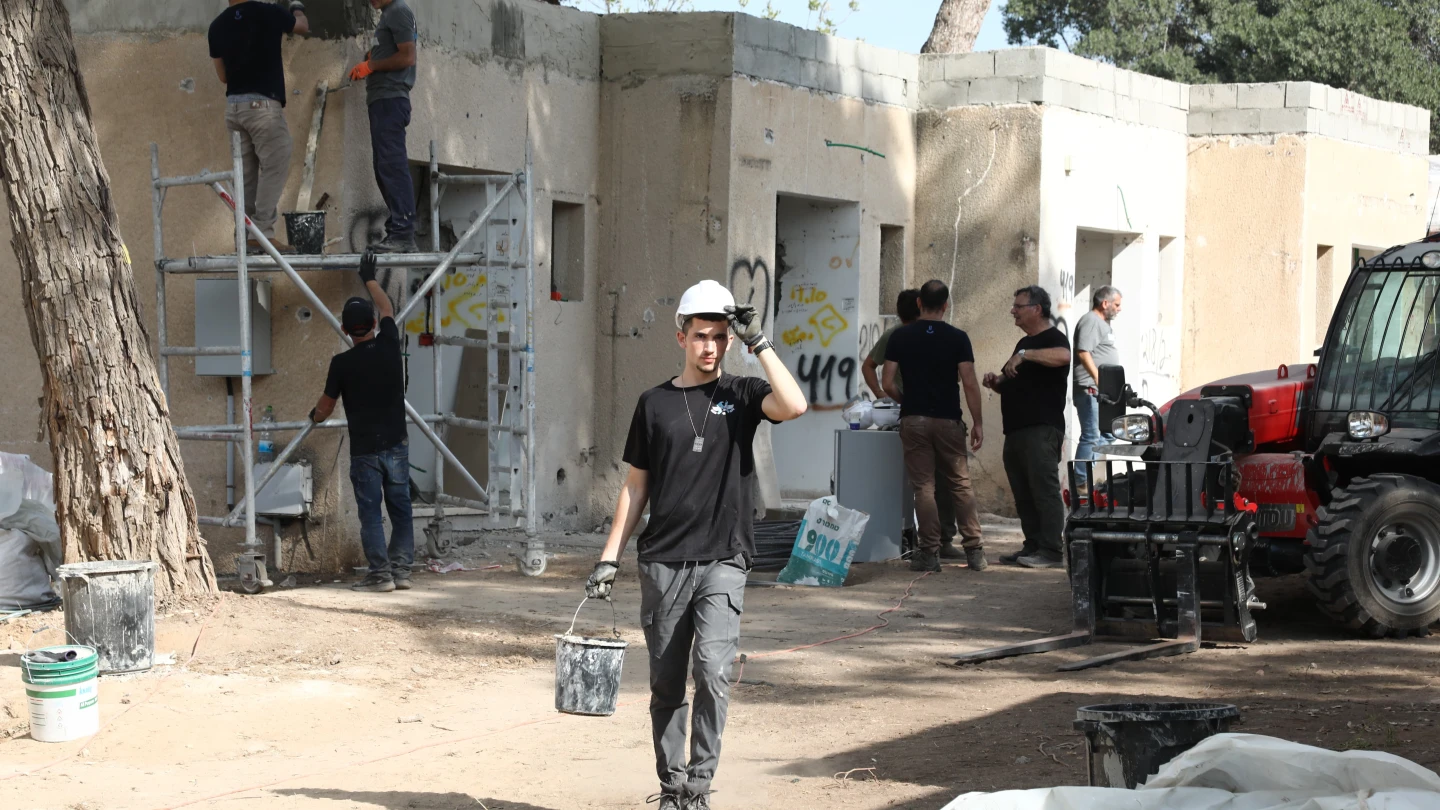
The government has allocated approximately 17.5 billion shekels ($5.7 billion) in multi-year funding. More than 11.5 billion shekels ($3.75 billion) has already been committed to construction, infrastructure and community services, including more than 3 billion shekels ($979 million) for physical reconstruction and temporary housing. Hundreds of damaged buildings have been renovated or rebuilt.
The reconstruction has nevertheless faced funding delays. State Comptroller audits have identified a persistent gap between maximum budgets promised by the government and funds actually disbursed, sometimes delaying multi-year projects.
Agriculture remains a strategic pillar of the region and of Israel’s food security. The Oct. 7 attack and subsequent fighting caused major losses of agricultural workers, equipment and cultivated land.
The recovery effort emphasizes advanced agricultural technology and attracting younger workers. In 2026, the Agriculture Ministry and Tekuma Administration offered up to 72 million shekels ($23.5 million) in capital investment for water infrastructure, irrigation and advanced control systems.
Veteran farmers can receive grants covering 50% of investment costs to rebuild greenhouses, dairy barns, livestock facilities, poultry houses and orchards. A separate “Next Generation” program, budgeted at approximately 15 million shekels ($4.89 million), aims to attract young farmers and entrepreneurs.
Labor shortages are also driving automation. Grants covering up to 40% of investment costs, and as much as 10 million shekels ($3.26 million) per farm, support robotics and automation at regional packing houses.
The region’s industrial base is shifting toward advanced manufacturing and higher-paying employment. The Israel Innovation Authority’s investment arm offers grants of up to 30% of investment costs to companies establishing, expanding, or relocating plants to the Tekuma region. The government is also promoting Israeli and local procurement for reconstruction projects.
The Tekuma Administration subsidizes up to 30% of wage costs for new employees at regional factories.
Major projects include a planned 15-acre employment and industrial complex at Kibbutz Kfar Aza, costing approximately 250 million shekels ($81.6 million) and expected to open in 2027.
In Sha’ar HaNegev, officials are promoting a high-tech park, regional research institute and innovation center with Sapir Academic College. Another 300 million shekels ($97.9 million) has been allocated for renewable-energy infrastructure and efficiency upgrades at regional factories and businesses.
Two factories, two recovery paths
Beeri Print and Nirlat illustrate the sharply different industrial recovery paths.
Beeri Print, Israel’s leading printing company and producer of driver’s licenses, credit cards and government documents, suffered no critical structural damage despite the devastation of Kibbutz Be’eri. With employees and outside assistance, it resumed operations just one week after the attack, on Oct. 15, 2023, under heavy security.
The company’s profits have provided Be’eri with a financial cushion for rehabilitation. The kibbutz’s physical reconstruction is estimated at 465 million shekels ($151.8 million) through the Tekuma Administration. Beeri Print remains the kibbutz’s central economic engine and continues competing for exclusive government contracts involving sensitive documents and smart identification cards.
Nirlat’s paint factory in Kibbutz Nir Oz suffered almost total destruction. The 12.6-acre facility was burned down during the attack, forcing the company to rebuild its infrastructure and engineering systems from scratch.
The Tax Authority advanced Nirlat approximately 201 million shekels ($65.6 million) in two payments against final compensation to accelerate recovery. The company resumed limited production by December 2023 at an undamaged solvent facility while temporarily relocating some production to Beersheva and expanding operations in Netanya.
In 2026, Nirlat’s parent company, Inrom, approved a 400 million shekel ($130.6 million) plan for a fully automated paint factory in Nir Oz. Construction is underway and is expected to take about three years. The company says the facility will be among the world’s most advanced of its kind. Nirlat has also renewed its lease with the kibbutz for another 25 years.
CHALLENGES REMAIN
Despite substantial investment and the return of most residents, reconstruction is far from complete. Approximately 1,952 acres of open and agricultural land were directly damaged by fighting and military vehicle movements, with losses estimated at tens of millions of shekels. Rehabilitation of the land and surrounding environment remains ongoing.
Still, the region is moving from emergency recovery toward long-term growth. Communities are repopulating, businesses are rebuilding, agriculture is adopting new technologies and major industrial projects are underway. The government’s goal is not merely to restore the Gaza border communities, but to create a larger, stronger, and more technologically advanced region by 2033.