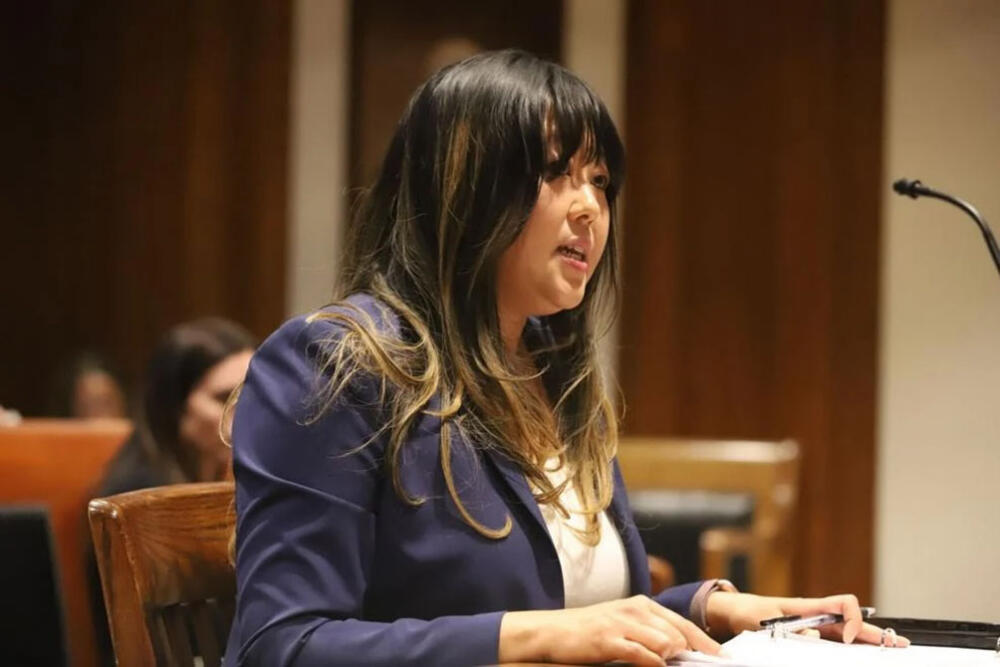
- Ella Adams, State House News Service
October 08, 2026
Automated license plate recognition technology may need a “PR makeover,” the state’s top public safety official said this week, telling lawmakers Wednesday it would “be a shame” to lose the investigative tool due to privacy concerns.
People are debating the technology nationwide due to the potential inappropriate use of it by law enforcement and privacy concerns. There’s interest in placing guardrails on it although no single proposal is gaining momentum.
“When I think about the lives saved, the dangerous individuals apprehended, it’s an important tool that has solved crimes and recovered victims and vulnerable individuals. But again, it has to be balanced with the right policies and procedures,” Public Safety Secretary Gina Kwon told Sen. Mark Montigny at a State House hearing, referring to a kidnapping case and murder case that she said both involved LPR use to solve.
“It does need some attention, and I think maybe a PR makeover because the technology is important, and I think what gets lost sometimes in the privacy conversation are the successes, and I think you can have both,” Kwon said. She noted that misuse of the technology has been mostly “along the lines of individual officers not using it for actual criminal or investigative purposes,” and that it’s still “a vital investigative tool.”
In Massachusetts over the last 18 months, 25 municipalities have canceled contracts with Flock Safety or discontinued pilot programs testing the company’s cameras, according to the ACLU of Massachusetts.
“That balance hopefully can be found,” Montigny said. “All the stuff that is out there in the public domain causing the concern is legitimate. These are not just, you know, protesters with tin hats.”
He added that he doesn’t think every community in Massachusetts should have an individual ALPR policy.
Suggesting model policies or a regulatory framework, Kwon said, “I don’t think the answer is to wipe it out completely.”
“I think balancing privacy interests — and we do it with all kinds of technology — is important to whatever that looks like in the next legislative session, I hope we can be a partner,” Kwon said. “I think it would really be a shame to lose the technology in the whole privacy argument.”