Synopsis: Strategic restraint and economic development form the foundation of the government’s long-term plan to resolve border disputes with Thailand and preserve territorial integrity.
In navigating the Cambodia-Thailand dispute, Cambodia is considering long-term impacts, with a focus on maintaining economic efficiency and gradually strengthening its capacity to defend its territory while ensuring peace and citizen livelihoods.
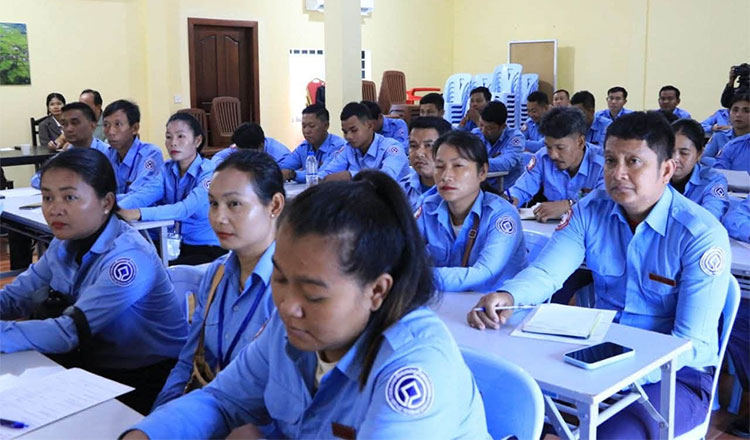
Speaking to more than 2,000 graduates at the University of Management and Economics in Battambang province yesterday, Prime Minister Hun Manet said the government is seeking to strengthen Cambodia’s ability to defend its territory while preserving peace and economic stability.
“We continue to move forward and gradually strengthen ourselves; this is the approach of the Royal Government,” he said.
He said Cambodia’s loss of control over certain areas does not mean it has recognised those areas as belonging to another country.
#CambodiaThailand #BorderDispute #HunManet #Diplomacy #InternationalLaw
“Losing control of certain areas on the land registry does not mean we agree to cede them to others,” he said, adding that Cambodia has not signed any agreement handing disputed areas to another country.
He said Cambodia’s territorial claims are based on the 1904 Convention, the 1907 and 1909 treaties and associated maps, rather than claims extending into Thai provinces such as Surin or Buri Ram.
Mr Hun Manet said history shows Cambodia previously regained control of territories through diplomatic pressure, treaties and international mechanisms rather than prolonged warfare.
He cited the return of Battambang and surrounding areas in the early 20th century and developments following Japan’s withdrawal in 1946 as examples of how territorial issues can be resolved through international pressure and agreements.
“Our first responsibility, defending our territory, remains our duty,” he said. “But now we continue to fight through diplomacy and legal means to claim it back.”
He said Cambodia will continue using all available diplomatic and legal mechanisms, particularly the Joint Boundary Commission (JBC), to resolve outstanding border issues.
He rejected suggestions that construction of roads or fences along the border means territory is being surrendered, adding that some areas have undergone adjustments based on measurements and existing agreements.
The prime minister said the government is prepared to build tens of thousands of houses and provide new livelihoods for displaced citizens if necessary, but stressed that this is not the preferred solution.
“We want our people to have the ability to return to our legal land; it must be measured clearly,” he said.
He requested international and independent observation of the border measurement process, adding that Cambodia has invited relevant observers and the UN Special Rapporteur on Human Rights to witness developments in affected areas.
He said Cambodia wants to exhaust legal and diplomatic avenues before resorting to actions that could lead to further bloodshed.
“If we have another choice besides shedding blood, let’s give our people a chance to breathe, strengthen themselves, stick to their family livelihoods, and help the national economy make Khmer even stronger while we find peaceful solutions,” he said.
He added that military force can produce short-term territorial gains but cannot guarantee a lasting settlement without an agreement between both countries.
“Fighting never ends. No war is ended by war,” he said, pointing to Cambodia’s experience in ending its civil war through the Win-Win Policy rather than military victory alone.
He warned that prolonged conflict would place a heavy economic burden on Cambodia, particularly border provinces such as Battambang, Banteay Meanchey, Preah Vihear and Oddar Meanchey.
Referring to thousands of people displaced by fighting, he said an extended conflict could require the government to spend hundreds of millions of dollars while disrupting businesses, education, employment and local livelihoods.
Mr Hun Manet said the government previously intervened to cushion citizens from rising costs, including suspending special taxes on imported oil when global prices increased.
He contrasted such spending with the potential cost of war, saying funds required to stabilise fuel and electricity prices would be lost entirely if consumed by fighting.
Beyond direct financial costs, he said armed conflict destroys homes, disrupts businesses and forces people to flee.
“If bombs were dropped on Battambang city, could you study, work at a bank, work at your workplaces, or open your shops?” he asked. “No, everything would shut down and everyone would flee as refugees.”
He urged young Cambodians to understand the government’s approach, acknowledging that some citizens may become frustrated by the pace of border negotiations.
He said acting quickly for political appearances can produce temporary satisfaction but fails to deliver a durable settlement.
“Rushing for a moment looks good for optics, but real benefit is hard to achieve, and it can further destroy the peace of our citizens and create longer-lasting problems,” he said.
He described economic development and improved livelihoods as essential components of national defence, stating that a stronger economy gives the country resilience and capacity to protect its interests.
“Strengthening the economy and resolving our internal issues – especially the livelihoods and hardships of the citizens” – are essential to creating a stable environment, he said.
Mr Hun Manet urged national solidarity and continued efforts to resolve the border dispute peacefully while strengthening the nation from the local level to the national level.
“Through peaceful means and defence, it might be a bit slow, but it secures a vast environment,” he said, calling on citizens and the younger generation to help build a stronger, peaceful Cambodia.
Chheng Kimlong, president of the Asian Vision Institute, said military force tends to drag out conflict and rarely produces a decisive outcome.
“As we can see today, even though Thailand has strong military capabilities, that does not mean it will succeed forever. And we should not wait until one day Cambodia becomes militarily stronger,” he said.
“Therefore, since the resolution Cambodia seeks is based on international law, if Thailand continues to harbour such intentions and turns away from the principles of international law that are already in force, it will make the conflict difficult to resolve.”
He said dealing with a hostile neighbour requires more than diplomacy.
“Cambodia must necessarily strengthen everything, including its national defence capabilities, to deter aggression and encroachment by neighbouring countries.”