(Oct. 6, 2026 / JNS)
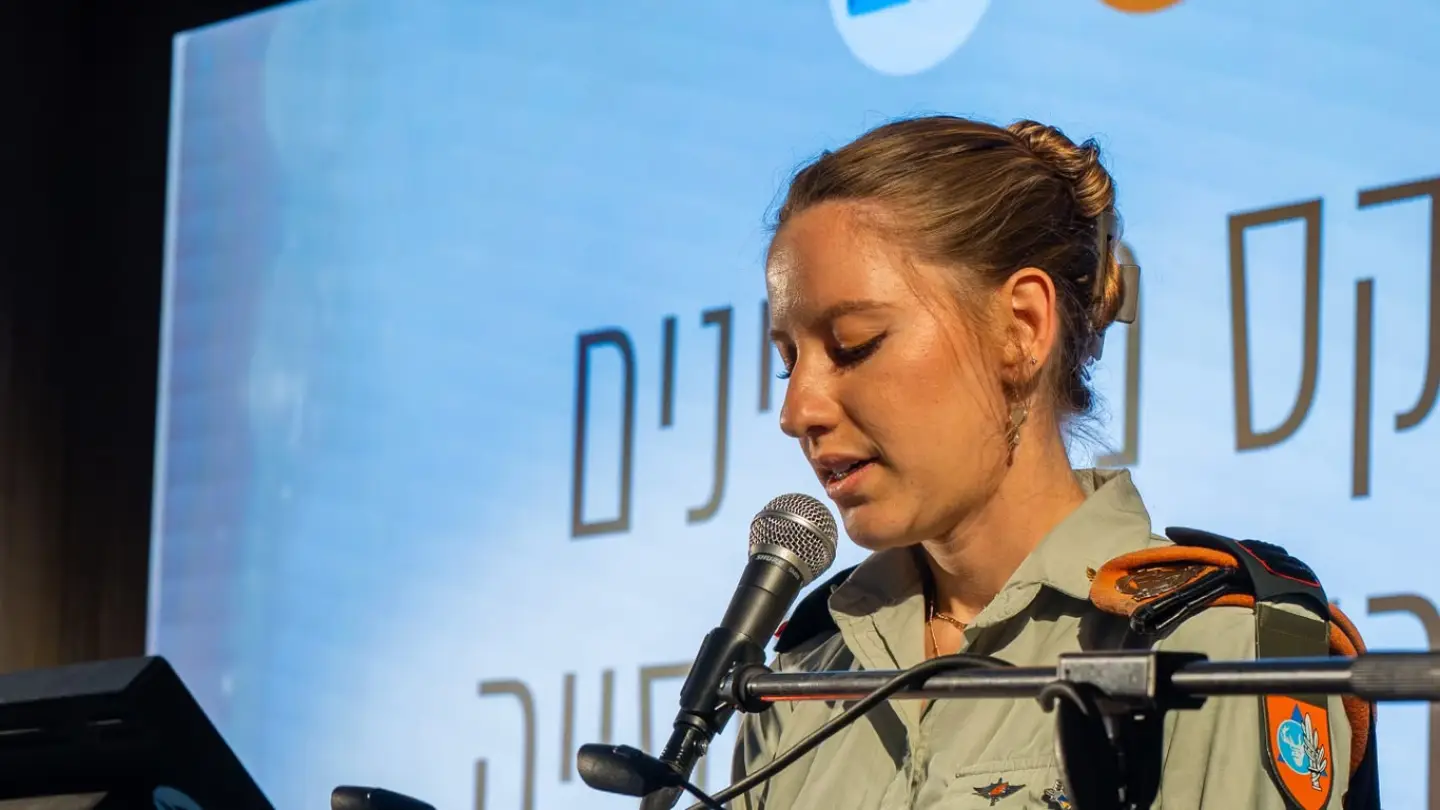
Capt. Ariel Armbrister, 23, serves as a search-and-rescue officer in the Israel Defense Forces’ Home Front Command. Her family made aliyah from the United States in 2019.
This week, ahead of the third anniversary of the Oct. 7 massacre, she speaks to JNS about her experience as an on-duty officer at the Zikim base near Gaza that day and the decisions she made as it came under attack.
Armbrister recounts arriving at Zikim on Thurs., Oct. 5 for a routine weekend assignment, which involved being responsible for the soldiers remaining on base over Shabbat. It was a role, she says, that she had performed before without incident.
The following day, Oct. 6, felt like an ordinary Friday, and she accompanied her soldiers to the beach. That evening was the start of Simchat Torah holiday, which the soldiers celebrated before going to sleep. Armbrister says that she went to bed at around 3 a.m.
Just over three hours later, at 6:30, sirens began sounding. Armbrister and the other soldiers initially assumed it was another round of rocket fire from Gaza. But then, she says, they heard gunfire. That was the moment, she recalls, when she realized something was fundamentally different and knew that she needed to get to the command center of the base.
So she quickly donned her uniform, helmet and protective vest and headed there with other soldiers. As they drove, they heard shooting so intense that they were convinced their vehicle was under attack. “I’ve never been terrified like that before,” she says.
When they arrived at their destination, the base commander made a decision that Armbrister believes was critical to preventing the base from being overrun by terrorists: Commanders and officers would replace the new recruits at the guard posts, putting more experienced personnel on the perimeter. This was Armbrister’s introduction to what would come to be called the “Oct. 7 massacre.”
According to the IDF, seven soldiers were killed at the Zikim base that day and another nine were wounded. A different soldier was killed during the Hamas infiltration at nearby Zikim beach, where Armbrister and the others had been bathing the previous day.
‘The world was ending’
Inside the command center, the officers attempted to piece together what was happening, while trying to obtain assistance for the soldiers fighting outside.
According to the IDF, Armbrister coordinated the operations-room personnel, compiled lists of the wounded and dead and directed forces evacuating the wounded, all with limited resources and information at her disposal.
Armbrister says that one of the hardest parts of that morning was having to project confidence while herself feeling immense fear.
Meanwhile, she recounts, radio communications from the combat soldiers outside became increasingly desperate. They were requesting reinforcements and ammunition, but the officers in the command center struggled to find help. Calls to nearby bases revealed that those units were also under attack.
Then came reports that soldiers protecting Zikim had been wounded. The soldiers inside the command center phoned Magen David Adom for ambulances, but were told that terrorists were flooding the roads, making it too dangerous to dispatch medical vehicles.
“I felt at that moment like the world was pretty much ending,” she recounts.
But then, Armbrister adds, came the report that terrorists had infiltrated the base itself. Armbrister says she then locked the command-center doors, turned off the lights and ordered everyone to remain quiet and hide under the tables.
The soldiers thankfully managed to kill terrorists inside the base, she says, after which they gathered in the cafeteria. Later, another barrage of rockets sent roughly 90 soldiers into a large bomb shelter, where they would remain for about 15 hours with little communication, as cellphone reception and electricity failed.
By then, Armbrister says, she had reduced her mission to its simplest terms: “I just needed to function. That was my goal.”
‘I don’t know where that courage came from’
As the hours passed, Armbrister recounts, the combat soldiers guarding the base became exhausted. Someone had to replace them, but most of the new recruits were unwilling to leave the shelter. So she volunteered, grabbing a rifle from one of the recruits who had suffered a panic attack.
Since she hadn’t fired such a weapon in approximately a year, she was forced to reacquaint herself with it.
“I don’t know where that courage came from,” she says, adding that as soon as she stepped outside, she questioned her decision.
“What the hell are you doing, Ariel?” she remembers asking herself. “Do you want to die?”
With new recruits following her, however, she says she felt she couldn’t turn back. Eventually, she returned to the shelter, but later volunteered for another guard position just outside the structure. She remained there until exhaustion caused her to request that someone replace her. She had been awake for nearly 24 hours straight.
She remembers falling asleep on the floor of the shelter before being woken up by a senior commander who entered with news that two buses had arrived to evacuate the soldiers. They rushed aboard and began the journey out of Zikim.
As they reached the roads outside the base, Armbrister says she saw the devastation left behind by the attack. The images, she stresses, remain with her.
“There are people who look away, and then there are the ones who can’t stop looking. I’m the kind who has to look, and memory of what I saw will be there forever,” she says.
‘My true home is here in Israel’
A few days after the attack, an officer suggested that Armbrister take advantage of her American citizenship and return to the United States. This, she says, isn’t an option.
“I will always love America; it will always be one of my homes, but my true home is here in Israel,” she insists.
Looking back, Armbrister says that Oct. 7 fundamentally changed her understanding of responsibility and leadership.
“I think I matured like 10 years on that day,” she says, adding that the experience altered her perception of her life, coming to believe that since God had given her a second chance, she has the responsibility to make use of it—namely, by continuing to serve in the IDF. And she has made good on that vow.
Today, she lectures in Hebrew and English as part of IDF leadership courses, the Taglit-Birthright Israel program and IDF Spokesperson’s Office delegations abroad through Friends of the IDF and other organizations. She has also committed to another eight years in the IDF: two years of university studies in crisis-and-emergency management, followed by six additional years of military service in the Home Front Command.