
Want to bookmark your favourite articles and stories to read or reference later? Start your Independent Membership today.
Join today
Already a member?
Log in
Your support helps us to tell the story
From reproductive rights to climate change to Big Tech, The Independent is on the ground when the story is developing. Whether it’s investigating the financials of Elon Musk’s pro-Trump PAC or producing our latest documentary, ‘The A Word’, which shines a light on the American women fighting for reproductive rights, we know how important it is to parse out the facts from the messaging.
At such a critical moment in US history, we need reporters on the ground. Your donation allows us to keep sending journalists to speak to both sides of the story.
The Independent is trusted by Americans across the entire political spectrum. And unlike many other quality news outlets, we choose not to lock Americans out of our reporting and analysis with paywalls. We believe quality journalism should be available to everyone, paid for by those who can afford it.
Your support makes all the difference.Read more
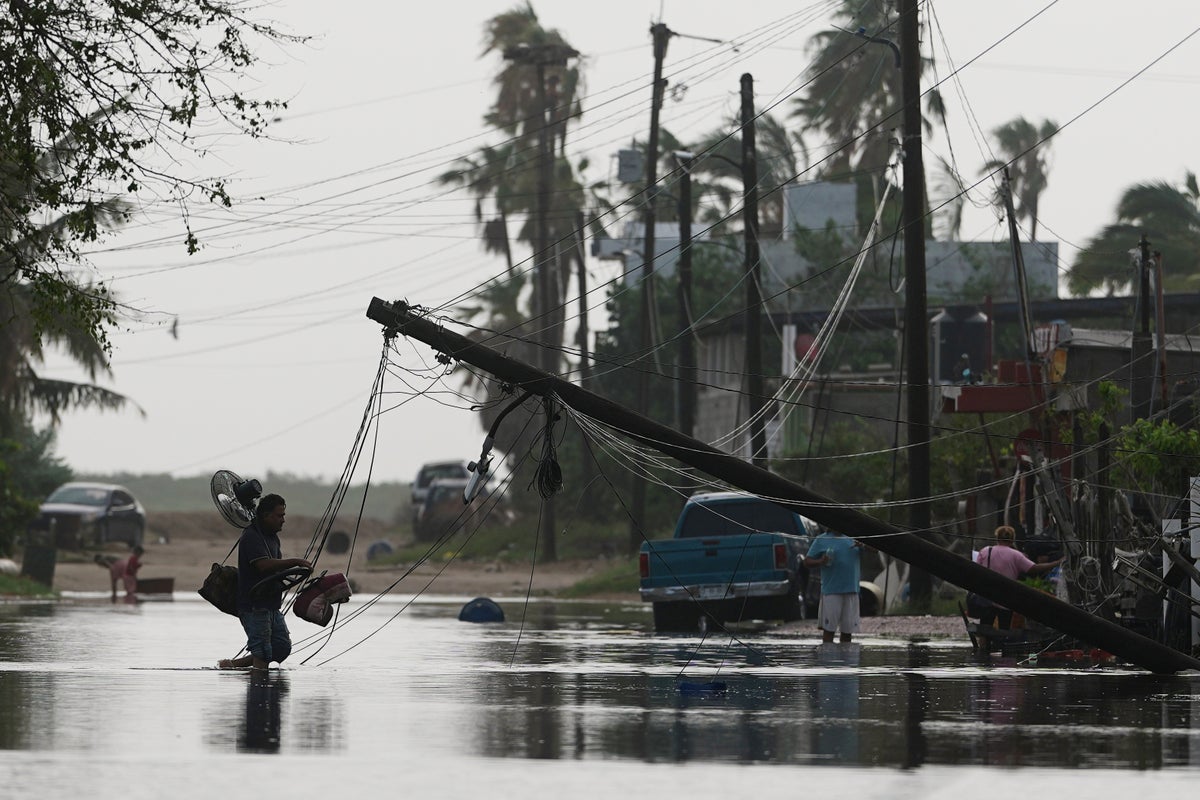
Another storm strengthened into a Category 2 cyclone off Mexico’s Pacific coast on Thursday morning at the same time northern Mexico and parts of the southwest were reeling from flooding and damages from Hurricane Polo earlier this week.
Hurricane Rachel was located about 230 miles (370 kilometers) off the southern tip of Baja California on Thursday, chugging forward at 6 mph (9kph) as a powerful hurricane, according to the National Hurricane Center. The center reported winds of 105 mph (165) kph.
Rachel was projected to move along the Mexican coastline before veering west in the Pacific.
Mexican authorities said Thursday that, as Hurricane Rachel moves across the Pacific, they remain on alert due to forecasts of very heavy rain in the states of Baja California Sur, Sinaloa, and Jalisco, and the possibility of landslides, rising river levels, overflowing rivers, and flooding in low-lying areas.
The Pacific has seen an unusually busy hurricane season, which experts have attributed to El Niño, which has fueled crippling droughts in Mexico and Central America and floods in other parts of the region. In the Pacific, it has resulted in warmer waters and wind patterns that act as fodder for hurricanes.
While Mexico’s Sonora state was left reeling from flooding and winds, rain swept across the U.S. Southwest this week, causing desert rivers to surge.


