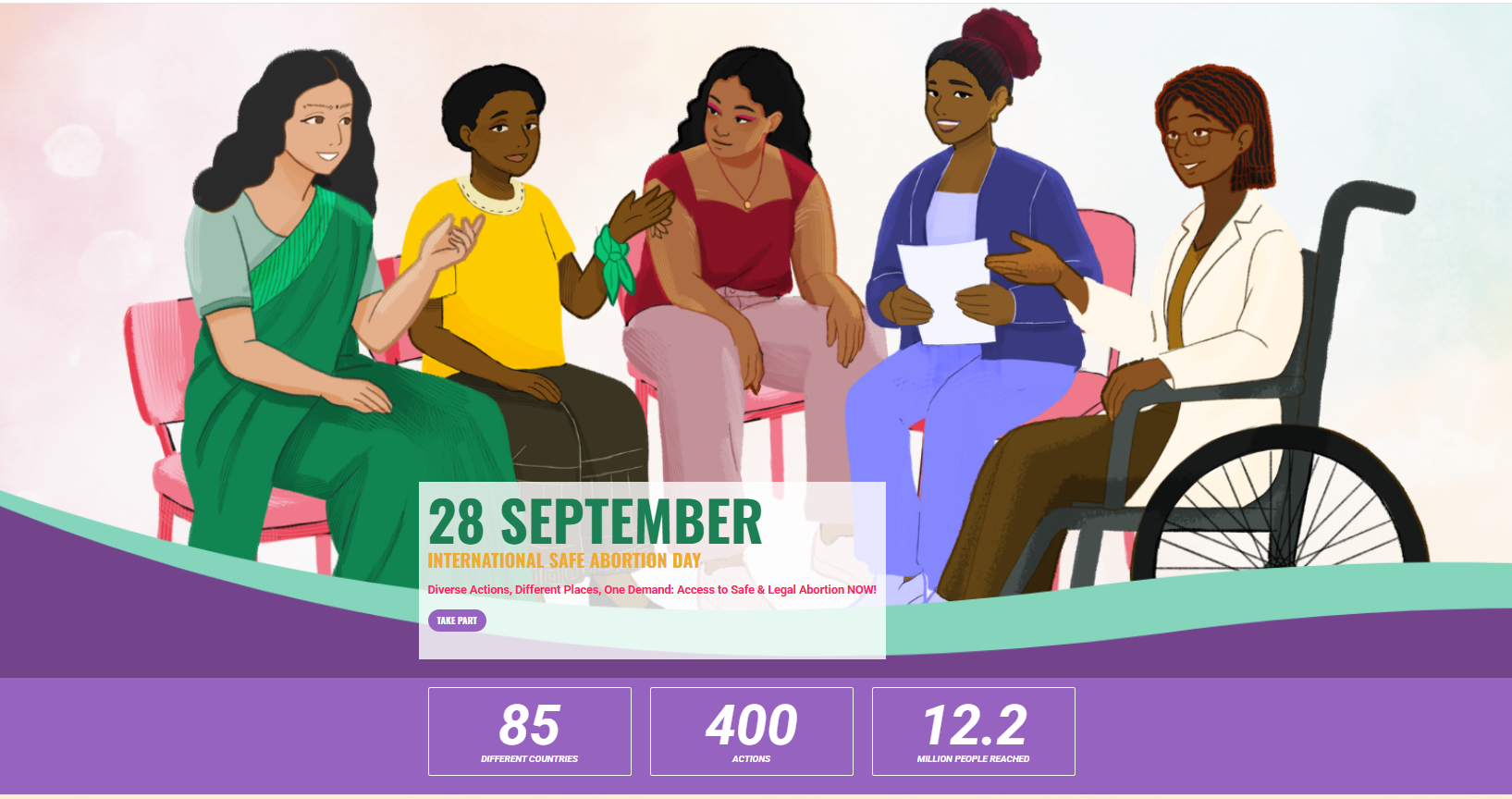
The plea is simple and clear: “Access to Safe and Legal Abortion NOW.” https://share.google/mGLdfuLnsTKfxdwes
International Safe Abortion Day is not promoting abortions; it is about promoting safety. And that cannot be achieved without decriminalisation.
We have had severely restrictive criminal laws for more than 150 years, yet the Caribbean has the highest abortion rate in the world. So, no one needs to ‘promote’ abortion. So much for our religious leaders who shout about the sanctity of life.
Only 2 English-speaking Caribbean countries have positive laws for abortion: Barbados and Guyana. After only 10 years of legal abortion in Barbados, 1983–92, admissions for complications of abortion had dropped by 71%. In Guyana, after 30 years, 1995–2025, the drop was 97%. There were almost none.
This is normal. We looked at 154 countries whose abortion rates and abortion laws we could find. We looked at abortion rates as high >30, medium 30-15, and low <15; and we looked at laws as criminal or legal. Of the 58 countries with high abortion rates, 36 (62%) relied on criminal laws; of the 46 with low abortion rates, 44 (96%) relied on legal abortion. The results are statistically significant.
What is more, the claims that legalisation encourages licentious behaviour, undermines the moral fabric of society, weakens family planning, and increases the number of abortions are unfounded.
In Barbados, the number of abortions at Queen Elizabeth Hospital fell by 53% in 10 years. And the decline among teenagers was even higher at 59%. Similarly, in Guyana, by 2025, the abortion rate had declined by 20%, and the unintended pregnancy rate had dropped by 28%.
Clearly, the drop in the unintended pregnancy rate is a strong indicator that family planning improved after legalisation. Almost all women who had abortions at Georgetown Public Hospital requested either IUDs or implants. That contraceptive transition to long-term reversible contraceptives greatly reduced the risk of unplanned pregnancies.
You would think that compelling global data, compelling regional data, and 150 years of catastrophic failure with our criminal abortion laws would be sufficient to urge us to try something different.
But the political class is subordinate to the dogma of the church. And dogma does not yield to evidence. So, we continue to ignore the obvious, sink our heads into the sand and deny the harm we do to the sanctity of life. We cling to the form of the law and pretend not to see how terribly it ravages the lives of the unborn, girls, and women alike.
Fearful of giving the wrong moral signal, we hang on to a criminal law that fails to prevent abortions, fosters an unregulated, clandestine industry, and guarantees harm, especially to poor women and girls. And we do this in the name of the sanctity of life. This is hypocrisy and cruelty.
Sincerely
Tonia Frame, PhD, President, GPPA
Fred Nunes, PhD, Consultant, ASPIRE
Dr Tonia Frame is the President of the Grenada Planned Parenthood Association (GPPA), a Trustee of the Caribbean Family Planning Affiliation (CFPA) and an Assistant Professor in the Department of Public Health and Preventive Medicine at St George’s University.
Dr Fred Nunes is the founder of ASPIRE — Advocates for Safe Parenthood: Improving Reproductive Equity, Advisor to the CFPA and GPPA, and is a former Head of Management Studies at The UWI, Mona.
NOW Grenada is not responsible for the opinions, statements or media content presented by contributors. In case of abuse, click here to report.