How would all this work? The member states would ask the Commission to prepare a roadmap of criteria: the Schengen acquis.
That means external border control, visa policy, the Schengen Information System, police cooperation and data protection – reinforced by rule-of-law conditions.
The Commission would report on progress every six months, and once a country met all the criteria, the member states would have to give their consent in the Council.
Reforms and the closer cooperation they bring can strengthen security rather than weaken it. When the Schengen area grew from 15 to 24 members in 2007, Germany’s then Interior Minister, Wolfgang Schauble, said: “We will have a gain in security, not a loss.”
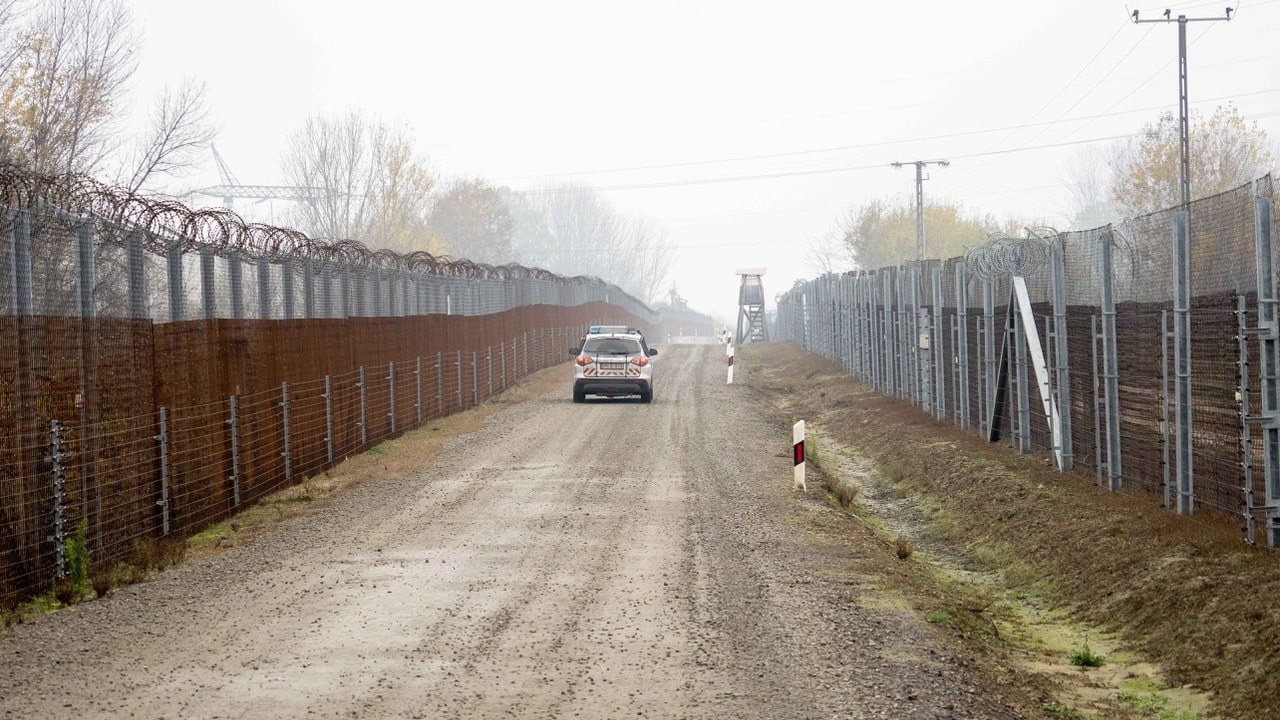
The main argument against admitting Western Balkan countries has recently evaporated. For over a decade, several EU interior ministers saw the Western Balkan borders as a brake on irregular migrants and asylum seekers heading from Turkey and Greece into central Europe.
The admission of Bulgaria and Romania to the Schengen area in 2025 overturned that. Why would anyone on that route cross several tightly controlled borders when they could travel from Greece through Bulgaria and Romania to Hungary and Austria without ever leaving the Schengen area?
Reforms and eventual membership would meanwhile help to stabilise the region’s most fragile states – Bosnia and Herzegovina, Serbia and Kosovo, where Bosniaks, Serbs and Albanians live on both sides of the borders. As EU membership has receded into the distant future, the dangerous narratives of the late 1980s, that led to the wars of the 1990s, are returning, and with them ideas of redrawing borders along ethnic lines (floated by the presidents of Serbia and Kosovo in 2018).
The recent state funeral in Belgrade for Bosnian Serb wartime military commander Ratko Mladic, convicted of committing genocide in Srebrenica, is only the latest reminder of that.
It is precisely because these forces are gaining ground that the EU needs a stronger counter-offer. Schengen could be one. It does not move borders but makes them invisible, as they are between France and Germany, or Lithuania and Poland.
But you cannot make a border invisible before its status is settled, and the line between Serbia and Kosovo is the very thing being fought over. Settling it would become the price of a prize that’s within reach. It is a far stronger incentive than EU membership, which is at least a decade away.
Several countries already belong to Schengen but not the EU: Norway, Iceland, Switzerland and Liechtenstein. Unlike with earlier Schengen enlargements, this time no new external borders would be required. Surrounded by Schengen members, the borders of the Western Balkan countries could simply be collapsed inwards.
Offering such a roadmap would cost the EU little, and only serious reformers would ever join. Yet the process alone would hand the EU influence and win back some of its lost credibility. More importantly still, it would offer the Balkans something better than more quarrels over where lines should run. Borders would no longer matter.
Kristof Bender is Deputy Chairman of the European Stability Initiative (ESI).
A German version of this article first appeared in the Neue Zürcher Zeitung (NZZ).
The opinions expressed are those of the author and do not necessarily reflect the views of BIRN.