Keep our news free from ads and paywalls by making a donation to support our work!
Notes from Poland is run by a small editorial team and is published by an independent, non-profit foundation that is funded through donations from our readers. We cannot do what we do without your support.
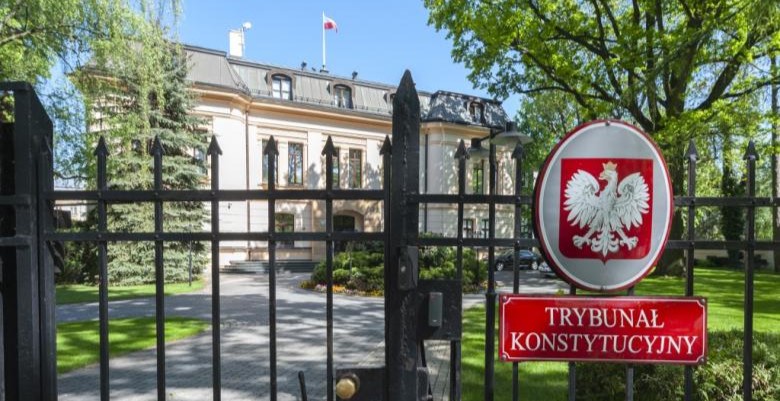
The crisis around Poland’s Constitutional Tribunal (TK) has deepened further, after prosecutors charged two senior TK officials over their role in preventing new judges from taking up their positions on the court.
Those judges were chosen by the government’s majority in parliament but rejected by President Karol Nawrocki and the TK’s chief justice, Bogdan Święczkowski, both of whom are aligned with the right-wing opposition.
Following news of the charges, Święczkowski announced that he has initiated proceedings of his own against three other new judges who were admitted to the court this year after being chosen by the ruling coalition. That could result in them being expelled from their positions.
Zarzuty w śledztwie dotyczącym niedopuszczenia sędziów Trybunału Konstytucyjnego do orzekania: ⬇️https://t.co/MPiKCEqGBs
— Prokuratura (@PK_GOV_PL) September 23, 2026
After coming to power in December 2023, the government of Prime Minister Donald Tusk refused to recognise the TK, which was stacked with judges appointed by the former Law and Justice administration. It argued that, because some of those judges were unlawfully appointed, the TK itself was illegitimate.
Earlier this year, Tusk’s majority in parliament finally began the process of appointing new judges to the TK to fill the growing number of vacancies. Normally, 15 judges sit on the tribunal, but many seats were empty after incumbents’ nine-year terms had expired and the government had previously refused to fill them.
However, under Polish law, new TK judges must take an oath “before the president” in order to take up their position. Nawrocki, who was elected last year with the support of PiS, has refused to swear in four of the six judges chosen by parliament in March.
Nawrocki argues that there were legal doubts surrounding their election. The government rejects this, as do the judges themselves, who organised their own swearing-in ceremony before a notary and then submitted the documents to the presidential chancellery.
Afterwards, the four judges attempted to take up their positions at the TK. However, Święczkowski, who served in the PiS government before becoming a TK judge, refused to admit them, arguing that they had not taken the necessary oath before the president.
The judges took their case to the European Court of Human Rights (ECHR), which in May issued an interim order requiring that they be allowed to take up their positions. But Święczkowski has refused to comply, arguing that the ECHR does not have the competence to make such a decision.
The European Court of Human Rights has ordered Poland’s Constitutional Tribunal (TK) to accept four judges whom opposition-aligned President Nawrocki refused to swear in.
The decision was welcomed by the government but rejected by the TK itself https://t.co/9NxInPdYk9
— Notes from Poland 🇵🇱 (@notesfrompoland) May 6, 2026
While Święczkowski himself is protected from prosecution by legal immunity, two senior TK officials have now been charged over their role in refusing entry to the four judges.
One of the two suspects, who can be named only as Zofia H. under Polish privacy law, is the director of the TK’s chancellery; the other, Piotr P., is the commander of the TK’s security service.
They have been charged with abuse of power by a public official, which is punishable by up to three years in prison, and “maliciously and persistently” violating the employment rights of the judges, an offence that carries a sentence of up to two years.
Prosecutors say that the officials’ actions were “to the detriment of the private interests of judges of the Constitutional Tribunal and the public interest in the proper functioning of the judiciary in Poland”. Both of the accused have been questioned and pleaded not guilty.
The crisis around Poland’s Constitutional Tribunal (TK) has deepened further after the tribunal ruled that the president is not obliged to swear in new TK judges appointed by parliament.
President Nawrocki last month refused to swear in four new judges https://t.co/ycnweW9pSR
— Notes from Poland 🇵🇱 (@notesfrompoland) May 13, 2026
The decision to bring charges was welcomed by Waldemar Żurek, who serves as justice minister in Tusk’s government as well as prosecutor general.
“In a building that should stand guard over the constitution, unlawful blockades were organised, humiliating inspections were conducted, and malicious bullying was directed at legally elected judges,” he wrote on social media.
“A state official has no right to place themselves above the law, and the gates of the tribunal are not the gates of a private fortress,” he continued. “Anyone who carries out unlawful political orders and destroys the foundations of the rule of law must reckon with criminal liability.”
W budynku, który powinien stać na straży Konstytucji, urządzono bezprawne blokady, upokarzające kontrole i złośliwy mobbing wobec legalnie wybranych sędziów. Urzędnik państwowy nie ma prawa stawiać się ponad prawem, a bramy Trybunału nie są bramami prywatnej twierdzy.…
— Waldemar Żurek (@w_zurek) September 23, 2026
The TK itself, however, condemned prosecutors’ actions, calling them “unlawful” and a “tool of personal pressure and a form of intimidation”.
“The director of the chancellery and all other employees of the TK have performed and continue to perform their duties and official orders in accordance with the applicable law,” wrote the tribunal on its official X account.
It argued that it would, in fact, have been a criminal abuse of power to have “allowed persons who have not taken the oath before the President to assume the office of a TK judge”.
W dniu dzisiejszym @PK_GOV_PL przedstawiła Pani Dyrektor Kancelarii Trybunału Konstytucyjnego absurdalne zarzuty z art. 231 § 1 i 218 § 3 Kodeksu karnego, które od początku do końca są oparte na wymyślonych podstawach prawnych. Działanie to stanowi kolejną próbę wywarcia wpływu…
— Trybunał Konstytucyjny (@TK_GOV_PL) September 23, 2026
On Thursday, the day after the charges were announced, the TK issued a further statement saying that Święczkowski had initiated proceedings against three new TK judges who were chosen by parliament this year and sworn in by Nawrocki (two in March, the other in June).
The TK said that it was assessing complaints that two of those judges filed against tribunal employees, as well as their refusal to participate in sessions of the TK’s general assembly. Those three judges have shown solidarity with their four excluded colleagues by refusing to participate.
“These proceedings may conclude with the most severe ruling of the disciplinary court in the form of removal from office of the aforementioned TK judges,” wrote the TK.
Prezes @TK_GOV_PL Bogdan Święczkowski, działając na wniosek jednego z sędziów, wszczął dzisiaj postępowanie mogące się zakończyć zarzutami dyscyplinarnymi wobec trojga sędziów Trybunału Konstytucyjnego: Magdaleny Bentkowskiej, Dariusza Szostka oraz Sławomira Patyry.…
— Trybunał Konstytucyjny (@TK_GOV_PL) September 24, 2026
An eighth new TK judge chosen this year, Maciej Berek, who was elected by parliament earlier this month, has also not yet been sworn in by Nawrocki.
Berek’s appointment has been particularly controversial, given that he served in the government until being nominated to the TK. Tusk described Berek as his “right-hand man”.
Even some MPs from Tusk’s ruling coalition voted against Berek’s appointment, arguing that it contradicted the government’s own efforts to “depoliticise” the judiciary, including by banning recently serving politicians from sitting on the TK.
The presidential chancellery has so far refused to swear in Berek based on a technicality, arguing that there is no evidence he has previously served for at least ten years as a legal counsel, which is a requirement to sit on the TK. Berek says that he has presented such evidence.
Notes from Poland is run by a small editorial team and published by an independent, non-profit foundation that is funded through donations from our readers. We cannot do what we do without your support.
Main image credit: Komenda Główna Państwowej Straży Pożarnej (under CC BY-SA 4.0)
Daniel Tilles is editor-in-chief of Notes from Poland. He has written on Polish affairs for a wide range of publications, including Foreign Policy, POLITICO Europe, EUobserver and Dziennik Gazeta Prawna.