3
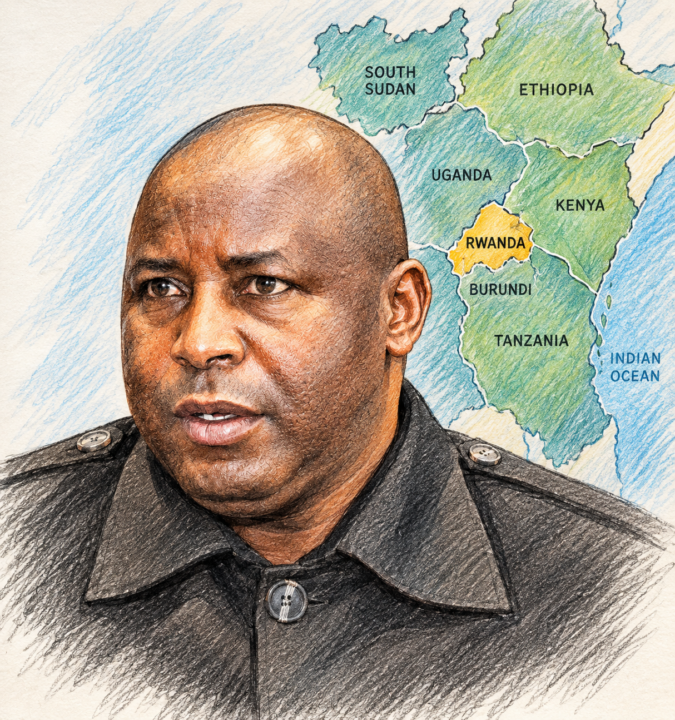
President Évariste Ndayishimiye’s role in escalating the conflict in eastern Democratic Republic of Congo is a major concern not only for the Congolese people but for the entire region. He was supposed to be a mediator. Instead, he has become a central actor in fueling the crisis. So far, he has betrayed three important actors in the conflict.
Consider the East African Community. When he served as EAC Chairperson, Ndayishimiye had an opportunity to play a crucial role in strengthening the regional peace process aimed at ending violence in eastern DRC.
It is worth remembering that the regional force’s mandate came from the EAC Treaty and its Protocol on Peace and Security. The force included troops from Burundi, Kenya, South Sudan and Uganda and was intended to support the political process, protect civilians and help enforce peace agreements.
But Ndayishimiye undermined that process. Against the decisions of regional heads of state, he went beyond the peacekeeping mandate given to the regional force. He supported Kinshasa’s refusal to negotiate with M23, effectively opposing the position of other regional leaders who believed that, after achieving a six-month ceasefire, there was an opportunity to push the Congolese parties toward a political settlement.
In May 2023, Tshisekedi stated that, of all the EAC contingents deployed in the DRC, only the Burundian troops had met his expectations.
“The Burundian army is the only one operating against armed groups as part of the force of East African countries deployed since the end of 2022 in the east of the Democratic Republic of Congo,” Tshisekedi said, adding that “there is a kind of collaboration between the EAC force and the M23 terrorists.”
Ndayishimiye’s approach reversed the EAC’s modest gains. The withdrawal of the EAC force was followed by an expansion of Burundi’s bilateral military involvement alongside the Congolese army.
The Burundian army subsequently joined Kinshasa’s coalition, which included Eastern European mercenaries, local militia groups such as the Wazalendo, and the FDLR, an armed group founded by remnants of the forces responsible for the 1994 Genocide against the Tutsi in Rwanda.
For Rwanda, Burundi’s decision to fight alongside the FDLR amounted to a betrayal.
Consider that Rwanda had supported the EAC deployment on the understanding that its own security concerns would also be addressed. The regional force had a mandate to neutralize foreign armed groups operating in eastern Congo if they refused to surrender, disarm and disband. These groups included the FDLR.
It was in this context of regional cooperation and shared security that Rwanda facilitated the deployment of Burundian troops to the border city of Goma. It must have been a shock for Kigali to discover that Burundi was also sending troops disguised in Congolese uniforms to fight alongside the Kinshasa coalition.
That coalition has been accused of mass killings targeting Congolese Tutsis, looting their property and burning their homes. For M23, this represented a betrayal.
During the EAC deployment, M23 had ceded 80 percent of the territory it had captured to the regional forces, including Burundian troops. M23’s expectation was that these forces would protect Congolese Tutsis, who were being targeted by the FDLR and affiliated Wazalendo groups, with the support of the Congolese army.
But in Nturo, North Kivu, Burundian forces stood by as militias burned approximately 300 homes belonging to Tutsi families. The incident further damaged the already fragile relationship between M23 and Burundian forces.
At the heart of these betrayals, there was one man: the current Chairperson of the African Union.
Ndayishimiye should be condemning the persecution of Congolese Tutsis instead of collaborating with the FDLR in targeting them. He should have urged Tshisekedi to pursue dialogue, as other regional leaders had done. For Congolese fighting for their rights, he has lost much of the trust he had at the beginning of the conflict.
From Kigali’s perspective, the sentiment is similar. Burundian troops are not only fighting alongside the Congolese army but are also cooperating with the FDLR. The subsequent deterioration in Burundi Rwanda relations has made the situation even more dangerous. The risk is that Burundi’s actions could deepen tensions with neighbouring Rwanda to a point from which there may be no easy return.
For Ndayishimiye, the challenge is to decide whether Burundi’s long-term interests are better served by remaining deeply embedded in Kinshasa’s military strategy or by using its influence to encourage negotiations among the parties.
Burundi’s security cannot ultimately be separated from the security of its neighbours. The question is whether Ndayishimiye’s policy will contribute to regional stability or deepen the divisions that have kept eastern DRC at war for decades.
Visited 1 times, 1 visit(s) today