South Africa marks Heritage Day today. For Basotho, whose language, families and history cross the Mohokare every day, the holiday is as much about Lesotho as it is about its neighbour.
South Africans observe Heritage Day on 24 September, and the Heritage Day Lesotho connection runs deeper than the border posts at Maseru Bridge and Ficksburg suggest. The public holiday asks South Africans to celebrate the languages, dress, food and customs that make up the country. A large share of those belong to Basotho.
Sesotho is one of South Africa’s 12 official languages. It is the most widely spoken home language in the Free State and is spoken by millions of people in Gauteng, according to Statistics South Africa’s Census 2022 cultural dynamics report. The Sesotho spoken in Bloemfontein, Soweto and Maseru is the same language, with the same proverbs and the same praise poetry.
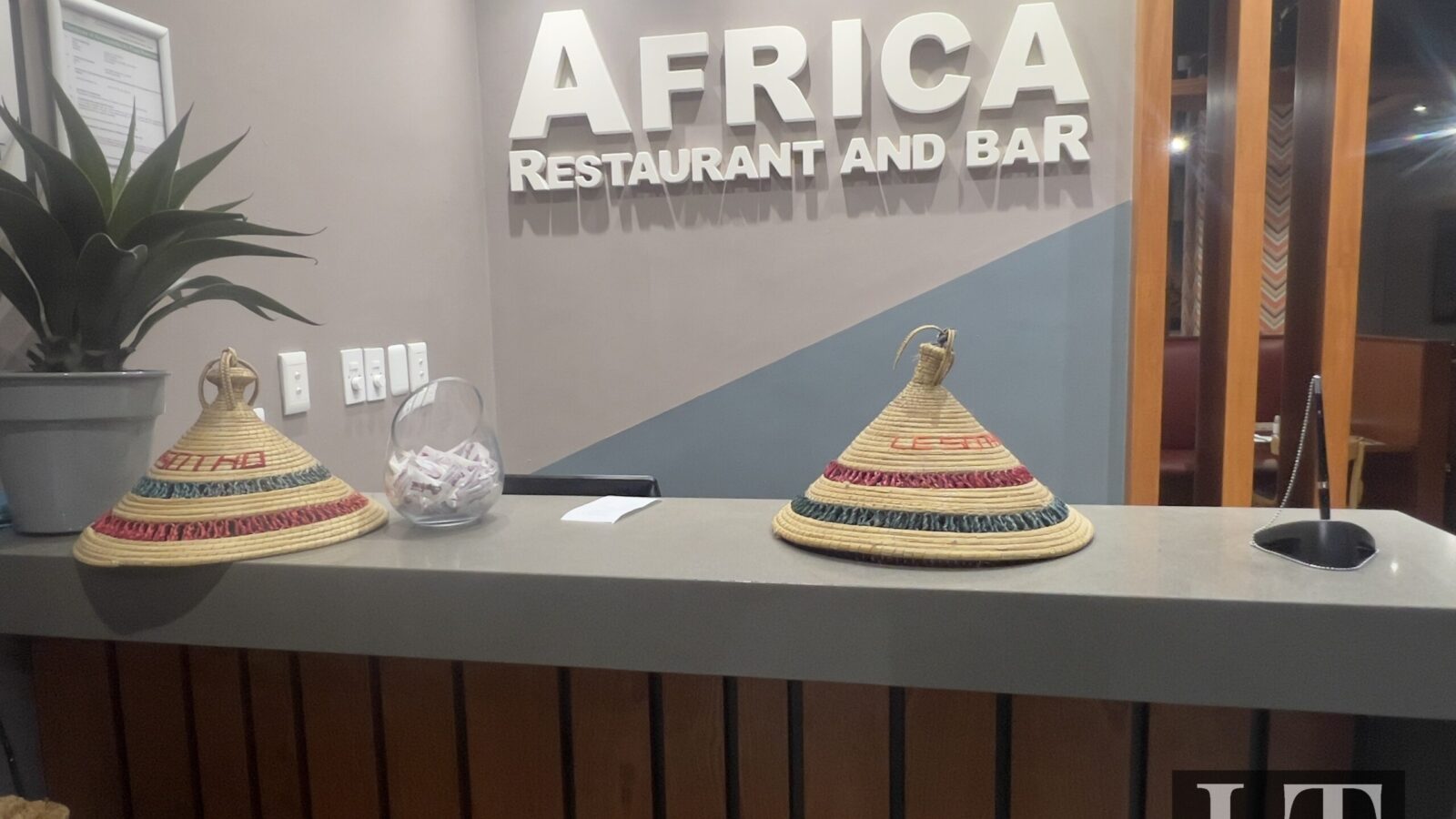
A Heritage Day display of reed thatch, guinea fowl feathers, a painted clay pot and printed cloth at a Protea Hotel by Marriott. Photo: Malefo Thinyane / Lesotho Tribune
How Heritage Day began
Before 1994, 24 September was Shaka Day in KwaZulu-Natal, marking the death of the Zulu king. When the new government drew up its list of public holidays, the date was left out. The Inkatha Freedom Party objected, and Parliament agreed to keep the day under a broader name so that every community could claim it.
In 1996 President Nelson Mandela used the day to say that South Africa’s culture was the property of all its people. Over the years it has also become known informally as National Braai Day, when families gather around fires to cook meat and share food.
Heritage displays in offices, hotels and schools across South Africa bring out reed thatch, clay pots, beadwork, feathers and blankets. Many of these objects would be familiar in any village in the Lesotho lowlands.
Heritage Day and Lesotho’s shared history
The border between the two countries is a colonial line. Much of the land west of the Mohokare, including the farms around Ladybrand, Ficksburg and Wepener, was once under Morena Moshoeshoe I. It was lost in the wars with the Orange Free State in the 1850s and 1860s and confirmed by treaty in 1869. Basotho still call parts of the eastern Free State the conquered territory.
For more than a century after that, Basotho men crossed the border to work on the Witwatersrand gold mines. Their earnings built homes in Lesotho and their songs, the famo and the lifela tsa litsamaea-naha sung by migrant workers, travelled back with them. Those songs are now part of South Africa’s musical history as well as Lesotho’s.
The Basotho blanket is the plainest example of how the two countries share their culture. It is worn at weddings, funerals and initiation ceremonies in Lesotho, and it is just as common at events in Thaba Nchu, QwaQwa and Soweto. The mokorotlo, the conical Basotho hat, has appeared on Lesotho’s national flag since 2006.
Sixty years of independence
This year’s Heritage Day falls ten days before Lesotho marks 60 years of independence on 4 October. The kingdom became independent from Britain in 1966, with Moshoeshoe II as king and Chief Leabua Jonathan as prime minister.
Many Basotho living in South Africa will mark both days. Some will braai in Johannesburg today and travel home to Maseru, Mafeteng or Butha-Buthe for the independence celebrations next week.
Heritage Day is a South African public holiday. The language, the blanket, the songs and the history it celebrates in the Free State and Gauteng came from the mountains on the other side of the Mohokare, and they still belong to Basotho in both countries.
Related stories:
Viral video compares South Africa treatment of Basotho to Israel and Palestine
Basotho New Year commences
Telecoms