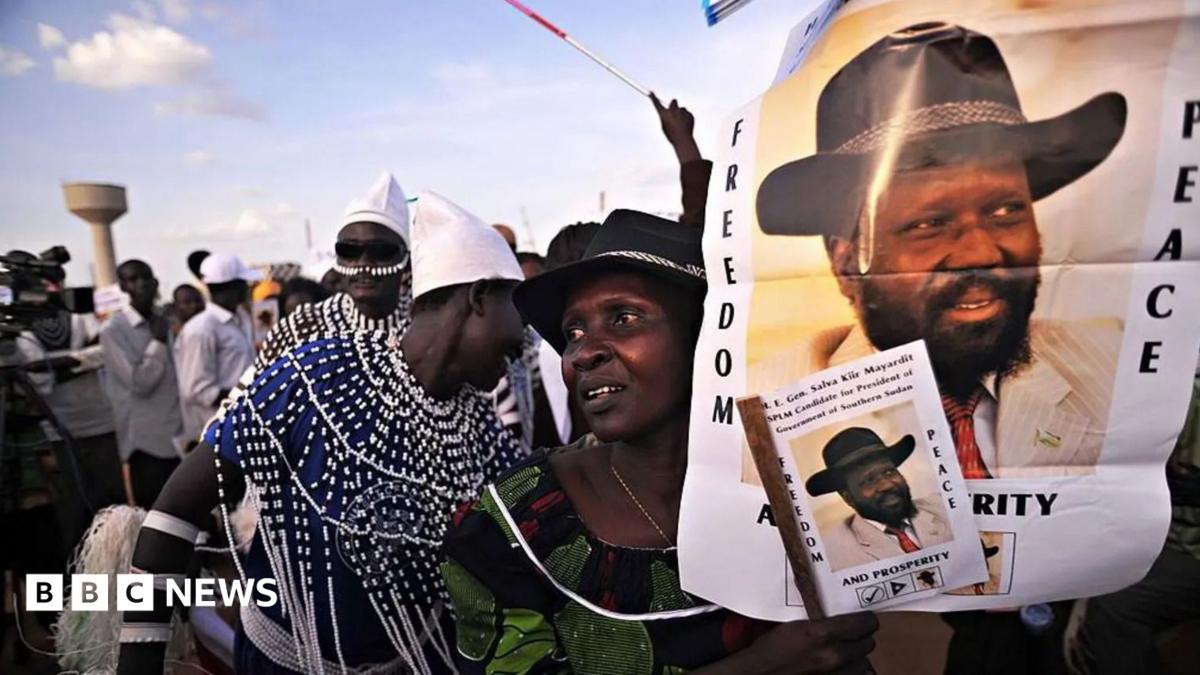
Kiir last week dismissed the chairman of the national elections commission, Abednego Akok Kacuol, without giving a reason. He was replaced by the commission’s secretary-general, Gabriel Bol Deng.
Akok had said in August that the commission needed $250m (£190m) to conduct the election but had received only $21m.
The main opposition group, the Sudan People’s Liberation Movement in Opposition (SPLM-IO), the party of Machar, said on Thursday it would not take part in the polls.
It has written to the African Union and other agencies warning that the country had entered a “constitutional and legitimacy crisis”.
“We will not participate in, validate, or lend legitimacy to an electoral process held without key constitutional, security and legal reforms,” the party said in the letter.
“Parts of the country remained outside of the government’s control and we are wondering how people in those areas would be able to vote,” acting SPLM-IO chairman Nathaniel Oyet told the BBC.
“This means that the the elections are a way for Kiir to seek legitimacy,” he said.
The body which oversees implementation of the 2018 peace agreement, the Reconstituted Joint Monitoring and Evaluation Commission (RJMEC), said South Sudan had entered a “critical phase”.
It said several key talks under the agreement remained incomplete and urged the parties to agree on a path towards credible elections and a peaceful end to the transitional period, which has lasted since independence.
The latest 24-month extension was due to end on 22 February 2027.