1
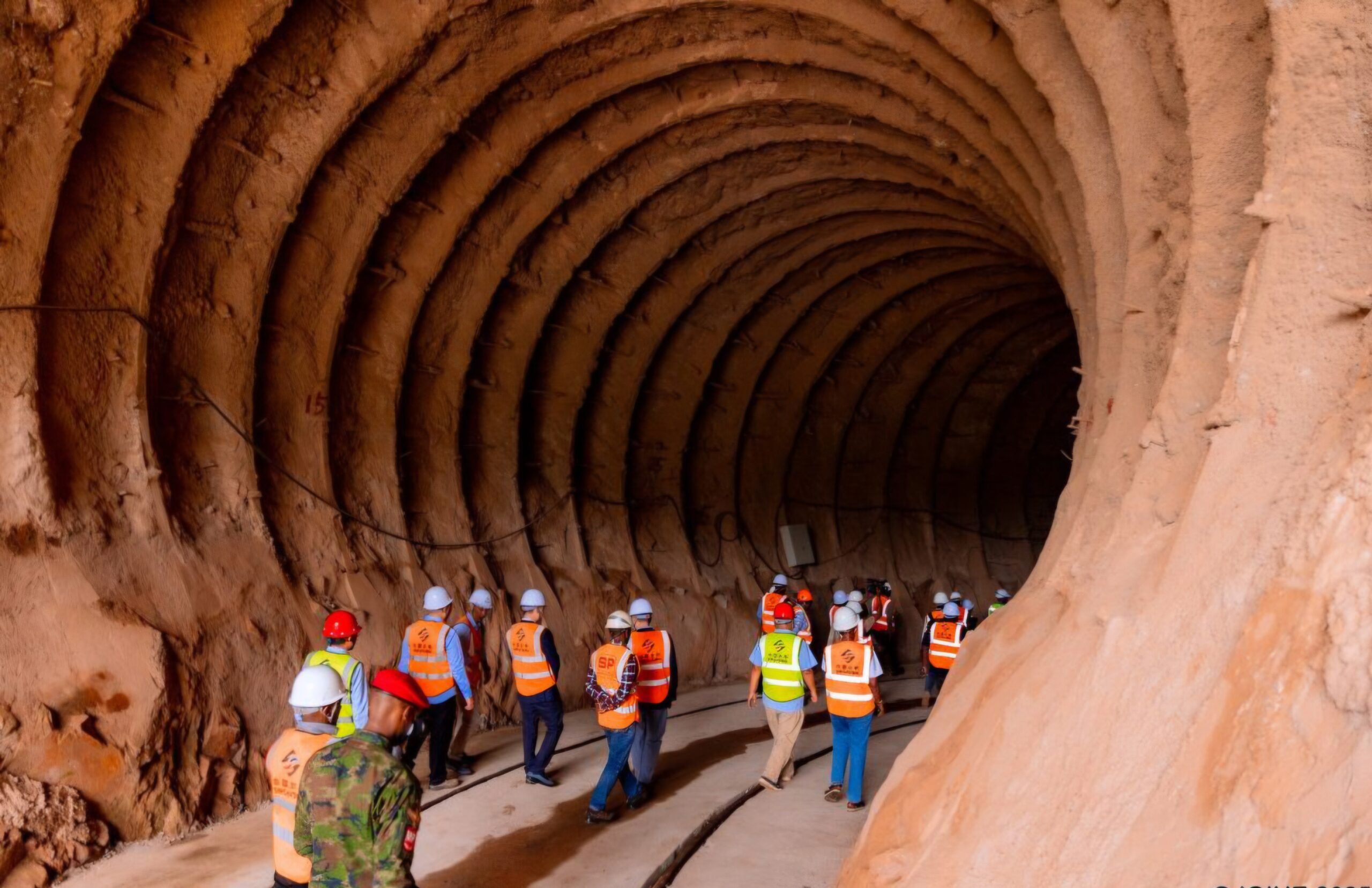
Construction work is advancing on the new Nyabarongo II hydropower plant Gakenke district, to 43.5MW to national grid. However, the dam will depend on Nyabarongo river that has several other dams upstream.
Government of Rwanda plans to add more than 500 megawatts of electricity generation capacity by 2029, with solar power expected to play a major role in reducing shortages during the dry season.
The government says it is expanding and diversifying electricity sources as falling water levels reduce hydropower generation during the dry months.
Infrastructure Minister Damien Murwanashyaka told the Senate Commission on the Economy and Finance on September 22 that hydropower production can fall to almost half of normal levels during the dry season.
“We have the required capacity and we are working on it so that by 2029 this problem will have been resolved,” Murwanashyaka said.
Rwanda currently has 472 megawatts of installed generation capacity, according to Rwanda Energy Group (REG). Under government plans, another 523.73 megawatts will be added by the end of the second National Strategy for Transformation (NST2) period in 2029.
Solar power will account for the largest share of the new capacity, with 300 megawatts planned. Another 165 megawatts will come from methane gas and 58.76 megawatts from hydropower.
The government is also exploring battery storage so that solar electricity generated during the day can be stored and used when demand is higher or other sources produce less power.
“We are working on a system that allows us to store electricity generated during the day so that it can be used when it is needed,” Murwanashyaka said.
The plans came under scrutiny from senators, who questioned whether the government can deliver the projects quickly enough and whether electricity access figures reflect what households actually receive.
Senator Fulgence Nsengiyumva, chairperson of the Senate Commission, said installing electricity poles at a cell administrative office should not be counted as providing electricity to all residents of that cell.
“Taking electricity to the cell office does not mean that the 2,000 residents have received electricity,” he said.
He also questioned why the predictable dry season continues to cause power shortages.
“You already know that the dry season will come. Why don’t you plan for it early?” he asked.
Senator Frank Habineza said some electricity projects were still at the planning or procurement stage, despite the government’s 2029 deadline.
“Your plans are good, but I am concerned because the time you have given yourself to solve these problems is short, while many projects are still on paper,” Habineza said.
He called for a more flexible electricity system in which solar and other sources could compensate when conventional generation falls.
Senator Rose Mureshyankwano raised a separate concern over the maintenance of solar systems installed in households. She said some residents struggle to find technicians and spare parts when their equipment breaks down.
The government currently says about 88% of Rwanda’s households have access to electricity. Its target is to reach 100% by 2029.
Twenty-five administrative cells remain without electricity. Murwanashyaka said they would be connected by the end of the 2026/27 financial year.
Rwanda is also looking beyond generation. The government plans to work with private companies to increase local production of equipment used in energy projects, including cables and solar equipment.
The government has ruled out relying heavily on diesel generators to address dry-season shortages. Murwanashyaka said their high operating costs would make them an unsustainable solution.
Instead, Rwanda is prioritising hydropower, solar, methane gas and peat over the next five years. Nuclear energy, he said, is expected to enter testing only after 2030.
The broader challenge is to increase electricity supply while keeping prices affordable.
Murwanashyaka said electricity tariffs would be much higher if the market alone determined prices. He said the government therefore continues to support REG to keep electricity affordable for households.
He also said tariffs for small industries, including maize-flour producers, could be reviewed because they currently pay rates similar to those charged to larger industries.
The government’s electricity strategy therefore faces two parallel demands: expanding supply fast enough to eliminate shortages and ensuring that new connections translate into reliable electricity for households rather than infrastructure alone.
Visited 1 times, 1 visit(s) today