The expansion of higher-speed track infrastructure has been significant. Indian Railways is looking to up the average speed of trains and the length of railway tracks that are now capable of speeds of 130 kmph and above has nearly jumped five-fold since 2014. Yet, the overall punctuality remains at 77% in 2025-26, with only 3 zones recording punctuality above 90%.According to recent Ministry of Railways data released, about 54,600 km of railway tracks were renewed between 2014 and February 2026, with track renewal and upgrading being carried out based on factors such as the age, traffic load and condition of the track.
Indian Railways’ track upgradation
The expansion of higher-speed track infrastructure has been significant. In 2014, only 5,036 track km, or 6.3% of the network had a sectional speed potential of 130 kmph or above.By early August 2026, this had increased to 24,173 track km, accounting for 22.5% of the network.This is an almost 5 times increase from 2014 in the share of tracks in the 130 kmph-and-above category. At the same time, the length of track in the 110-130 kmph category rose from 26,409 km in 2014 to 62,036 km in February 2026. Taken together, more than 80% of the network had a sectional speed potential of 110 kmph or above.
Upgradation of railway tracks
Indian Railways attributes the improvement in speed potential to a range of track and maintenance measures, including the use of thicker rails and switches, longer welded rail panels, improved welding technology, mechanised track maintenance, rail-grinding machines and advanced systems for monitoring track condition. Track inspection and maintenance data are also being integrated through the web-enabled Track Management System to improve maintenance planning.
Punctuality concerns
Punctuality has also shown some improvement, but concerns remain. Earlier this year, Indian Railways said that the overall punctuality stood at 73.62% in 2023-24, rose to 77.12% in 2024-25, and reached 77.24% in 2025-26 up to February 2026.During the same period, 24 railway divisions recorded punctuality of more than 90%, while another 19 divisions recorded between 80% and 90%.Railways has cited several measures behind the improvement, including real-time monitoring, timetable rationalisation, scientific analysis of train schedules, integrated maintenance blocks, high-capacity locomotives and advanced IT systems.To tackle fog-related delays, 29,848 GPS-based Fog Safe Devices had been provided to locomotive pilots as of January 31, 2026. A Modified Semi-Automatic Stop Signal system has also been introduced for operations during poor visibility.However, punctuality continues to face operational constraints. Indian Railways runs around 25,000 trains a day, with passenger, suburban, freight and other services sharing routes. Congestion on heavily used corridors, maintenance requirements, fog, path constraints, alarm-chain pulling, agitations, cattle run-over and other unforeseen events can affect train timings. The ministry is also increasing network capacity through new lines, gauge conversion and doubling or multitracking projects.
Vande Bharat trains and bullet trains
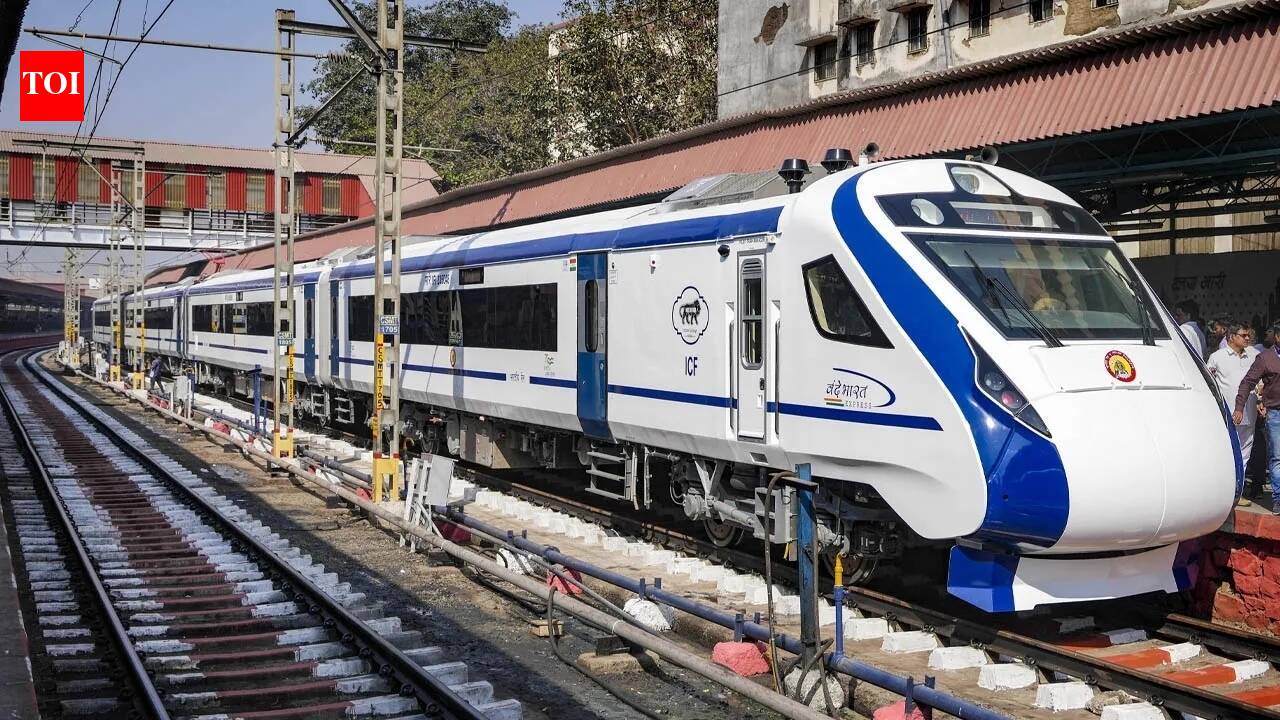
Rajdhani and Shatabdi Express trains are capable of running at speeds of 160 kmph but very few sections on the Indian Railways network allow for that operational speed. On most high-density routes, the maximum speed continues to be 130 kmph, that too not throughout the route.With the launch of the Vande Bharat Express trains, the average speed is expected to improve since the train set allows for faster acceleration and deceleration. However, speed is not just a function of the train set, but a lot of factors such as track capability, signalling infrastructure, and even fencing on routes where open tracks can lead to cattle casualties at higher speeds.Now, Indian Railways is looking to launch its first bullet train which will run on a dedicated track, allowing for higher speeds.