- Australian authorities disrupted an alleged wildlife trafficking ring in Sydney, seizing 36 reptiles and about AU$300,000 (more than $215,000) in cash and gold bullion.
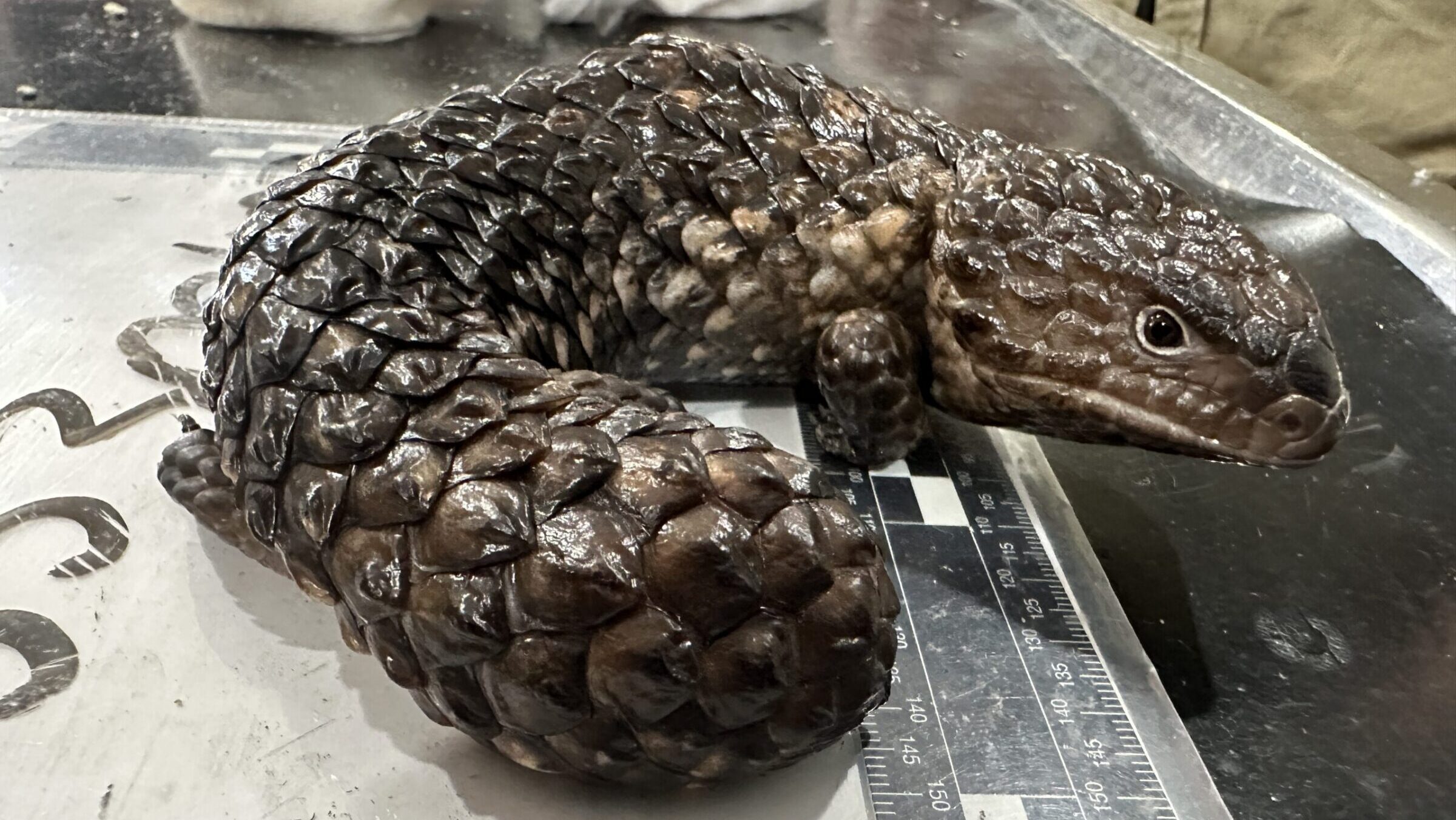
- The animals included 28 native Australian reptiles, including shingleback lizards, spiny-tailed skinks and lace monitors.
- This bust was the first major wildlife crime operation conducted by the National Environmental Protection Agency (National EPA), Australia’s new federal environmental regulator.
- The National EPA alleges native reptiles were supplied to foreign nationals for illegal export.
See All Key Ideas
In Australia in May 2026, Yang Zeng, a 28-year-old Chinese national who was unlawfully in the country, was sentenced to two and a half years in prison. Zeng was convicted on nine charges related to the illegal export of native wildlife to Hong Kong, according to Australia’s Department of Climate Change, Energy, the Environment and Water (DCCEEW), the government agency in charge of wildlife.
The animals targeted included saw-shelled turtles (Myuchelys latisternum), Cooper Creek turtles (Emydura macquarii emmotti), blue-tongued lizards and magnificent tree frogs (Pelodryas splendida). Investigators found that the man used a fake animal keeper license to obtain the reptiles.
Between September 2024 and May 2025, Zeng used couriers and international companies to handle international shipping and customs, according to DCCEEW. The animals were stuffed into socks and hosiery, wrapped in foil and hidden inside parcels alongside items including bags of dog food.
Environmental crime investigators also seized five native turtles — three saw-shelled turtles and two long-necked turtles (Chelodina longicollis) — that were found swimming in a bathtub during a search of a property in a suburb of Sydney.
Under Australian law, exporting native wildlife, including eggs, without a permit is illegal.
A joint federal and state operation in Australia uncovered alleged Sydney wildlife trafficking ring and confiscated reptiles, cash, and silver and gold bullion worth around $300,000. Image courtesy of the National Environmental Protection Agency.
The case offers a glimpse into an illegal trade that often remains hidden until animals are intercepted at the border, at airports or when trafficking networks are uncovered.
But the country now has a new agency to fight wildlife crime. On July 1, 2026, Australia launched the National Environmental Protection Agency (National EPA) with a mission to “strengthen oversight” and “modernise national environmental regulation.” It’s Australia’s first independent national environmental regulator.
Trafficking penalties don’t match maximums
Zeng’s sentence was broadly in line with another recent wildlife-trafficking case: In September 2025, Zipeng Huang, another Chinese national was sentenced to two years and 10 months in prison and given a $5,000 fine for trafficking native wildlife. Huang had attempted to mail 27 Australian reptiles to Hong Kong, hidden inside socks and boots in nine separate parcels.
In a more recent case in August 2026, a 42-year-old Vietnamese woman, Thi Ngoc Huong Chu was convicted of attempting to smuggle more than 50 fertilized emu eggs on commercial flights from Australia to Vietnam, where they are consumed as a culinary delicacy. The eggs were seized and destroyed before they left Australia. Her conviction resulted in a AU$5,000 ($3,600) fine.
Thi Ngoc Huong Chu, a woman from New South Wales, was convicted and fined $5,000 for trying to smuggle more than 50 fertilized emu eggs to Vietnam. Image courtesy of the National Environmental Protection Agency.
The length of each of these sentences and the fine levied were substantially below the maximum available under Australian federal environmental law. Smugglers who export animals without a permit can face 10 years in jail and fines up to AU$364,000 ($260,000). Handling property or money acquired through criminal acts can land the perpetrator in prison for up to 25 years.
But recent cases show sentences can vary considerably. In February 2026, Sydney resident Neil Simpson, 61, was sentenced to eight years in prison — the longest sentence ever imposed on a wildlife smuggler in Australia.
Simpson’s case combined three separate charges of attempting to export live native reptiles to Hong Kong, Romania, South Korea and Sri Lanka between 2018 and 2023, according to DCCEEW. Investigators seized 101 live reptiles, and later, hundreds more were confiscated as part of two undercover investigations: lizards, skinks and dragons.
Simpson hired others to ship the packages and three other members of what the environmental agency called a “criminal enterprise” were also convicted.
Conservationists will closely watch a new case: On September 4, a 21-year-old Chinese national was arrested and charged with attempted smuggling of 163 native reptiles from Sydney to Hong Kong.
Australian wildlife targeted by traffickers
An extraordinary diversity of wildlife has evolved on this continent, including reptiles, frogs, birds and mammals found nowhere else on Earth. Some of these species are highly sought after by overseas collectors, particularly bird eggs and reptiles.
Although commercial exports of live native reptiles have been prohibited for decades, they remain popular — and present — in the international pet trade, according to a recent study in the journal Conservation Science and Practice. The recent seizures of blue-tongued lizards, magnificent tree frogs and turtles are examples.
Traffickers also smuggle exotic species into the country.
In its first major wildlife crime investigation, the new National EPA seized native and exotic reptiles, and AU$300,000 (more than $215,000) in cash, gold and silver bullion, reportedly on July 16, 2026. In addition to 28 native species, officers found a North American hognose snake and a ball python (Python regius), both highly regulated, non-native species.
In its first major operation since being established on July 1, Australia’s National Environmental Protection Agency seized reptiles, including hognose snakes and ball pythons. Image courtesy of the National Environmental Protection Agency
Now, experts say the trade is expanding. “Australian reptiles have always been common and attractive in the exotic pet trade,” said Phill Cassey, director at the Wildlife Crime Research Hub. We’re also seeing a rise in non-native pet species coming … into Australia, including mammals and most recently a big rise in the popularity of insect and invertebrate species – including spiders, scorpions, cockroaches and ants.”
Authorities say they intercepted 113 exports involving 1,250 native wildlife specimens during the 12-month period ending in May 2026, according to DCCEEW, the wildlife agency.
“Illegal trade of Australia’s native wildlife is a serious crime,” said Dani Yannopoulos, who heads the National EPA’s environmental permitting and compliance division, in a media release published on August 22, 2026 “Australia’s native wildlife is precious and we are working closely with [Australian] Border Force and international partners to stop those who attempt to exploit it through the illegal wildlife trade.” The Border Force is tasked with protection of Australia’s borders as well as customs.
But it’s a lucrative business and the profits can be substantial. “Wildlife trafficking is worth about $30 billion a year in the East Asia and Pacific region alone,” said Tanya Plibersek, Minister for the Environment and Water, in a press release. “The price of Australian reptiles on the international black market can be more than 28 times the domestic price.”
Native lizards that sell legally for AU$100-400 ($72-$287) in Australia can command AU$1,000-20,000 (roughly $715-$14,300) overseas.
Wildlife is smuggled aboard planes and shipped via commercial courier services. Image courtesy of the National Environmental Protection Agency.
Public concern about wildlife trafficking
There’s widespread concern about illegal wildlife trafficking, but limited knowledge of the problem, according to a 2026 survey conducted by the International Fund for Animal Welfare (IFAW) and Wildlife Crime Research Hub at Adelaide University. Some 86% of respondents were worried about illegal wildlife trafficking, though 64% said they knew little about it.
Meanwhile, 22% of respondents had never heard of illegal wildlife trafficking, highlighting what researchers say is significant.
“Public awareness is one of the most powerful tools available to deter wildlife trafficking,” said Katie Smith, who serves as program manager at the Wildlife Crime Research Hub, in a press release for the survey. “The more people understand how the illegal wildlife trade operates, the better equipped we are as a society to prevent it.”
Cracking down
In 2023, the Australian government upped its efforts to tackle the illegal wildlife trade by expanding DCCEEW’s Environmental Crime Team, according to the department.
By late 2024, the Australian government reported more than 200 export seizures at the country’s borders and 18 arrests over an 18-month period. In a media release at the time, Environment and Water Minister Tanya Plibersek said, “We know Australia’s wildlife are highly lucrative to criminals and organized crime syndicates, especially those animals that are already vulnerable or threatened with extinction.”
This lace monitor was confiscated as part of a larger investigation dubbed Operation Athos. Australia’s unique native wildlife, particularly reptiles, are highly sought after by criminal networks operating in the global illegal pet trade. Image courtesy of the National Environment Protection Agency.
As traffickers target a widening range of species and adapt the ways they move them, Australian authorities face the ongoing challenge of disrupting the networks while reducing the demand that makes the trade profitable.
For the newly established National EPA, prosecutions are intended to make the consequences of wildlife trafficking increasingly difficult to ignore.
“This sends a clear message: If you take part in the illegal wildlife trade, you risk serious penalties,” the National EPA’s Dani Yannopoulos said.
The recent crackdowns are raising the risks for traffickers, but the incentives and forces driving the trade — high profits and international demand — remain.
Banner image: In a joint federal and state operation in Australia, enforcement officials recovered 28 native reptiles, including shingleback lizards, pictured, spiny-tailed skinks and lace monitors. Image courtesy of the National Environmental Protection Agency.
Australian authorities seize 100,000 live cockroaches in crackdown on exotic insect trade
Already disappearing, Southeast Asia’s striped rabbits now caught in global pet trade
Asia now hub of growing illegal wildlife trade across 100+ countries, study shows
Citation:
Chekunov, S., Anderson, R. O., Prowse, T. A. A., Measey, J., Toomes, A., & Cassey, P. (2026). Cold-blooded commerce: Characterizing and predicting trade in Australian squamates. Conservation Science and Practice, 8(4), e70233. doi:10.1111/csp2.70233
FEEDBACK: Use this form to send a message to the author or editor of this post. If you’d like to post a public comment, you can do so at the bottom of the page.
Cite this article
Johan Augustin (2026). Reptiles, gold and money: How Australia is cracking down on wildlife trafficking. Mongabay Conservation news. DOI: https://doi.org/10.66709/news-329866