By Amanda Williams
The state task force convened by Gov. Jared Polis to address the outbreak of a destructive beetle released a draft list of recommendations Tuesday.
The Ponderosa Mountain Pine Beetle Task Force was launched in December 2025 to come up with solutions to slow the spread of the mountain pine beetle, which is decimating ponderosa forests across the Front Range.
The group, which includes dozens of people from different state agencies, universities and conservation groups, has been meeting since February, and is facing a fast-approaching deadline to make recommendations in time for next year’s legislative session.
The task force only formally approved one of the more than 20 suggested recommendations, leaving the rest for a future meeting.
Out of the ideas on the draft list, the task force discussed their top five on Tuesday, including building forestry workforce training programs, incentives for increasing logging and processing of beetle-kill timber, and improving statewide fire resource planning.
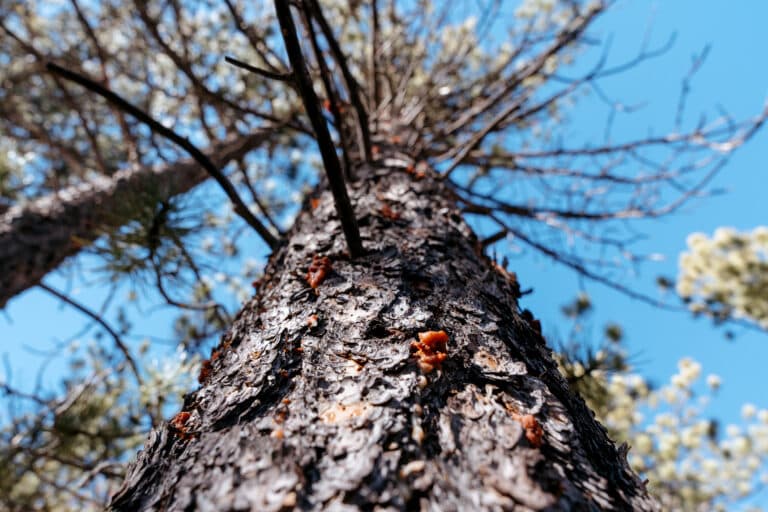
The one area of agreement was the need for accessible information on just how bad the outbreak is. State entomologist Dan West is one of the researchers who fly criss-cross patterns over Colorado’s forests every year to record the patches of rust-colored and dead pines, the most obvious signs of beetle kill.
“The purpose of [the flights] is for early detection and rapid response, and without knowing where things are, how can you possibly have a rapid response or in any way mitigate it?” West asked.
Members of the task force are also worried about protecting the data on pine beetle kill that already exists. It’s housed on a federal interface and could be deleted at any time.
“If you want science and research you need data,” said Brett Wolk, the associate director of the Colorado Forest Restoration Institute. “We just want to make sure the data is there.”
Issues with federal staffing, certified pilots and budgets led to a smaller coverage area in 2025, according to the task force documents. West said they won’t be able to cover the whole state this year either. The 2026 surveys are ongoing and aren’t expected to be finalized until November.
Becky Duffyhill for CPR NewsDan West, Colorado State Forest Service Entomologist, picks up a tiny mountain pine beetle larva from a lodgepole mountain pine tree with tweezers in Gold Hill, west of Boulder. Feb. 6, 2026.
West noted that some states started keeping track using their own systems, but the task force recommendation didn’t go that far. Instead it voted to recommend the state prioritize working with federal agencies to make sure those aerial flights continue to happen and the data is available into the future.
At the end of the day, these are only recommendations until Gov. Polis or the legislature take up the issue. And there was some hesitation about whether any recommendations for new funding sources would be dead on arrival with the legislature’s $1.5 billion deficit.
Workforce was a primary point of discussion around a recommendation to build on a stalled house bill to boost forestry and firefighter capacity with apprenticeship programs. The group also punted on their second highest priority item: a public-facing document illustrating how mountain pine beetles and fire interact. While it seems obvious that more dead trees, killed by beetles, would increase fire risk — the science is nuanced.
Another recommendation sent back to the drawing board involved tax credits or grants for a new wood processing facility to mill and destroy beetle-killed timber. There was also some tension between how many of these recommendations should focus on the Front Range, where the current beetle outbreak lives, or encompass a statewide solution.
The goal is to “not be back in this room 10 years from now, talking about a different epidemic,” Brad White, fire chief for Grand Fire Protection District No. 1. “The solutions this group comes up with should be valid for the Front Range, and should also be scalable and help with future situations.”
The full list of recommendations includes wildfire mitigation funding, local outreach, reducing weight restrictions on logging trucks to reduce transportation costs and more.
Some of those will be on the agenda at the next task force meeting on November 2.