GAROWE, SOMALIA – Puntland says the United States struck an al-Shabaab weapons and ammunition store at Markad in the Cal Madow mountains on Thursday 17 September, and its statement said Puntland security institutions coordinated the operation. The government described the site as a depot supplying attacks against Puntland and the rest of Somalia, but released no imagery, casualty figure, damage assessment or weapons inventory. United States Africa Command has issued no public account of a strike at Markad. Puntland’s announcement therefore supplies the only official version presently available: a claimed American attack, a named target and direct coordination with Garowe, without public American confirmation of any of the three.
Markad Enters Puntland’s Published Security Record
Puntland’s 17 September account places Markad in the Golis section of Cal Madow and identifies the target as a facility used to store weapons, ammunition and other military supplies. The statement as reproduced on Thursday says the material supported al-Shabaab operations and attacks, and that the strike formed part of a continuing effort to deny the group secure locations in northern Somalia. Markad appears twice in the public account, first as a settlement and then as the location of a logistical node. No commander, unit or intended operation was associated with the alleged depot.
On 17 September, Puntland’s counter-al-Shabaab command separately claimed that the operation inflicted heavy losses. The published Somali-language account of that claim supplies no number of dead or wounded, and it says no independent detail establishes the scale of the loss. The same gap covers the weapons. No list identifies the ammunition said to have been destroyed, while the platform, munition and point of impact remain undisclosed. No hospital record, burial notice or al-Shabaab statement has supplied a separate count. The available record establishes that Puntland announced an operation at Markad and attributed it to the United States; it cannot establish the physical result on the ground.
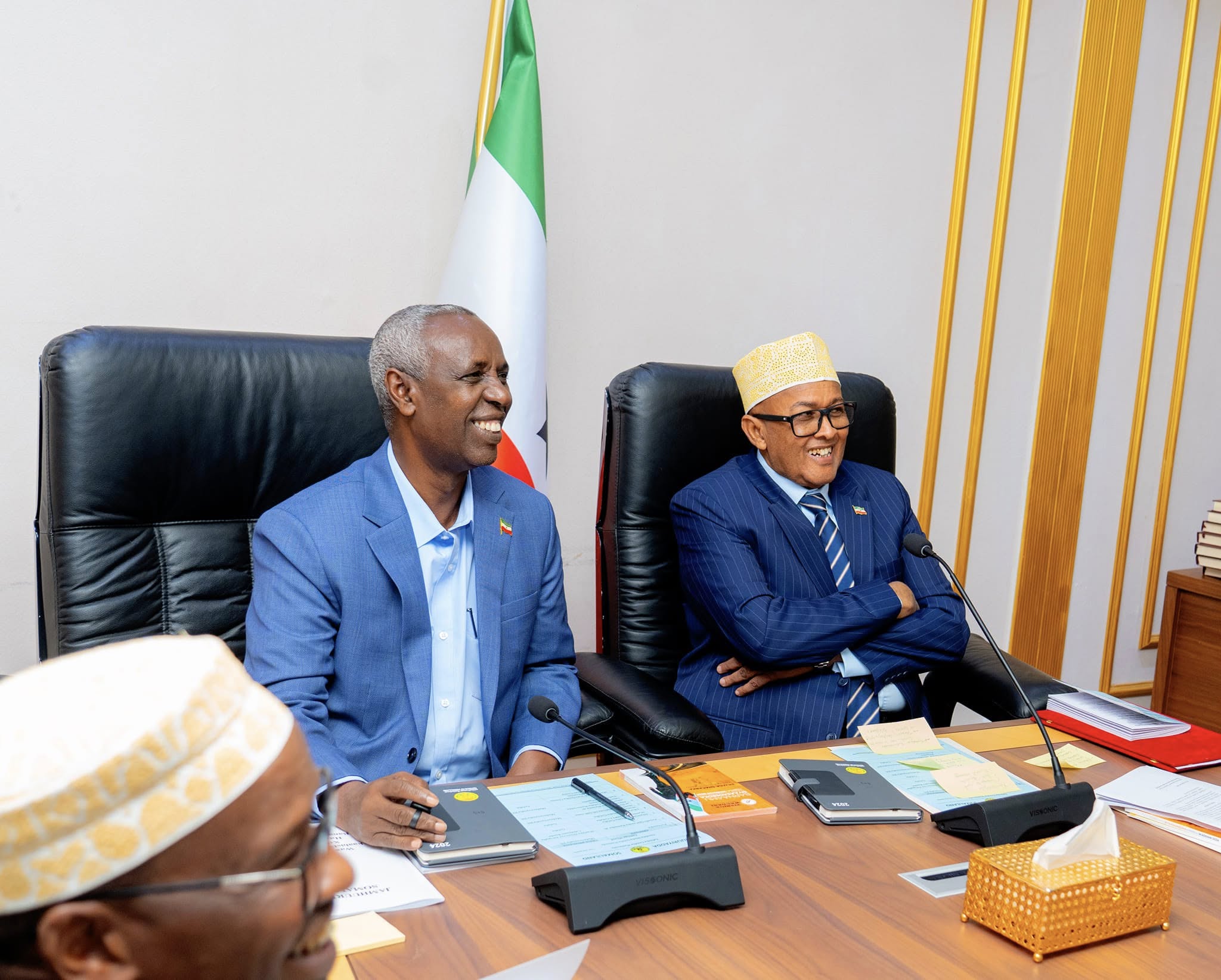
The 2 August Bosaso agreement gives direct coordination a longer paper trail than the strike itself. President Said Abdullahi Deni met the American special operations commander in Bosaso and signed an agreement expanding counterterrorism and maritime cooperation. On 31 August, another American delegation discussed joint operations against the Islamic State and al-Shabaab in the Calmiskaad and Cal Madow ranges, training for Puntland forces and plans for an American facility at Bosaso. Puntland published named commanders, cabinet attendance and stated agendas for both encounters. Its account of Markad places an operation inside the geography named at those meetings seventeen days after the second one.
Markad Lies Inside a Two-Range Campaign
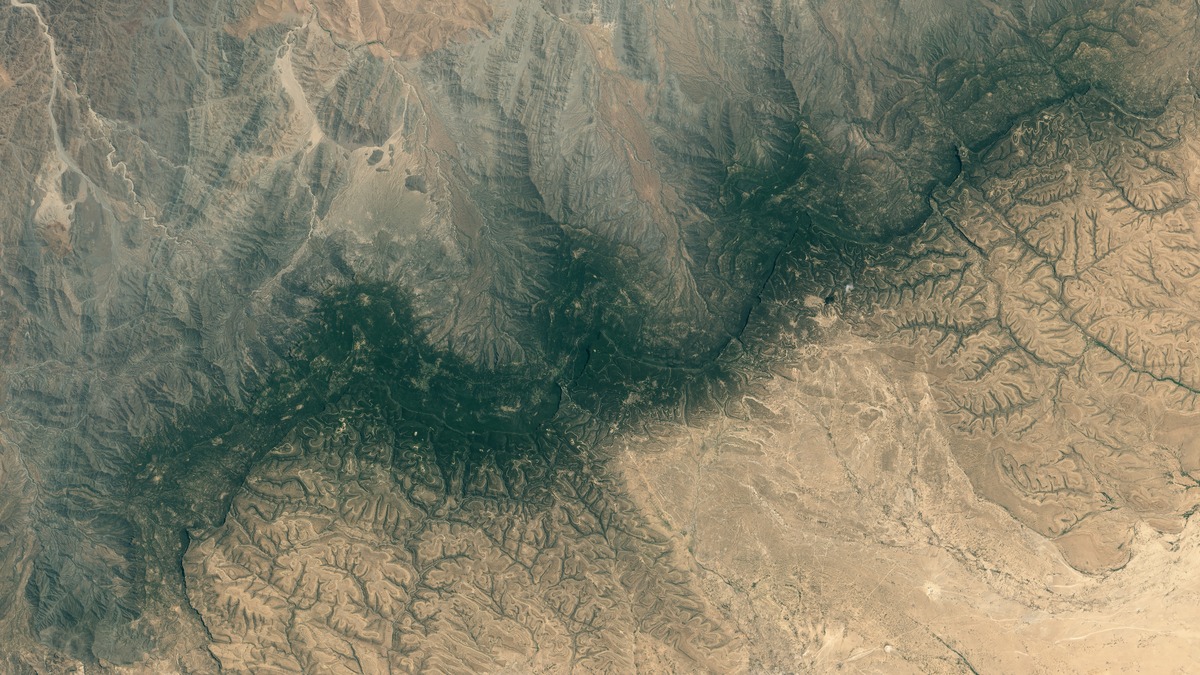
Markad sits in the mountain country west of the Calmiskaad battlefields where Puntland has concentrated much of its recent campaign against the Islamic State. The wider Cal Madow range rises sharply behind the Gulf of Aden coast, and a Landsat survey of its ridges and forested heights shows the broken terrain through which small settlements, tracks and wooded valleys run. Puntland’s statement locates the alleged al-Shabaab store at Markad in that landscape. A depot there could serve fighters moving between interior routes and the northern coast, though no publicly released imagery identifies the building described in the announcement.
Across Cal Madow and Calmiskaad, Puntland has treated the two ranges as connected security theatres with different principal enemies. The Islamic State has held caves and camps in Calmiskaad east of Bosaso, while al-Shabaab has maintained a smaller northern presence through parts of Cal Madow. American aircraft supported Puntland’s Operation Hilaac against Islamic State positions through 2025 and 2026. The Markad account assigns the latest operation to the al-Shabaab file, extending the cooperation developed around the Islamic State campaign toward the older insurgency in the western mountains. A public strike record would show whether that extension has become regular or remains a single reported operation.
In August, armed politics also reached the approaches to those ranges. The Calmiskaad Defence Forces moved into the Xumbays country, outside Puntland’s command and near an Islamic State logistics corridor, while elders tried to prevent fighting with state forces. Markad lies farther west and carries a separate al-Shabaab claim, yet both episodes concern who controls armed movement through northern mountain districts. Puntland’s declared arrangement gives its own institutions the ground role and American forces the aerial one. The 17 September statement presents Markad as the product of that command relationship, without naming the Puntland unit that supplied intelligence or verified the target after the strike.
AFRICOM Has Yet to Put Markad on Its Ledger
AFRICOM’s public strike record showed no Markad entry by Friday 18 September. Its most recent Somalia release concerned an al-Shabaab facility struck on 14 September, and the command said that operation was coordinated with the Federal Government of Somalia. A search of the command’s current Somalia releases lists further strikes on 4, 5 and 8 September with the same federal coordination formula. The command’s media page was last updated on 15 September during the reporting window. None of those entries names Puntland, Cal Madow or Markad. Public silence leaves the Puntland statement uncorroborated by the American institution said to have conducted the attack.
Puntland’s wording departs from that recent formula because it assigns coordination to its own security institutions and speaks for both governments in confirming success. Garowe used similarly direct language after the 31 August Bosaso meeting on joint operations, while the American side left Puntland to publish the encounter. Markad extends that pattern from a meeting room into an alleged strike. AFRICOM may still issue a delayed release, as it has done after earlier Somalia operations, but its current public ledger supports no American claim about the target, the partner authority or the result.
Confirmation from AFRICOM would settle the aircraft and the coordination claim while leaving the battle-damage account open to separate scrutiny. A release could identify the date, approximate location, targeted organisation and Somali partner without disclosing the weapon or intelligence source. Puntland could also publish post-strike imagery, an inventory of destroyed materiel or a field report from the unit that reached Markad. Until either record appears, the strongest established fact is the announcement itself: Puntland has put its name, its security institutions and its relationship with the United States behind a claimed operation at Markad, and the United States has yet to put the same operation into its own public record.