Written by Bojana Anđelić and Vuk Z. Cvijić
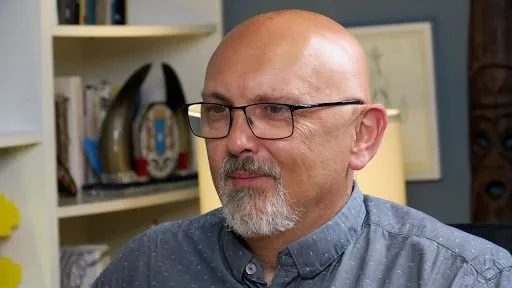
In its crackdown on dissenters, the outgoing administration of the Serbian Progressive Party has gone so far as to begin shutting down vital institutions. Citing an administrative error in a seven-year-old employment contract, the Ministry of Health – led by Zlatibor Lončar – has banned Professor Oliver Stojković, who heads the genetic laboratory at the Milovan Milovanović Institute of Forensic Medicine, from working. Consequently, the laboratory has been temporarily closed because Professor Stojković was its sole expert.
The danger and irresponsibility of the Ministry of Health’s actions become starkly apparent when considering that, prior to this ban, DNA analyses conducted at this laboratory were used to identify the remains of deceased persons, apprehend criminal offenders, establish disputed kinship relations, and perform laboratory testing as part of diagnostic procedures for bone marrow transplant oncology patients and pregnant women. Such a move jeopardises public health as well as crime investigations and court proceedings.
Professor Oliver Stojković, of the Faculty of Medicine, has headed the genetic laboratory at the Milovan Milovanović Institute of Forensic Medicine for over 20 years and is one of our most distinguished experts in this field. He has performed DNA identifications in thousands of cases: from the victims of the RTS bombing and the remains of Ivan Stambolić to mass graves across the former Yugoslavia and the identification of the body of Aleksandar Nešović Baja, who was killed in the 27 restaurant. He was also part of the team of experts that identified the first patient in Serbia to die of COVID-19, who was admitted to hospital on 5 February 2020.
None of this mattered to the Ministry of Health, as Professor Stojković had fallen out of favour with the regime. In an interview with Radar, he explains that it all actually began shortly after the student protests started, when the Teaching and Scientific Council of the Faculty of Medicine voted almost unanimously to support the students’ demands.
“The revenge of the state, the Government, and its ministers – above all Zlatibor Lončar and the outgoing Minister of Education, Dejan Vuk Stanković – soon followed. We received a decree reducing the proportion of research activities at faculties fourfold, from 20 to 5 hours per week. Although the vast majority of teaching staff and employees at the faculty supported the students, the retaliation was targeted at those who did so publicly,” says Professor Stojković.
The Ministry of Health seized upon an administrative error to settle scores with the disobedient professor. Consequently, on 31 August 2026, the Institute of Forensic Medicine notified the courts – including the High Court in Belgrade – that it could no longer perform DNA analyses until further notice. Radar has had sight of these notifications, which prompted our interview with Professor Stojković. The reason cited for the Institute’s inability to perform DNA analyses is a ruling by the Biomedicine Directorate of the Ministry of Health banning Professor Stojković from working, without any additional explanation.
“The Directorate’s ruling contains no findings regarding substandard work, faulty DNA analyses, or the unreliability of laboratory results; rather, it refers exclusively to the legal basis of my employment in the laboratory,” our interviewee explains. “Specifically, in the reasoning of the Biomedicine Directorate’s ruling, inspector Ružica Jovanović relies on my 2019 employment contract with the Faculty of Medicine, which lists the Institute of Human Genetics as the organizational unit of the faculty where I work, and notes that during an inspection conducted in July 2026, the Faculty failed to provide the Ministry of Health with an appropriate contract or other document justifying my engagement at the Institute of Forensic Medicine.”
He adds that he has worked at the Institute since 2005 in associate titles, and since 2006 in teaching titles, ranging from assistant professor to full professor. In all previous contracts – from 2006, 2012, 2013, and 2017 – it was correctly stated, he says, that his teaching duties were performed at the Department of Human Genetics, while his work assignment was at the Institute of Forensic Medicine.
“However, in the 2019 contract, after I was elected full professor and established permanent employment, this clause regarding my work assignment to the Institute of Forensic Medicine was omitted – due, I would say, to an obvious technical oversight. This contract modification had no legal effect, as I continued to exercise all my rights – such as salary calculations, annual leave, absences – as well as my obligations, professional, scientific, and partly teaching duties, at the Institute of Forensic Medicine.
None of the Faculty’s departments – neither the human resources service, the specialist studies service, nor accounting, and consequently neither did I – noticed or rectified this change in the employment contract. It is precisely for this reason that I consider this to be a pure administrative error that went unnoticed and uncorrected,” states Professor Stojković.
The problem arose because the competent services of the Faculty of Medicine refused to rectify the error.
“Throughout July and August, after learning of the existence of this Biomedicine Directorate ruling, I addressed Professor Milena Balint Todorović, who is serving as Acting Dean of the Faculty of Medicine, in writing on multiple occasions, asking her to act in accordance with the Ministry’s ruling and draw up an appropriate legal instrument regarding my engagement at the Institute of Forensic Medicine. I also approached her in person, as well as Ivana Miletić, the new Faculty Secretary, to whom the acting dean directed me. Unfortunately, I received no response to any of my letters.”
Meanwhile, the pressure has not abated. Inspections are being sent to the laboratory on the basis of anonymous complaints. Some were signed, including one by Professor Nina Žigon from the Department of Pharmacology at the Faculty of Medicine. Her report contained a genetic laboratory report for a patient that had been prepared and signed by Professor Stojković. The problem is that she was not authorised to possess that document, let alone share it further.
Asked whether he believes the inspection procedures are part of a political purge, the professor states that there is an obvious pattern of pressure against teachers who publicly support students.
“The government of Professor Macut, now in resignation, continues to settle scores with many other university teachers, particularly at the Faculty of Medicine. The authorities do this through their proxies in various bodies – and in the case of the Faculty of Medicine, particularly through the Faculty Council, the University Clinical Centre of Serbia, the National Ethics Committee, and Ministry of Health inspections. That is my assessment, based on the sequence of events and the experience I have described. For me, the key question is why the problem of my employment engagement – which I pointed out and for which I proposed a concrete solution – was not resolved in a way that ensured the laboratory’s continued operation,” states Professor Stojković, adding that he expects the pressure to continue.
“Personally, as things stand, I will continue my career where the administrative error in my employment contract intended: at the Institute of Human Genetics. This will not be the first time I have had to build laboratory capabilities for this work from the ground up. Until then, I will continue with my professional activities as a forensic genetic expert, because these tasks are not exclusively tied to a laboratory, just as forensic medical examinations are not confined solely to the autopsy room,” our interviewee notes.
The lingering problem is the fact that the genetic laboratory of the Milovan Milovanović Institute of Forensic Medicine will remain closed until further notice, which will complicate or prevent the execution of requests from prosecutors, courts, and clinics.
Regarding the ban on Professor Stojković’s work and the practical shutdown of the DNA analysis laboratory at the Institute of Forensic Medicine, we spoke with experts from the judiciary and the police.
Ivana Ramić, a judge at the High Court in Belgrade, says that it is extremely irresponsible to effectively shut down one of only four DNA analysis laboratories in Serbia.
“These are laboratories covering the whole of Serbia, and each of them handles a large volume of expert examinations. Such DNA forensic analyses are highly complex and require expert personnel as well as appropriate equipment. Now, one laboratory is being shut down, and not only does this halt a significant number of expert examinations, but it also prevents a great many other matters that are vital to the citizens of Serbia,” says Judge Ramić.
Her colleague from the High Court, Judge Aleksandar Trešnjev, notes that this decision to ban operations will cause delays in ongoing court proceedings.
“If the parties to the proceedings request clarification on certain aspects of an expert report and the court deems it necessary, an expert from the institution where the examination was conducted must be summoned. In this specific case, the DNA expert from the Institute of Forensic Medicine will now be unable to attend, explain, and testify. If you do not have an expert from the institution where the examination was performed, and their hearing is necessary, such an expert report will lose its evidentiary value. In cases where it is necessary to hear an expert, and that is now impossible, a new expert report will have to be commissioned. Clearly, this will slow down certain proceedings,” Judge Trešnjev explains.
Bojana Savović, a public prosecutor at the High Public Prosecutor’s Office in Belgrade, commenting on the ban on Professor Stojković’s work, says it is evident that the authorities in Serbia do not shy away from any means nor consider the consequences when dealing with individuals who are not to their liking.
“When settling scores with individuals, the regime does not care whether it jeopardises the work of an institution such as the Institute of Forensic Medicine. It is a disgrace that they had only a single geneticist, and now they have been left without even him. Fairness in proceedings is reflected both in the speed with which data is obtained and in the ability to compare the results obtained with other institutions that perform such work. In this way, their number is also being reduced,” says Prosecutor Savović.
Siniša Janković, a retired police inspector, commenting on the suspension of DNA analysis at the Institute of Forensic Medicine, adds that police investigations could also be indirectly brought to a halt.
“By preventing work on DNA analyses, they have tied the police’s hands regarding the most reliable and efficient means of proving criminal offences. DNA analyses are the most reliable item of evidence. Now, performing this work at the Institute of Forensic Medicine – one of our few relevant institutions – has been disabled. We know that in developed countries, DNA samples are now used to solve crimes dating back more than 40 years, making them an essential tool in all modern investigations. It is evident that informal centres of power are interconnected and appear to be acting preventively to obstruct the gathering of evidence – perhaps even concerning planned or already committed crimes,” says former inspector Janković. He adds that he is aware two women responsible for DNA analyses at the Ministry of Internal Affairs have left their jobs, and that the police face a problem because employed experts are poorly paid.
Faculty of Medicine Professor Oliver Stojković recalls that personal, professional, career, and financial damage has been inflicted upon a large number of faculty professors and associates.
“It is costly and painful for each individual, and its aim is to frighten, deter, and force the withdrawal of those numerous members of the academic community who have risen up to defend our society’s most significant institutions. Fear and anxiety certainly exist, but, it seems to me, an even greater fear is present in the ranks of those who have been coerced – through their signatures, actions, and inactions – to participate in this retaliation by the outgoing administration,” concludes Professor Stojković.
It should be borne in mind that the ban on Professor Stojković’s work was issued by the Ministry of Health, headed by Zlatibor Lončar. The outgoing minister is notable for having had his name feature in a final, legally binding conviction against the Zemun clan. In the section of the judgement where the court states it granted credence to cooperating witnesses from the Zemun clan, their statements are quoted in detail describing his cooperation with this criminal group -and even, as the text records, that he killed those who survived attacks by these criminals.
(Radar, 17.09.2026)
https://radar.nova.rs/drustvo/oliver-stojkovic-laboratorija-zemunski-klan/