Adult family home providers raise concerns over state policies
Published 1:30 am Thursday, September 17, 2026
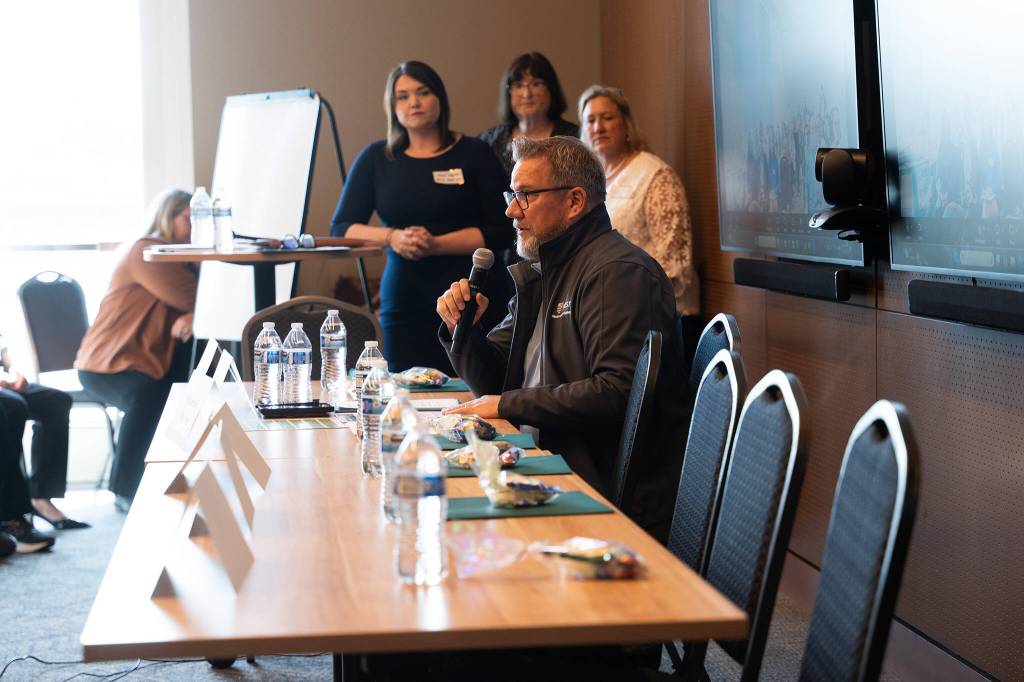
LYNNWOOD — More than 100 people operating adult family homes throughout the state gathered in Lynnwood on Tuesday to discuss state policies that they say are negatively impacting their businesses.
Adult family homes are residential homes that are licensed to care for up to six to eight residents, depending on the type of license. In addition to housing, the facilities provide meals, laundry and personal care.
Caring Adult Family Homes of the North Sound is an independent, grassroots group of adult family home providers in the region. While the event was originally supposed to include five legislators, only State Rep. Sam Low, R-Lake Stevens, was present Tuesday.
Low recalled first learning about adult family homes in the 1970s, when his church bus would pick up adults with disabilities in adult family homes in Everett.
“I would get to ride on the bus and learn about their home life and learn about the situations that they were in, and I continued that for several decades up into the early 2000s,” he said. “This topic is near and dear to my heart. I know there’s a lot of struggles, especially around the reimbursement area, and I want to hear the struggles you’re going through.”
In July, the Washington Supreme Court ruled that a long-standing minimum wage and overtime exemption for live-in caregivers is unconstitutional. On Tuesday, providers said that this change isn’t financially sustainable when combined with low reimbursement rates.
“We support fair pay and protection for caregivers — they are essential to quality care,” said Damaris Ramirez, an adult family home provider. “But when state requirements increase the cost of providing care, the resources available to meet those requirements must increase as well. Otherwise, good homes will be placed at risk.”
Currently, the standard adult family home license allows for up to six residents if the home is large enough. Providers can apply for an additional license to increase the capacity to eight beds. On Tuesday, providers said that being able to apply for eight beds with the initial license would allow for more financial stability. Currently, inspections for eight beds can take multiple years, they said.
Michelle Simmons, an adult family home provider in Clark County, said providers are planning on presenting a bill to the state healthcare committee that would streamline the process.
“We need to care about the providers too and provide that quality of life and mental health to providers, to caregivers and to the residents,” she said. “Increasing my home to eight beds has allowed me to do that. It’s given me the money to bring in activities, bring in extra staff, bring in management so the providers are not completely worn out.”
In 2025, the state Department of Social and Health Services doubled the annual license fee for adult family homes, from $225 to $450 per bed, higher than the annual $381 per bed fee for assisted living facilities. Again, providers said that the increase is placing a financial burden on their businesses.
Another concern providers raised was a proposal from the state Health Care Authority to move to a single-vendor system for incontinence and urological supplies for Medicaid patients. The move could save the healthcare authority $4 million to $8 million per year, according to the Tacoma Daily Index. But providers say that the change could reduce the quality of supplies, as well as cause many local supply companies to close.
“What you’re going to do is raise the cost of care in this state,” said JoAnn Adiele, an adult family home provider in Shoreline. “If we get non-quality care products, our caregivers are going to double up, and then we’re going to get cited, and then these people are going to get wounds, they’re going to get more infections, you’re going to be sending them to the hospital. This is not a good idea.”
As a member of the House healthcare committee, Low said he will bring the providers’ concerns to the group in the next legislative session.
“I’m in the minority, but I will definitely make my voice heard to the chair of the committee, make sure he understands how important this is to me, how important it is to you and how important it is to my constituents.” he said. “That’s what I can commit to today.”
Jenna Peterson: 425-339-3486; jenna.peterson@heraldnet.com; X: @jennarpetersonn.