Your support helps us to tell the story
From reproductive rights to climate change to Big Tech, The Independent is on the ground when the story is developing. Whether it’s investigating the financials of Elon Musk’s pro-Trump PAC or producing our latest documentary, ‘The A Word’, which shines a light on the American women fighting for reproductive rights, we know how important it is to parse out the facts from the messaging.
At such a critical moment in US history, we need reporters on the ground. Your donation allows us to keep sending journalists to speak to both sides of the story.
The Independent is trusted by Americans across the entire political spectrum. And unlike many other quality news outlets, we choose not to lock Americans out of our reporting and analysis with paywalls. We believe quality journalism should be available to everyone, paid for by those who can afford it.
Your support makes all the difference.Read more
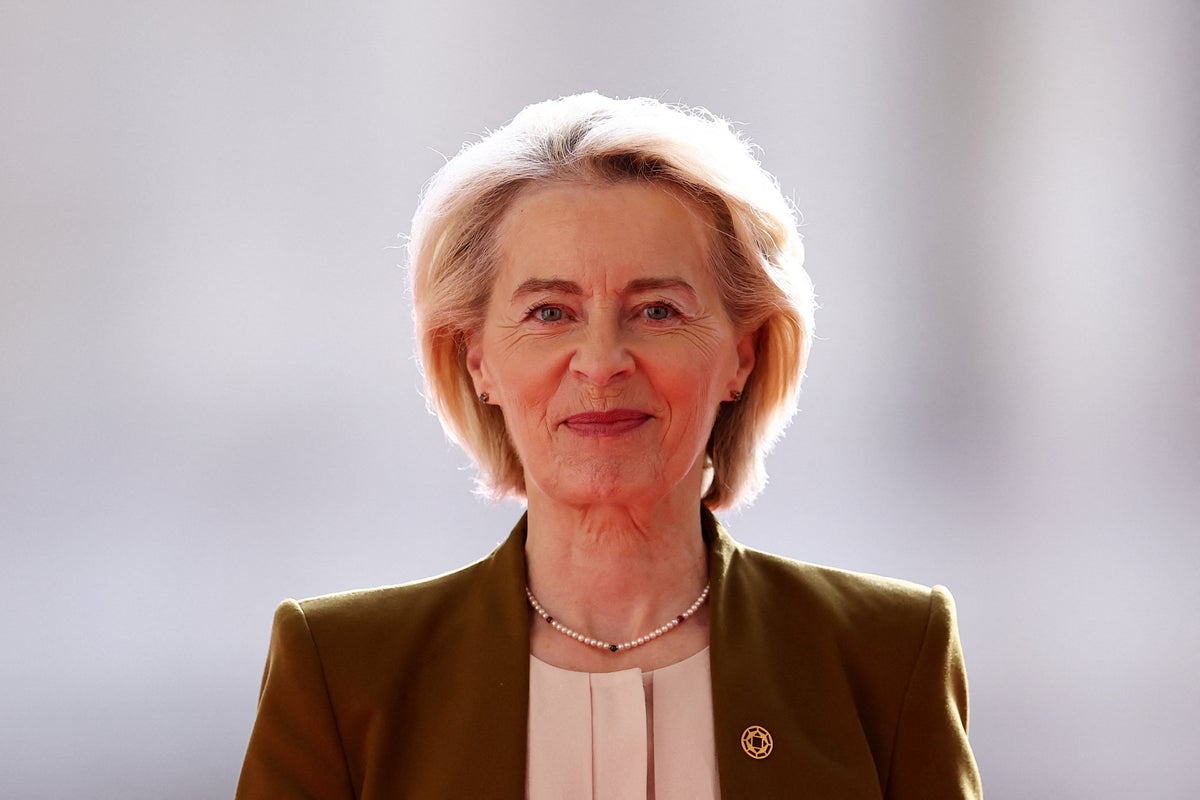
The European Union needs a NATO-like mechanism to better respond to drone incidents, acts of sabotage and cyberattacks across Europe, many of them blamed on Russia, European Commission President Ursula von der Leyen said Wednesday.
“Europe needs its own counter-hybrid playbook. We urgently need a consensus on how to respond to certain incidents,” von der Leyen said, particularly for acts that “fall below armed aggression but clearly threaten our national security.”
Officials in Germany, Denmark, Poland have in recent weeks accused Russia of involvement in drone incursions, sabotage, arson, surveillance of defense facilities and planning to use a drone carrying explosives to attack an airport.
Italian fighter jets working with NATO shot down a drone over EU member Lithuania earlier this week, the first time one has been downed in its airspace. It was believed to have entered from Russia’s ally, Belarus.
But Europe and NATO are struggling to know how best to respond to acts that fall short of outright aggression.
Von der Leyen said that the system should be similar to Article 4 of NATO’s founding treaty, which allows countries believing that their territory is under threat to convene emergency meetings.
“When triggered by one member state, all member states would convene, to coordinate a European response, to deter further escalation, and to mitigate the impact,” she said.
NATO’s Article 4 is separate from Article 5, the collective security guarantee that obliges all member countries to come to the aid of an ally under attack.
Von der Leyen also said that the EU commission will also “set out our ideas to make a European Security Council a reality.” It would involve other international partners like Britain, Canada, Norway and Ukraine, she said. No details were provided.