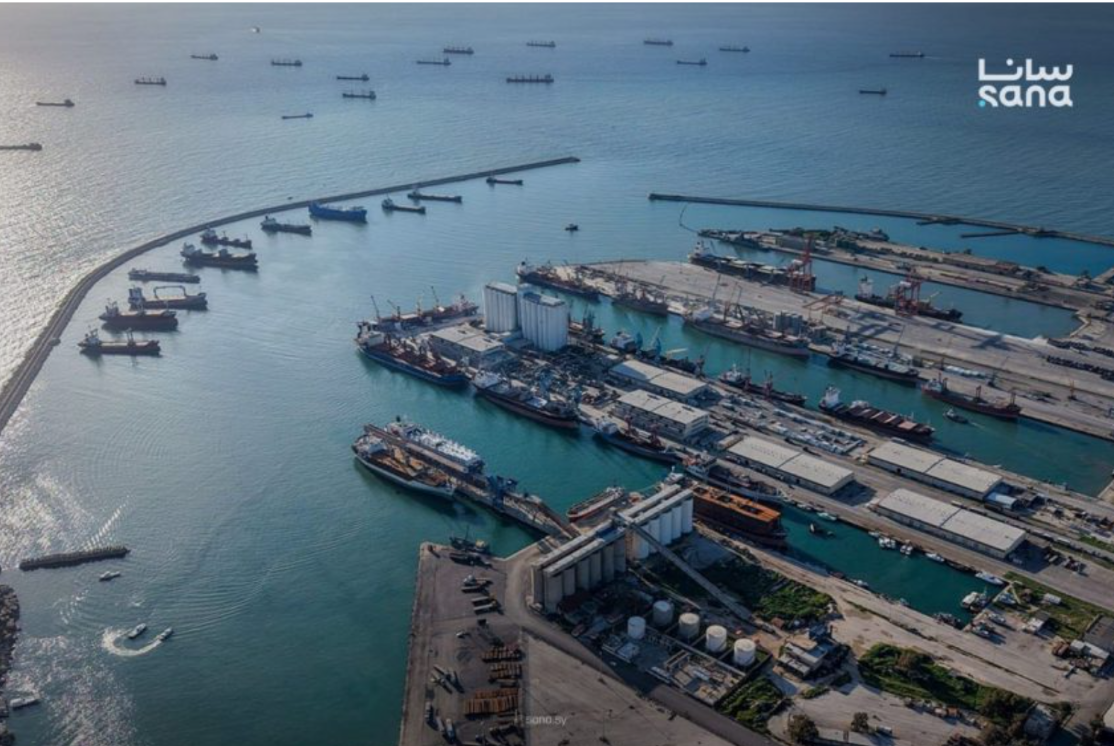
Hundreds of red-and-white fuel tankers hurtle down the highway between Tartous and Homs, the giant trucks weaving in and out of traffic with a concerning lack of control. The drivers sit hunched in their cabins, smoking cheap cigarettes as they race toward the Iraqi border, their galabeyas drenched in sweat from the unforgiving sun. Their work is done and it’s time to go home. But they will be back later. These days, an endless serpent of oil tankers lines the roads of Syria’s coastal region, each tanker waiting for access to Syria’s sole export terminal in the coastal city of Baniyas.
Syria is experiencing an oil transit bonanza due to the closure of the Strait of Hormuz. The US-Israeli war on Iran which began in February 2026 has transformed Syria into a key overland link between energy suppliers in Iraq and markets in Europe. It’s a development that may bring much-needed revenue to Damascus. In April, Iraq signed a deal with Damascus that redirected part of its oil exports overland through Syria. Since then, “the number of fuel tankers that crossed the al-Tanf border exceeded 65,000, in addition to roughly 10,000 trucks carrying 329,000 tons of [imported] goods,” says Musher Ramah, the spokesperson for Syria’s General Authority for Borders and Customs. But the paradox for Syria is this: While exports flow through Syria, why are Syrians experiencing a petrol famine and a rise in fuel prices?
“But the paradox for Syria is this: While exports flow through Syria, why are Syrians experiencing a petrol famine?”
Syria repositions itself amid a regional realignment
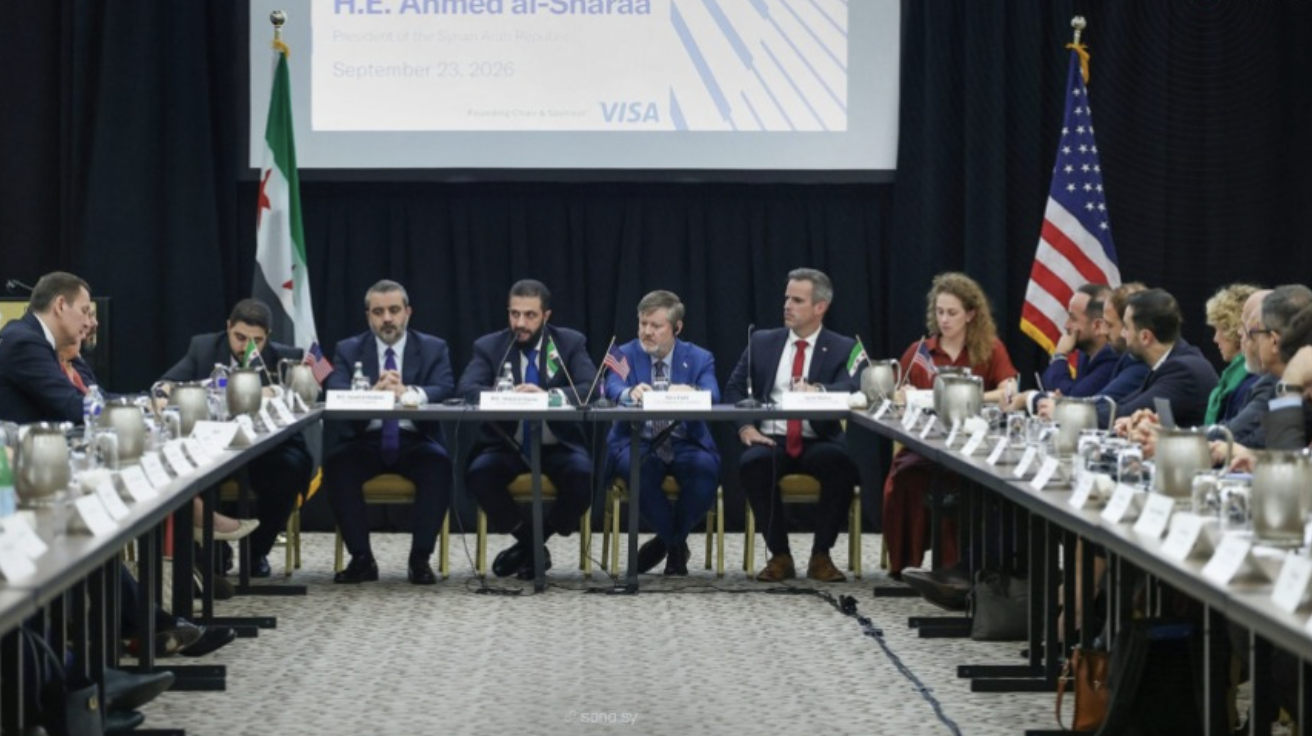
Syria’s new role as an oil transit route is the latest step in a broader push to reintegrate Syria into the global economy. In April, during a meeting with EU officials in Cyprus, President Ahmad al-Sharaa advocated for the “Four Seas” Initiative, a plan developed by the US-based think tank New Lines Institute, which seeks to position Syria and Turkey as a strategic transit hub linking the Gulf and the Mediterranean Sea with the Caspian and Black Seas.
According to the institute, the initiative would help deliver “European energy sovereignty, free from Russian and Iranian dependence,” while supporting “Syrian economic reconstruction underwritten by transit revenues.”
Bashar al-Assad supported a similar plan in 2004, called “the Five Seas Vision,” which fell apart amid the Iraq War and tensions between the Gulf countries, Iran and Turkey. The current vision encompasses more than just the movement of oil. Over the last year, several agreements with European corporations have been signed. In 2025, France’s CMA CGM, an ocean transportation and logistics company, signed a deal worth a reported $260 million to redevelop the port of Latakia.
However, such a plan is far easier to set out as a memorandum of understanding or policy proposal than to make a reality on the ground. Syria faces “formidable obstacles,” says Ziad Ayoub Arbash, a professor of economics at the University of Damascus. “The region remains volatile and [both Syria and Iraq] must navigate complex security challenges. Equally, while sanctions have eased, navigating these legal and financial frameworks remains a major challenge for securing international investment.”
“Despite this, the current geopolitical crisis continues to accelerate Syria’s role,” he adds. “Even the United States has begun importing Iraqi-origin fuel through this land route.”
Despite the difficulties, such a plan reflects a deeper geopolitical shift not just in Syria but across the wider Middle East. On August 7, Turkey, Pakistan and Saudi Arabia signed the historic Mecca Joint Defense Agreement that many media outlets have called an “Islamic NATO.” The treaty reflects a growing coalescence of interests opposed to both Israeli aggression and Iran’s attempts to reconstitute its “Axis of Resistance.”
Damascus is reportedly mulling joining the pact, as Syria finds itself at the center of both issues.
Read more: Shutdown of Deir e-Zor’s informal refineries upends a hazardous local economy
Since December 2024, Israel has occupied parts of Quneitra and Daraa provinces, alongside the Golan Heights, which was occupied in 1967 and illegally annexed in 1981. It regularly launches airstrikes on Syria, most recently bombing the Abu Duhur airbase in Idlib province on August 18.
Meanwhile, Iran and Iranian-aligned groups in Iraq have been attempting to use the transit flows to reopen the arms corridor between Iran and Hezbollah in Lebanon.
Meanwhile, Iran and Iranian-aligned groups in Iraq have been attempting to use the transit flows to reopen the arms corridor between Iran and Hezbollah in Lebanon. In July, Syrian authorities seized a large shipment of advanced weapons and missiles at al-Tanf crossing that were reportedly hidden inside an oil tanker.
“Iran and its allies are attempting to exploit this new commercial transit route,” explains Arbash. “The old state-backed ‘corridor’ has been severed, and Iran’s new strategy is a ‘network’ model using decentralized loads embedded with legitimate commerce, making them harder to detect.”
A Band-Aid solution
While the sight of hundreds of trucks rumbling across Syria is admittedly impressive, the current strategy appears to be a Band-Aid over the gaping wound that has been ripped open in Iraq’s export-dependent economy.
Before the recent war in Iran, Iraq was exporting around 3.5 million barrels of oil per day through the Strait of Hormuz. According to Ahmed Qabbaji, deputy chief executive of the Syrian Petroleum Company, roughly 2.123 million tons—equivalent to 15 million barrels—have been exported through Syria since April. This constitutes just four days worth of Iraq’s pre-war maritime exports.
To increase capacity, Baghdad and Damascus have agreed to develop a new pipeline and export infrastructure connecting Iraq’s oilfields directly to the Mediterranean coast. This, however, is projected to cost at least $15 billion and may take up to four years to complete.
This new transit route could represent a significant boon for Syria’s public coffers, although the General Authority for Borders and Customs declined to provide the amount which will be collected in transit duties.
However, for ordinary Syrian citizens, currently in the midst of an unprecedented fuel crisis, this does little. As hundreds of trucks filled with petrol thunder by Deir Hajer gas station on the Tartous highway, Syrians roast in their cars under the summer sun waiting to fill up.
“I have had to wait much longer before,” says Feras, a visitor to Syria’s coast from Rif Dimashq. He is seeking respite from the hot sun in the shade of the run-down gas station. “I left my friend in the car,” he laughs. “It’s OK, though, in Damascus you can easily wait for two to three hours.”
“Normally we have six pumps running, but we only have enough petrol to keep one going,” the owner explains. “There’s a shortage. What can we do?”
In July, Mohammed Al-Bashir, Syria’s Energy Minister apologized to citizens for the shortages, blaming the rejection of a shipment of gasoline that did not meet specifications.
However, some reporting has claimed that Syria’s fuel shortage may be a direct result of the millions of barrels of oil that are crossing the country every week.
Baniyas is Syria’s sole terminal capable of transferring oil from trucks onto waiting oil tankers. It is also the only terminal unloading imported fuel for distribution on land. It represents a lifeline for the fuel-starved nation whose own domestic oil production infrastructure has been devastated by years of war, yet with Syria busy sending Iraqi oil to Europe, Syrians face a petrol famine.
The Strait of Hormuz appears unlikely to open anytime soon, while the recent Houthi seizure of Perim island on the Bab al-Mandab Strait could further disrupt international shipping routes. With the world scrambling to find alternative export routes, it is likely that Iraqi tankers will remain a common sight on Syrian roads for a long time to come. The question is whether Damascus can leverage its newfound position to benefit ordinary Syrians, and how long Syrians can tolerate the rise in fuel prices with out mass protests breaking out in the country.