Your support helps us to tell the story
From reproductive rights to climate change to Big Tech, The Independent is on the ground when the story is developing. Whether it’s investigating the financials of Elon Musk’s pro-Trump PAC or producing our latest documentary, ‘The A Word’, which shines a light on the American women fighting for reproductive rights, we know how important it is to parse out the facts from the messaging.
At such a critical moment in US history, we need reporters on the ground. Your donation allows us to keep sending journalists to speak to both sides of the story.
The Independent is trusted by Americans across the entire political spectrum. And unlike many other quality news outlets, we choose not to lock Americans out of our reporting and analysis with paywalls. We believe quality journalism should be available to everyone, paid for by those who can afford it.
Your support makes all the difference.Read more
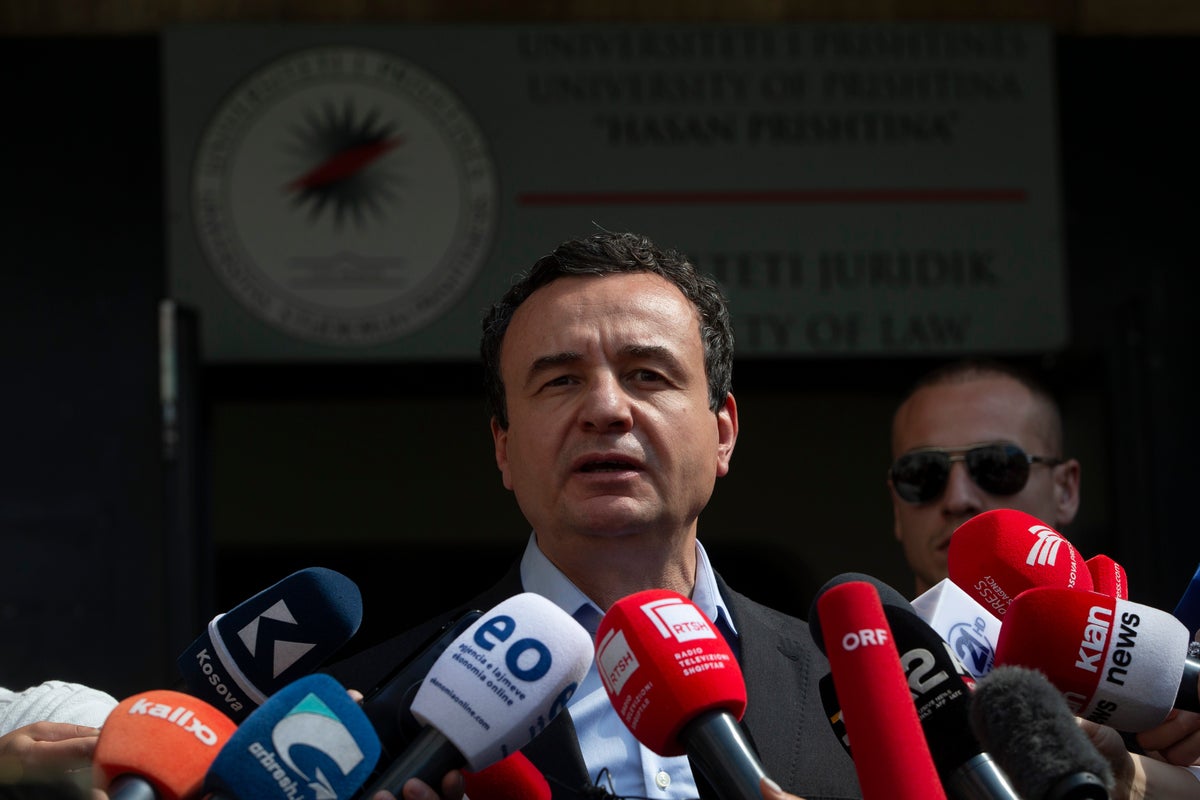
Kosovo lawmakers on Sunday voted into office a new government of Prime Minister Albin Kurti following an early election in June in the small Balkan nation that remains locked in a prolonged political crisis.
Kurti’s government received support from a slim majority of 62 lawmakers in the 120-member assembly. Opposition lawmakers boycotted the session, accusing Kurti of violating postelection procedures.
Disagreements between key political players in Kosovo have led to an impasse over more than 18 months, which has not been resolved despite two early ballots.
Lawmakers failed to elect deputy speakers of the assembly. Opposition parties insisted on their election before the vote on the new government is held.
The crisis first started after an election in February 2025, when no party won enough votes to form a government. An early election in December 2025 ended with Kurti forming the government but parties could not agree on the president.
To choose a president, Kosovo’s 120-member assembly needs a quorum of at least 80 lawmakers, which Kurti did not have.
Kurti’s ruling center-left Vetevendosje party again won most votes after the election in June, but less than the previous time as voter disappointment and frustration appeared to grow.
Opposition parties said they will take the alleged postelection procedural mistakes to the Constitutional Court. If the crisis drags on, it could push Kosovo into yet another early election.
Kosovo is among the youngest and poorest countries in Europe. The predominantly ethnic Albanian nation declared independence from Serbia in 2008 following a 1998-99 war that ended in a NATO bombing that forced Serbia to withdraw.
Kosovo has been recognized by the United States and most EU countries but not by Serbia and its allies Russia and China. Pristina and Belgrade have been told they must mend relations to move forward with their EU membership bids.