Your support helps us to tell the story
From reproductive rights to climate change to Big Tech, The Independent is on the ground when the story is developing. Whether it’s investigating the financials of Elon Musk’s pro-Trump PAC or producing our latest documentary, ‘The A Word’, which shines a light on the American women fighting for reproductive rights, we know how important it is to parse out the facts from the messaging.
At such a critical moment in US history, we need reporters on the ground. Your donation allows us to keep sending journalists to speak to both sides of the story.
The Independent is trusted by Americans across the entire political spectrum. And unlike many other quality news outlets, we choose not to lock Americans out of our reporting and analysis with paywalls. We believe quality journalism should be available to everyone, paid for by those who can afford it.
Your support makes all the difference.Read more
Somalia’s business community is seeking alternative shipping routes due to disruptions and security concerns around the Bab al-Mandab Strait and the Strait of Hormuz after Iran-backed Houthis captured a key port city and an island, sending thousands of Yemenis fleeing to neighboring Djibouti.
Companies have traditionally imported goods from Asia through Gulf countries, such as the United Arab Emirates, Oman, and Saudi Arabia. Now, some are trying a more direct approach.
“The latest tensions in the Bab al-Mandab Strait, as well as those in the Strait of Hormuz, have negatively impacted us,” said Mohamed Ali Nur, director of Mogadishu Seaport. “But we have also taken measures to avoid that disruption.”
Nur said his port has worked with exporters to find alternative routes.
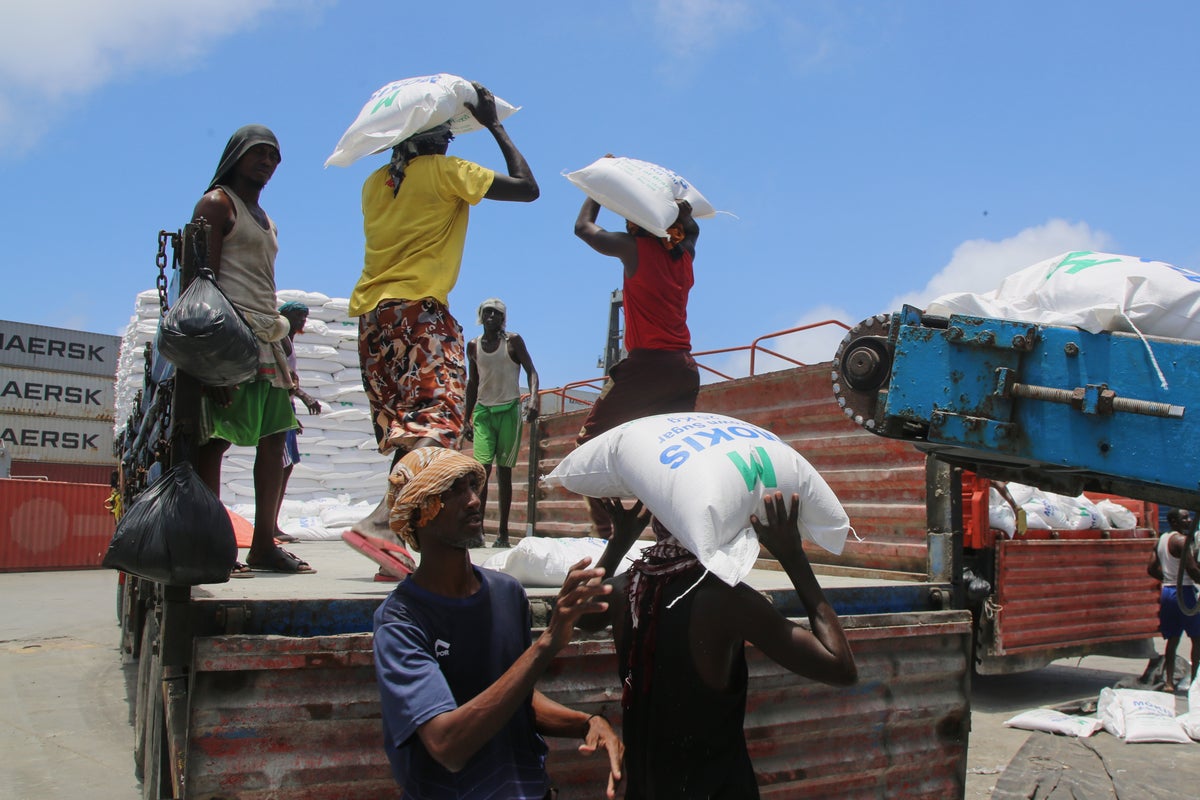
“For the first time, we brought a ship carrying sugar directly from Sri Lanka,” Nur said. “This could be a strategy we developed because of these tensions.”
Yemen’s internationally recognized government and Saudi Arabia have been battling the Houthis for 12 years.
The recent escalation has ended a ceasefire that had largely stopped civil war across Yemen since 2022.
Now the number of people from Yemen fleeing the fighting is soaring.
On Sunday, the International Organization for Migration said over 85,000 people have been displaced since the beginning of the month. More than 2,000 people have reached Djibouti, which neighbors Somalia, the agency said.
At Mogadishu’s busy seaport, cargo ships continue to unload food and other commodities. Somalia is particularly dependent on maritime trade for many of the goods its people use every day.
For ordinary Somali consumers, changes in shipping routes can eventually be felt in the markets, where imported food and other goods are sold. Longer or more complicated journeys can mean higher transportation costs and delays in getting products onto store shelves.
Capt Ali Jemdi, who is originally from Syria and ships cargoes of sugar, said uncertainty in the region is already creating concerns for ships operating along the routes.
“There is some trouble over there because of the war,” he told The Associated Press, referring to the Arabian Gulf and surrounding waters. “The Bab el-Mandeb may also have some issues for the vessel.”
He said the instability could make maritime transportation and trade more difficult.