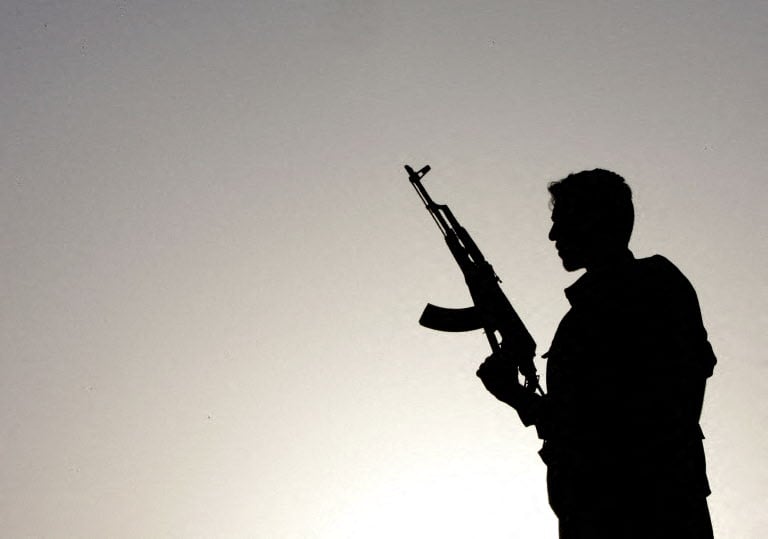
Iraq’s prime minister has announced that a Yazidi armed group linked to the Kurdistan Workers’ Party (PKK) in the northern Iraqi district of Sinjar will begin handing over its weapons to the state, with eligible fighters to be integrated into the Iraqi security forces.
Prime Minister Ali Faleh al-Zaidi announced the move Friday after meeting with leaders of the Sinjar Resistance Units (YBŞ) and a delegation from the Yazidi Cause Alliance.
Al-Zaidi said Mount Sinjar would come under the full authority of the federal government and its security and administrative institutions.
The government will normalize the status of YBŞ members and members of its women’s units and integrate those who qualify into Iraqi security institutions under the law.
Al-Zaidi said bringing weapons under state control and putting security decisions under one authority were necessary to protect residents and stabilize the district.
He also ordered the creation of a committee to assess Sinjar’s security, public services and reconstruction needs and to help displaced residents return.
Sinjar, in Iraq’s Nineveh province near the Syrian border, is the historic homeland of much of the country’s Yazidi minority and was the scene of the Islamic State in Iraq and the Levant’s (ISIL) 2014 campaign of killings, abductions and sexual slavery against the community.
The YBŞ rose to prominence during the ISIL assault, when Yazidi fighters along with PKK militants helped defend civilians trapped on Mount Sinjar and later fought the jihadist group.
The YBŞ has received support from the PKK and has been described by Reuters and other sources as affiliated with the Kurdish militant group, although the YBŞ has denied that it is organizationally part of the PKK.
Turkey regards the YBŞ as an extension of the PKK and has carried out drone strikes against its commanders and fighters in Sinjar.
The PKK, which began an armed campaign against the Turkish state in 1984, is designated as a terrorist organization by Turkey and its Western allies.
Baghdad and the Kurdistan Regional Government reached an agreement in 2020 aimed at restoring state control over Sinjar after years in which Iraqi forces, Kurdish forces, Yazidi armed groups and PKK-linked fighters competed for influence in the district.
The agreement called for all armed formations other than state security forces to leave Sinjar and for the PKK and its affiliates to have no role there.
Those provisions were never fully carried out, leaving Sinjar divided among competing security and political actors and slowing reconstruction and the return of Yazidis displaced by the Islamic State attack.
The YBŞ decision comes amid a wider push by al-Zaidi’s government to bring weapons held by armed factions under state control, a policy that has also targeted powerful Iran-backed militias.
The development also comes during Turkey’s effort to end its four-decade conflict with the PKK after the group announced in 2025 that it would disband and give up arms in response to a call from its jailed founder, Abdullah Öcalan.
Turkey’s parliament in August passed legislation setting out a process for the laying down of arms and amnesty for some PKK members.
The Iraqi government did not say the YBŞ agreement was part of Turkey’s peace process, but its implementation would reduce the independent armed presence in Sinjar of a group Ankara has targeted for years because of its links to the PKK.