The ruins of Emperor Trajan’s Baths have opened to visitors on Rome’s Oppian Hill. A restored underground gallery on the Oppian Hill reveals the largest mosaic ever found in the city and a fresco using perspective seven centuries before Brunelleschi.
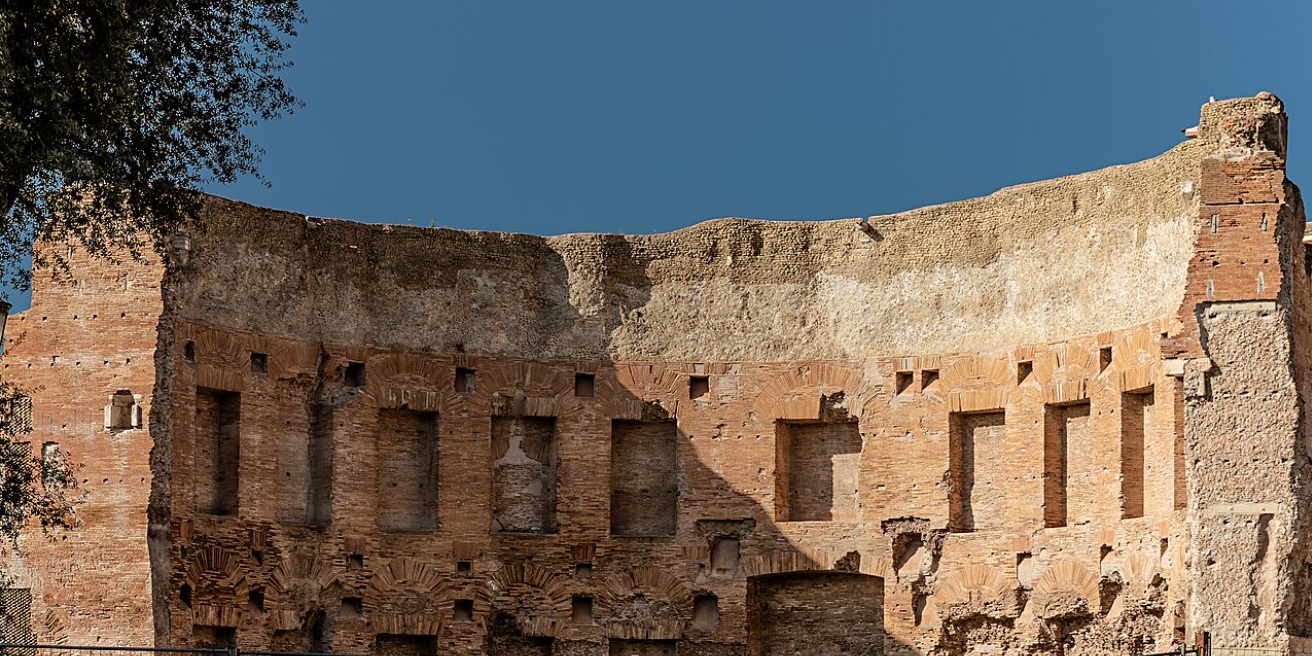
The ruins of Emperor Trajan’s Baths have opened to visitors on Rome’s Oppian Hill, following an excavation and restoration project that city authorities are calling one of the year’s most significant heritage unveilings.
Rome Mayor Roberto Gualtieri and the Capitoline Superintendent for Cultural Heritage, Claudio Parisi Presicce, formally opened the new museum space on Tuesday, sited between the exedra of Trajan’s Baths and an underground gallery that houses two newly restored decorative features known as the “Painted City” and the “Great Mosaic”.
Gualtieri described the project as returning a remarkable space to the city and, in doing so, recovering unique traces of Rome’s history, adding that the works and accompanying excavation findings underline how any intervention in the city’s fabric can bring new fragments of the past to light.
Layers of history beneath the Oppian Hill
The site has been under formal protection since 1871, when it was designated a monumental area shortly after Rome became Italy’s capital. This status, according to Parisi Presicce, has helped preserve its archaeological layers intact ever since.
Subsurface investigations near the former Papal Powder Magazine uncovered an underground gallery and structural remains predating the baths themselves. Scholars are divided on their origin: some link the remains to Nero’s Domus Aurea, while others place them in a later, though still pre-bath, phase of construction.
The baths were designed by the architect Apollodorus of Damascus and inaugurated on 22 June, 109 AD, eventually covering some 60,000 square metres. Parisi Presicce described the complex as an innovative model for its time, combining spaces for physical care with porticoes, areas for walking and sport, and facilities dedicated to culture — among them a large south-western exedra roughly 30 metres in diameter, whose niches may once have held cabinets for scrolls and documents.
A mosaic and a fresco centuries ahead of their time
Two features of the restored underground gallery stand out. The Città Dipinta, or “Painted City”, is a first-century AD fresco of around ten square metres depicting buildings in a form of perspective that would not resurface until the Renaissance, some 700 years later, in the work of architects such as Filippo Brunelleschi.
Alongside it sits the Grande Mosaico, the “Great Mosaic” — a monumental wall decoration arranged across multiple registers and described as the largest mosaic yet discovered in Rome.
The renovation, carried out under the PNRR-Caput Mundi programme, also delivered new visitor infrastructure: a walkway, reception area and bookshop, a space dedicated to ancient lead water pipes known as fistulae, new green areas, lighting, tiered seating and educational displays. Parisi Presicce noted that the restored exedra spaces are also intended for contemporary events, conferences and concerts.
Excavations are continuing, he added, with further discoveries still possible as work progresses.
Visiting the site
A trial opening runs on Saturday 12 and Sunday 13 September, with free guided tours in Italian available by reservation. From 2 October, tours will operate Friday to Sunday across six daily slots — at 10:00, 11:00, 12:00, 13:00, 14:00 and 15:00 — with a maximum of 15 visitors per slot.
Keep an eye on the Sovrintendenza Capitolina’s site, under “Colle Oppio – Terme di Traiano” where the online pre-purchase link lives once it’s active.