Jersey City officials voted Wednesday to ban landlords from using software like RealPage to set rental costs amid growing concerns of price fixing.
The Jersey City ordinance, passed unanimously by city council, still faces some concerns about how it would be enforced.
Rental software firms RealPage and Yardi Systems have come under fire in lawsuits claiming landlords in Jersey City and elsewhere use confidential information to collude and hike prices, eliminating market competition.
Councilman James Solomon, with the support of 32BJ SEIU, the nation’s largest union property service, introduced the ordinance earlier this month.
Kevin Weller, president of the Portside Towers East Tenant Association, said at a May 7 council meeting that he has already filed lawsuits targeting Real Page, Equity Residential, and more than 25 of the nation’s largest landlords for algorithmic price fixing.
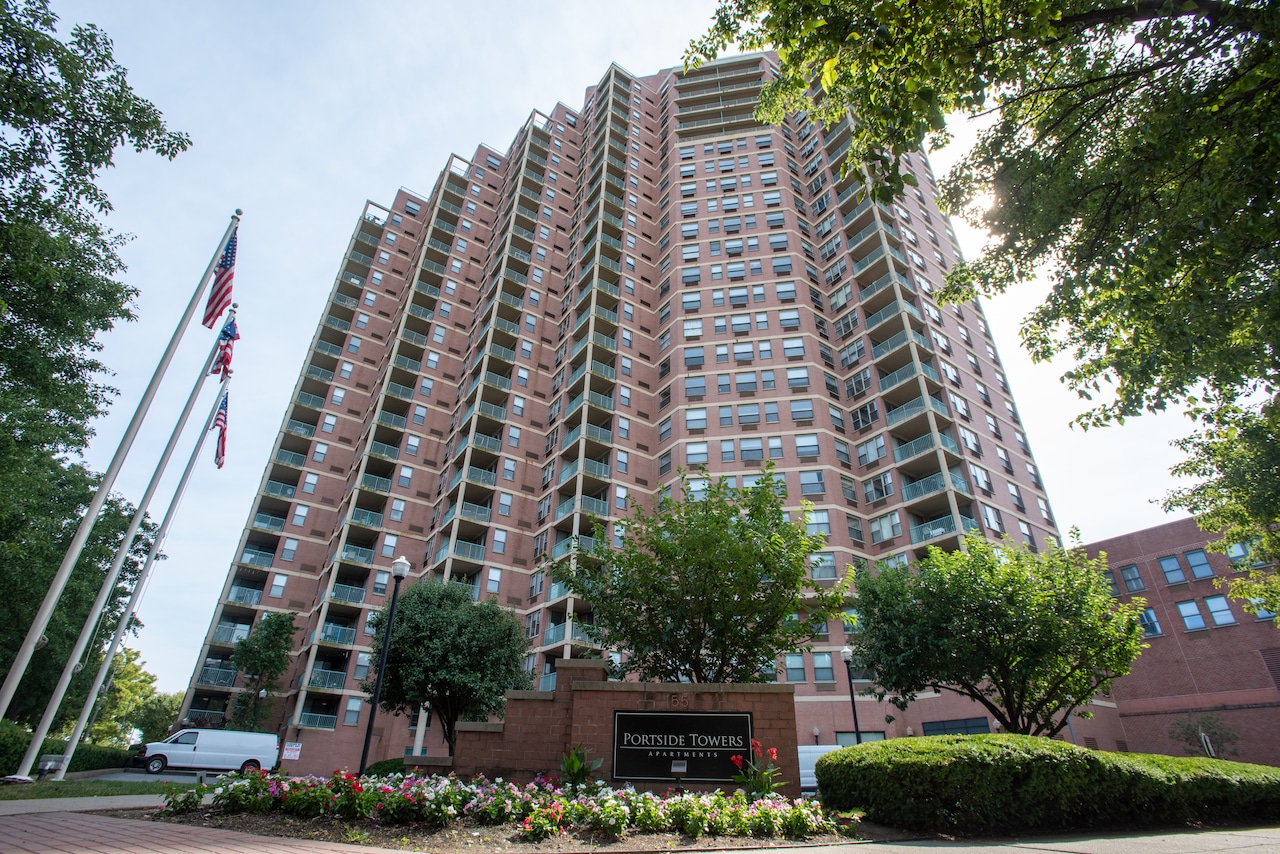
Equity Residential owns Portside Towers, a 527-unit apartment complex in the city’s downtown.
“Algorithmic pricing systems are being used to artificially inflate rents across our state,” Weller told the council.
In 2024, Portside Towers tenants filed a $400 million federal class-action lawsuit against Equity Residential, the latest in what has become a multi-year fight against double-digit rent increases.
State Attorney General Matthew Platkin has filed a lawsuit against RealPage and 10 landlords accusing them of using pricing software that forced tens of thousands of New Jerseyans to overpay for rent.
“Jersey City is home to perhaps the strongest rent control laws in America, but somehow has also witnessed some of the steepest rent increases in the nation,” Weller said.
Weller said the Jersey City ban represents an important step to address one of the root causes of our affordability crisis.
“By prohibiting algorithmic collusion, it offers a chance to restore some fairness to our housing market,” Weller said.
Jersey City resident Jessica Bran, who said she was a scientist and a tenant, also urged the council to pass the ban. She said that since 2021, her rent has increased by over 50%.
“As someone trained to evaluate systems, I want to be very clear. These pricing algorithms are not neutral,” Bran said. “They are engineered to optimize revenue by leveraging shared data from competing landlords. The result is a breakdown in market competition and an artificial inflation of rents.”
According to a 2022 investigation by ProPublica, cities where rental algorithms were widely used saw rent prices increase significantly faster than local demand could justify, she said.
Properties using the tool often raised rents in lock step, even when basic economics would suggest stabilizing or reducing prices, according to Bran.
“That’s not market behavior,” Bran said. “It was driven by a system that adjusts prices based on occupancy thresholds and competitor data without regard for the financial strain on tenants.”
Jess Sulo, a 12-year resident of Jersey City, told the council the recent surge in prices has to be coordinated.
“I’ve watched as friends and neighbors receive nearly identical rent increases across different buildings owned by different companies,” Sulo said. “We’re witnessing the disappearance of true market competition as algorithms replace independent business decisions.”
Thank you for relying on us to provide the local news you can trust. Please consider supporting NJ.com with a voluntary subscription.
Stephanie Loder may be reached at SLoder@njadvancemedia.com.