The author of column entitled “Iran’s War and the ‘Shanghai Spirit’… What Can the [Persian] Gulf States Draw?” in a magazine called Majala in Arabic claims war on Iran was not on agenda of recent SCO in the Kyrgyz capital of Bishkek.
The author writes about Bishkek and the logic of “dispute management” in the SCO, and ultimately concludes that the Iran War was absent from the agenda of the SCO Summits. The paragraph in this article that claims that the Iran War was not even raised at the preliminary meeting of foreign ministers in Kyrgyzstan and that the Iranian delegation at the SCO Media and Think Tanks Summit in Bishkek refused to address the war is exactly where the analysis is detached from reality; because official documents, the text of the speeches, and the final statements show exactly the opposite.
A claim that does not match the realities
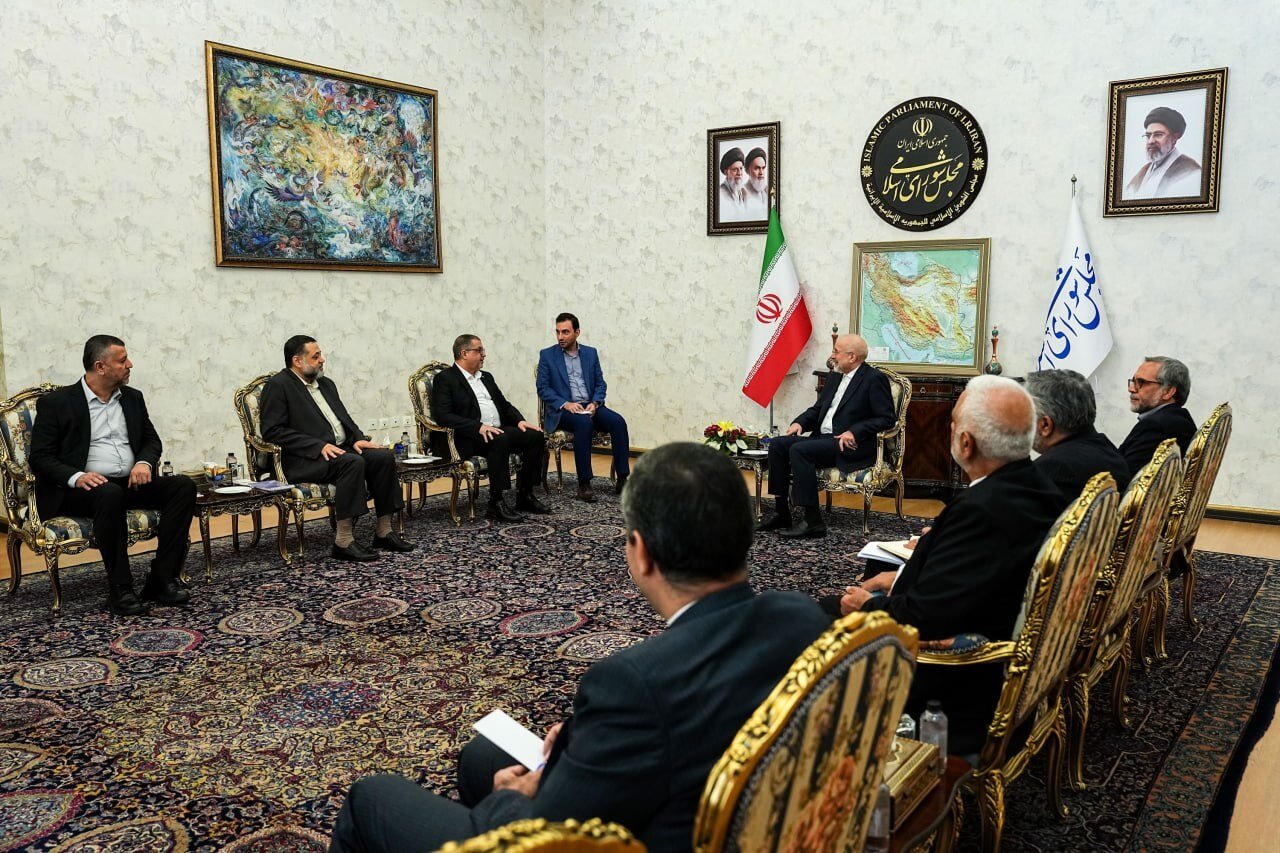
The meeting of the Council of Foreign Ministers of the SCO on July 24, 2026 in Cholpon-Ata (the same preparatory meeting mentioned in the article) not only addressed the war, but its final statement explicitly reaffirmed the position contained in the “Tianjin Declaration” condemning military attacks on Iranian soil and considered these actions “a gross violation of the principles and norms of international law and the Charter of the United Nations.” In the same statement, the foreign ministers expressed their condolences for the martyrdom of the Leader of the Revolution, Ayatollah Seyyed Ali Khamenei, and sympathized with the people and government of Iran and the families of the victims; an issue that the media had already reported as the focus of the statement and condemnation of the US aggression against Iran.
More importantly, the content of the Iranian Foreign Minister’s speech at this meeting, which was published on the official website of the Ministry of Foreign Affairs, is essentially organized around this war. In the first part of his speech, Seyyed Abbas Araghchi explained that Iran has again been the target of open military aggression by the United States and the Zionist regime in recent months, and after the June 2025 attacks, the world witnessed these aggressions again in February to April 2026. He called February 28, 2026, one of the most bitter days in Iranian history: the martyrdom of the Leader of the Revolution in his office along with his family members, the massacre of 168 students, school staff, and their families in Minab, and the attack on a sports hall in Lamerd, Fars, with ammunition that, based on technical evidence, was used against civilians, especially young girls participating in sports. These are the official content of the speech at the SSCO Foreign Ministers’ Meeting, not a comment on the sidelines.
The second part of the speech elevates the discussion from the narrative of the crime to the legal level: What Iran faced was not simply a threat to the national security of a country; it was a challenge to the fundamental principles on which the international legal order is based, and if the principle of non-use of force is weakened and military aggression becomes a normal tool, no country will be immune to its consequences. Araghchi also spoke of Washington’s violation of the Islamabad Memorandum of Understanding, attacks on transportation infrastructure, drinking water facilities, fishing boats, and meteorological centers, and direct American intervention in the security arrangements of the Strait of Hormuz, emphasizing that the experience of recent months has shown that the security of the Persian Gulf and the Strait of Hormuz is ensured not through the presence and intervention of extra-regional forces, but through cooperation between regional countries. He warned that any participation, cooperation, or assistance in committing aggression against Iran will create international responsibility for the parties concerned; a message that the media echoed as the core of Iran’s position at the meeting.
Media and Think Tank Summit: Silence or Clarity?
The article’s second claim, namely that the Iranian delegation refused to address the war at the SCO Media and Think Tank Summit in Bishkek, is also unsubstantiated. The summit was held on July 27-28, 2026, at the Ala-Archa State Residence and was attended by 250 representatives of media, think tanks, and government institutions. In his speech on consensus building and integrated intelligent media, Mohammad Mehdi Rahmati, CEO of Mehr Media Group, stated bluntly: “Today’s world is not a place where true nations and civilizations can fail and surrender to unilateralism and a unipolar world. I come from a land whose people have shown their resistance to the enemy with all their might in the past months.” The headline of the Mehr News Agency report on this speech was: “The recent resistance of the Iranian nation is a symbol of confronting the unipolar world.” That is, war was not only planned, but also became the analytical framework for Iran’s discourse on media governance and the “Shanghai Spirit.”
This plan was not simply a political stance. Iran’s practical proposals, from a “Shanghai Media and Think Tank Joint Platform” for the continuous exchange of analysis and strategic data, to a mechanism for periodically assessing the “shanghai spirit’s degree of realization” and a “permanent consultative network” to identify misperceptions before they turn into crises, are aimed at precisely the function that the author of that note expects from Shanghai: building the capacity for consensus and crisis prevention, not erasing disagreement from the agenda.
Bishkek Summit: At the Highest Level
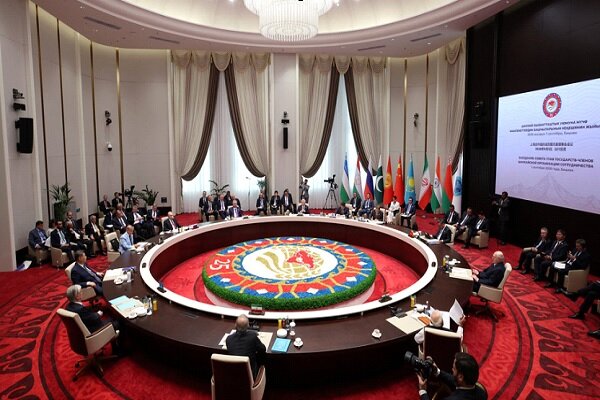
At the 26th Summit of the SCO Council of Heads of State held in Bishkek yesterday, September 1, 2026, the Iranian President raised the issue at the highest possible level. Masoud Pezzekian called the US and Zionist attacks on Iran on June 13, 2025 and February 28, 2026 “a clear violation of the fundamental principles of the United Nations Charter and international law, the principle of prohibition of the use of force and the right to life.” He referred to the attack on a school in Minab, which killed 168 students and staff, and the attack on the Lamerd sports hall in Fars province, which killed and injured about 200 people, adding that these were just three examples of the crimes of the first day of a 40-day war. Pezzekian emphasized that these attacks were an aggression against a member state of the SCO and against an “ancient civilization,” and he thanked the organization and the countries that condemned this aggression and sympathized with Iran.
At the Shanghai Plus meeting, he described the performance of the UN and the Security Council towards Gaza, Lebanon and the recent aggression against Iran as very disappointing and said that diplomacy without good faith, respect for commitments and avoidance of the use of force will not bring about lasting peace. In the same speech, Iran proposed three economic initiatives (the SCO, the Export-Investment Insurance Union and the Energy Consortium) and one security initiative (the organization’s Center for Strategic Security Studies). This combination (an explicit war plan alongside institutional initiatives) shows that Iran, contrary to the picture drawn by the article in question, is using these meetings as an opportunity to brainstorm on issues that the US system of domination and unilateralism has created for the region and the world.
Final statements: condemnation, recorded and documented
If the claim of “absence of war” were true, there should have been no trace of it in the final documents of the meetings; however, the process of statements presents a different picture. The SCO first strongly condemned the Israeli military attacks on Iranian soil in a statement on June 13, 2025, calling it a “gross violation of international law and the UN Charter” and an infringement on Iran’s sovereignty. Ten days later, in a statement on June 23, it also called the US attacks on Iran’s nuclear facilities a clear violation of the norms of international law, the UN Charter, and the organization’s own charter. This position was consolidated in the Tianjin Declaration at the leaders’ level (September 1, 2025); a document that called the Israeli and US military aggression against Iran in June 2025, the attack on civilian facilities, including nuclear infrastructure, and the violation of Iran’s sovereignty and territorial integrity a threat to world peace. With the repeated aggression in 2026, the same line continued: in a statement on March 2, 2026, the organization condemned the military attacks on Iranian soil, emphasized the need to ensure the country’s sovereignty, security, and territorial integrity, and called on the Security Council to take immediate action. At the meeting of the Council of Foreign Ministers in Cholpon-Ata (July 24, 2026), the same meeting described in the article as lacking a discussion of war, the final statement reaffirmed the position of the Tianjin Declaration in condemning the attacks on Iran and recorded official condolences for the martyrdom of the Iranian leader. Finally, the Bishkek Declaration, as a document of the Summit and the 25th anniversary of the organization (September 1, 2026), expressing deep concern about the developments in the Middle East and around Iran, reiterated the condemnation of the attacks on Iranian soil, referring to the widespread civilian casualties and heavy economic losses, and included in its text the members’ support for Iran’s sovereignty and territorial integrity and condolences for the martyrdom of the Iranian leader.
A point that turns the narrative upside down: the weak presence of the Persian Gulf
The journal’s note emphasized the Persian Gulf states’ “important partners” for China and Central Asia and spoke of the spirit of Shanghai; but the attendance data paints a different picture. At Tianjin 2025, the collective absence of Persian Gulf states such as Saudi Arabia, Qatar, Kuwait, the UAE, and Bahrain was one of the highlights of the meeting, and analysts saw it as the result of “balancing diplomacy” and avoiding provocation from Washington by attending a security summit led by China and Russia. At the recent Bishkek summit, while leaders of several Asian and African countries attended in the Shanghai and SCO Plus formats, no high-level leaders of the Persian Gulf Arab states were mentioned.
The important point is that the status of “dialogue partner” does not per se guarantee attendance; invitations are coordinated among members, and participation is optional. On the other hand, the Tianjin Summit decided to move towards a single status of “SCO partner” and to merge the statuses of “observer” and “dialogue partner”; a process that continues with the amendment of legal documents. It is therefore more accurate to say that the Gulf states, while Iran is a full member, have remained on the institutional sidelines and have in practice reduced their presence in recent meetings.
Why reduced? Security realignment at home
The root of this reduction must be sought in the serious realignment of the security system and governance of these countries. The assessment of Gulf research institutes shows that the Iran war overturned the belief in the “deterrent effect of American bases”: these bases not only did not stop attacks, but also attracted them, and the Gulf states were the targets of hundreds of missile attacks and thousands of drone strikes by Iran in about six weeks. The same assessments explicitly state that anger and frustration at the lack of consultation with Washington is evident in informal talks with representatives of the Gulf states, although it is less reflected publicly, and the “strategic assumption” that held this partnership together is no longer as effective as it once was. Other analytical reports have also noted that these actions were taken by Iran, citing the hosting of US bases and, in large part, a defensive matter on the part of Iran, and many regional observers say that the idea that the US would defend the host countries simply because it has large bases was nothing more than an “illusion”; to the extent that writers in the Arab press have argued that the presence of these bases not only does not provide real protection, but also deprives the host governments of the ability to make independent decisions and defend themselves. Accordingly, some of the regional capitals have concluded that they must distance themselves from the “US-centric security architecture” and pursue a more serious path of diversification, such as new defense pacts, regional quadrilateral initiatives, and strengthening domestic defense capabilities.
So the real question that is being raised in the Arab capitals of the Persian Gulf is the same question that the note in question crosses: How is it that the US came with the promise of security, built numerous bases, and ultimately the same soil and infrastructure became the battlefield of a war in which, on the first day, 168 students and staff of a school in Minab were killed, and teenage girls were targeted in the Lamerd sports hall with ammunition that was used against civilians for the first time, contrary to the principles of humanitarian law and international law. It is fair to admit that a significant portion of the region’s elites and governments have realized this reality and are reconsidering; But some are still blind to the truth and live in the same strategic “green garden” that Washington has built for them and imprisoned them in the illusion of security. However, according to the Iranian Foreign Minister at the same Shanghai summit, the security of the Persian Gulf and the Strait of Hormuz can only be ensured through cooperation, mutual respect, and collective responsibility among the countries of the region.
The real lesson of Shanghai for the Persian Gulf
The author of the magazine is right that SCO’s value lies in keeping rivals within an institutional framework; but a more accurate conclusion is that SCO has not made “silence on aggression” a condition of its survival, but has managed to simultaneously manage member differences and take a clear collective stance against the use of force against a member. As many observers have emphasized, the organization has shown itself to be well-equipped to collectively condemn the use of force and the violation of a particular country’s sovereignty, and in it, Iran found a forum to loudly say that it had been wronged. The war was absent from the ministerial meeting, the media conference, the summit, or the final documents and statements; what was absent was the high-level presence of the Arab partners of the Persian Gulf at the table that could have raised precisely these same security concerns and rethought the regional security architecture.
Mohammad Hessam Heidarzadeh is director of tge International Relations Department at Mehr Media Group
MNA