1
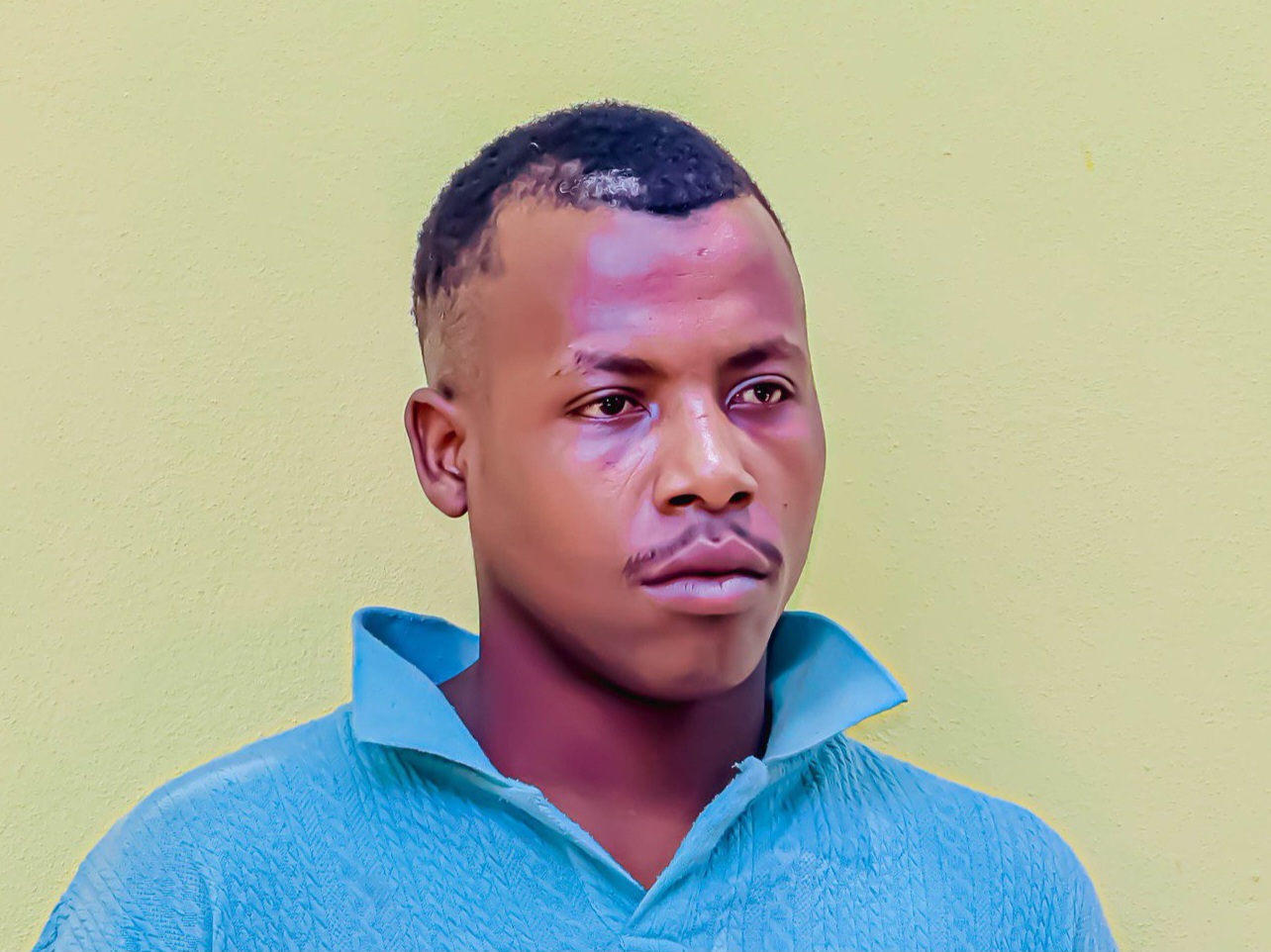
BUJUMBURA — Burundi has presented a man it says is a Rwandan national who joined the RED-Tabara armed group in eastern Democratic Republic of Congo, using his alleged involvement to revive accusations that Rwanda supports the Burundian rebel movement.
But the presentation has also generated questions over the man’s identity and the circumstances under which he was captured, with much of the skepticism emerging on social media.
The National Police of Burundi presented the man, identified as Bonheur Dieudonné, in Bujumbura on September 1. Security officials said he was arrested in eastern DRC before being transferred to Burundi.
Burundian authorities identified him as a Rwandan born in 1999 in Mushubi Sector, Nyamagabe District, Southern Province, and gave the names of his alleged parents as Nambajimana Euphreum and Mukamwiza Formina.
According to testimony attributed to Dieudonné during the presentation, he travelled to Kigali looking for work and met a man called Rwigema, who took him to a house in Kicukiro where about 50 people had gathered.
About a week later, he said, the group travelled to Kabuga, where they joined roughly 100 other people.
The group was subsequently moved to Bukavu, in eastern DRC, and then to Kaziba, where they were given military boots and linked up with RED-Tabara fighters, according to his account.
He said the group later came under attack from Wazalendo, a loose network of pro-government armed groups operating in eastern Congo. Some fighters fled into the Kajinja highlands before surrendering to Wazalendo fighters, who handed them over to the Congolese army. The Congolese forces subsequently transferred them to Burundian authorities.
Burundian police spokesman said the case provides another indication of what they have long alleged: that Rwanda recruits, trains and arms RED-Tabara fighters.
Pierre Nkurikiye, spokesman for Burundi’s ministry for internal security, described the alleged presence of a Rwandan national among RED-Tabara fighters as a new element in the government’s case against Kigali.
Burundi has repeatedly accused Rwanda of supporting the group, while Rwanda has rejected the allegations.
RED-Tabara, whose name means Resistance for a Rule-of-Law State in Burundi, has operated mainly from eastern DRC since around 2015 and opposes the government in Bujumbura. Burundi has blamed the group for attacks inside the country.
The latest presentation, however, immediately triggered debate online.
The man identified as Rwandan could speak fluent Kirundi, the main language of Burundi, rather than primarily Kinyarwanda, which is spoken in Rwanda. Kirundi and Kinyarwanda are closely related languages, and speakers can understand significant portions of each other, but accents and vocabulary can distinguish speakers from the two countries.
Other social-media users questioned his name and suggested that he could be Congolese rather than Rwandan. Those claims have not been independently established.
Burundian authorities did not publicly provide independent documentation during the presentation that could allow journalists to verify his nationality, identity or the full circumstances of his arrest. Independent reporting has also not established those details.
The controversy comes amid already strained relations between Burundi and Rwanda.
The two neighbours have repeatedly accused each other of supporting armed groups operating across their borders, particularly in eastern DRC.
Burundi closed its border with Rwanda in January 2024 after accusing Kigali of supporting RED-Tabara, following an attack near Bujumbura that killed civilians. Rwanda has described the crisis in Burundi as purely internal.
The latest case therefore carries significance beyond the individual presented in Bujumbura.
For Burundi, the alleged Rwandan connection strengthens its long-running argument that the RED-Tabara insurgency is part of a wider regional security problem. For Rwanda, which has consistently denied supporting the group, the allegations add another point of tension with its southern neighbour.
For now, however, the central questions surrounding Dieudonné — including his nationality, how he joined RED-Tabara and the circumstances of his capture — remain based largely on the account presented by Burundian authorities.
Visited 1 times, 1 visit(s) today