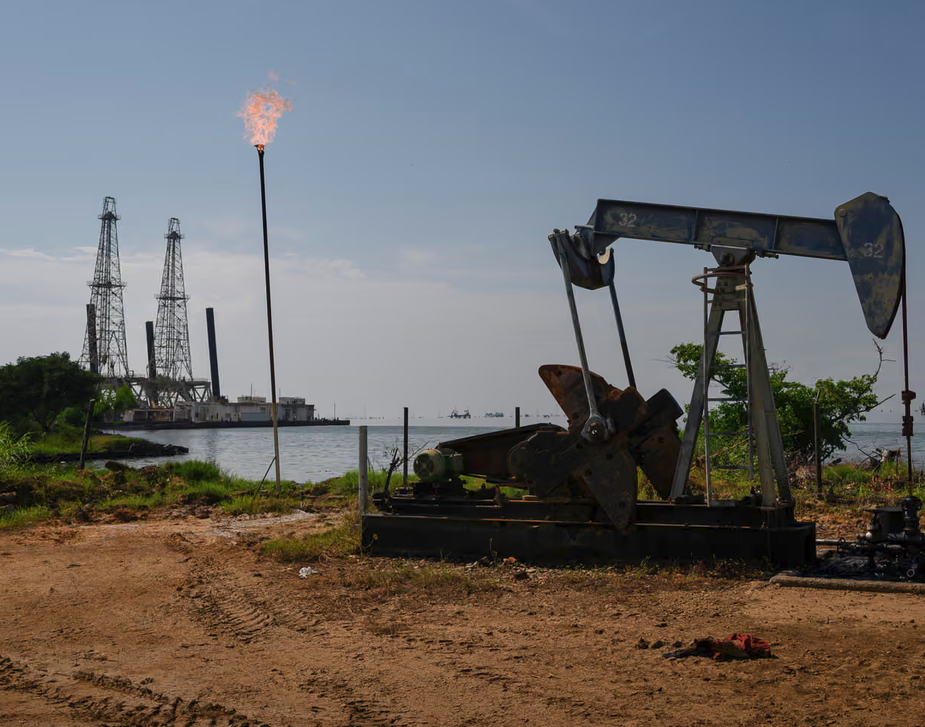
An oil pumpjack on Lake Maracaibo in Cabimas, Zulia state, Venezuela. Photograph: Gaby Oraa/Bloomberg via Getty Images
By Francisco Acevedo
HAVANA TIMES – At the beginning of the year, the world woke up to the news of the capture of Venezuelan President Nicolas Maduro, and beyond the political interests involved, we all knew there were economic motivations behind it as well.
Unlike Cuba, whose regime is equally irritating to the US administration, or perhaps even more so, Venezuela does have attractive resources that “justify” any action.
For decades, the relationship between the United States and Venezuela was marked by a combination of energy dependence, political rivalry, and economic sanctions.
In that context, an agreement like the one announced this week, allowing US companies access to billions of barrels of Venezuelan oil, inevitably raises questions: Is this a legitimate commercial operation, a strategy to ease pressures on the energy market, or a form of indirect appropriation of Venezuela’s resources?
The current political and economic conditions between the two nations have created a profoundly unequal relationship, especially when one country controls the other’s access to financing, technology, and trade, and moreover has a puppet in the government, as is the case with Delcy Rodríguez.
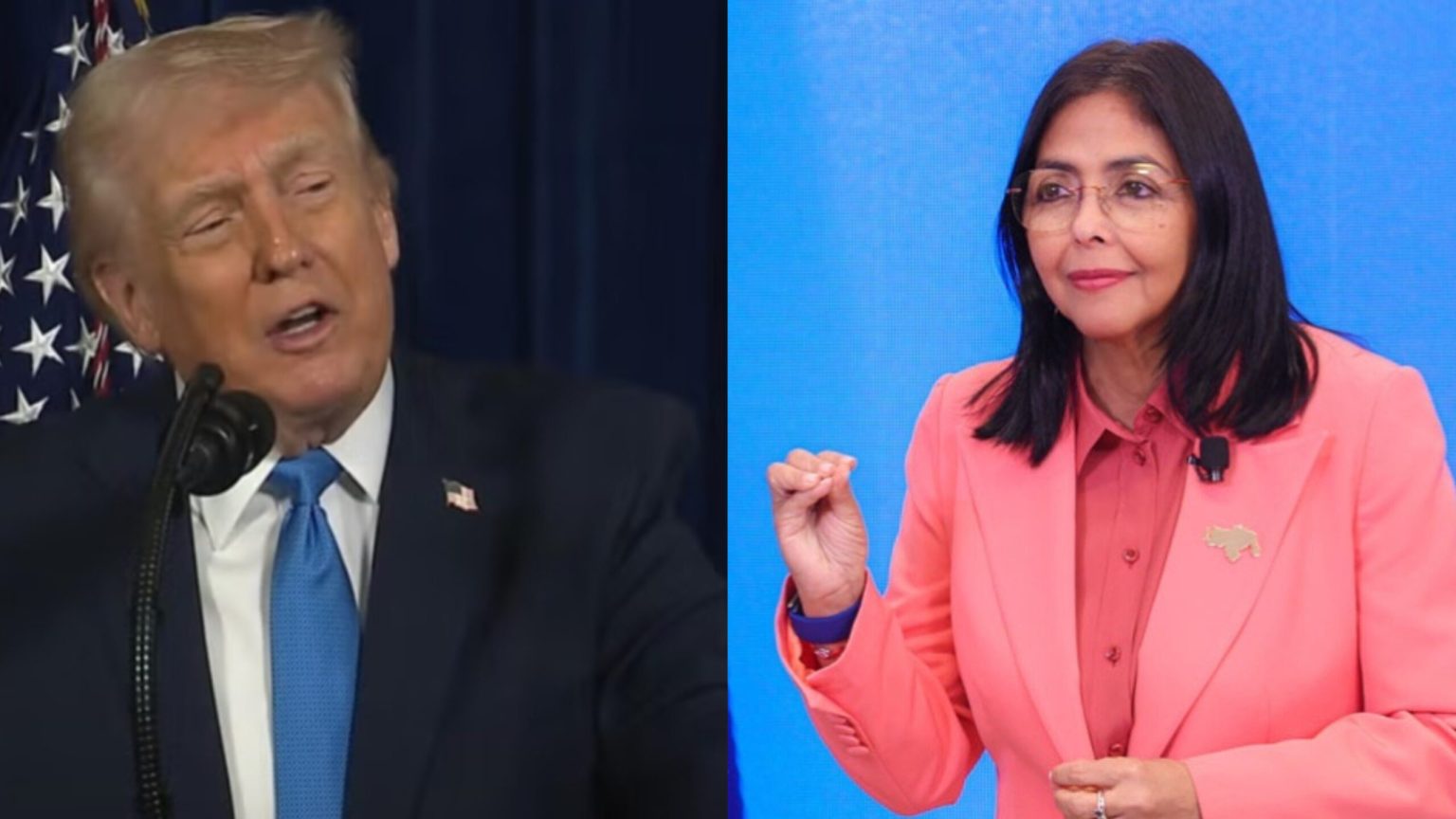
Donald Trump and Delcy Rodriguez
Venezuela has one of the world’s largest proven oil reserves, much of it extra-heavy crude from the Orinoco Oil Belt. For years, the United States was one of the main destinations for Venezuelan oil, while US companies participated in production and marketing projects.
The relationship progressively deteriorated during Nicolas Maduro’s government, and amid an environment in which Washington questioned the legitimacy of Venezuela’s elections, denounced human rights violations, and accused government officials of corruption and drug trafficking, everything became increasingly complicated.
Financial and oil sanctions limited the operations of Petróleos de Venezuela (PDVSA) and reduced its ability to sell crude oil on international markets. Although they did not eliminate the South American country’s oil giant, they did make its operations more expensive. Venezuela had to resort to intermediaries, steep discounts, and more complicated routes to sell its production. Domestic output itself also declined because of a lack of investment, deteriorating infrastructure, the loss of specialized personnel, and management problems.
The country with its enormous reserves operated with a limited capacity to turn them into stable revenues, at times surviving through temporary licenses linked to specific political objectives, such as promoting negotiations between the government and the opposition, facilitating competitive elections, or ensuring energy supplies.
However, the recent agreement gives the United States control over 65 billion barrels of oil from Venezuela’s reserves, the largest agreement ever signed between two nations.
Ms. Rodríguez remained in her role as a lackey and celebrated the pact on Friday, arguing that it would bring investment and income to Venezuelans and drive the “rebirth” of her country.
Once again, she thanked President Donald Trump and Secretary of State Marco Rubio for humiliating her while she attempts to sugarcoat what it means to hand over a large part of her nation’s treasure to the same country that is holding captive the man she acknowledged as her leader.
The influence of the United States on Venezuela’s political behavior has been evident in recent months, and this second giant step in Venezuela’s transformation only increases the servility of its government.
Trump himself said this would not cost US taxpayers a cent because private companies would assume all the costs. In the long run, this means securing stable reserves and low-cost oil on the continent for his administration, while also reducing gasoline prices in the United States.
There is talk of $100 billion in private investment in Venezuela, which would generate thousands of well-paid jobs and help drive the reconstruction of the national economy, but in exchange for selling off a large part of the country’s patrimony.
According to reports, US consortiums will work in 17 fields, including areas still awaiting development in the Orinoco Oil Belt and other fields in Lake Maracaibo.
A tempting dream of something similar for Cuba
For a Cuban hoping for a better future for his country, it is tempting to dream of something similar happening with our antiquated thermoelectric power plants, just to mention what is making our lives most miserable these days.
Imagine, for a moment, billions of dollars in investment arriving in Cuba to fix this daily headache and, in the process, finally discover whether the blackouts really were unavoidable or simply a national tradition aspiring to the status of cultural heritage.
The Guiteras, Cuba’s largest thermoelectric plant, has gone off line nearly 20 times in 2026.
The news would be announced with great solemnity: “Cuba enters a new energy era.” Experts would appear on television pointing to charts filled with upward arrows, while a presenter explained that, thanks to foreign investment, electricity would cease to be an intermittent phenomenon and become an available and reliable service.
The thermoelectric plants would receive new parts, specialized technicians, and gleaming coats of exterior paint that even the blackouts would have to ask permission before coming in.
The generators would stop sounding like asthmatic tractors and begin running with the smoothness of a coffee maker.
An excited population would simultaneously plug in the refrigerator, the fan and, for the first time in years, an iron.
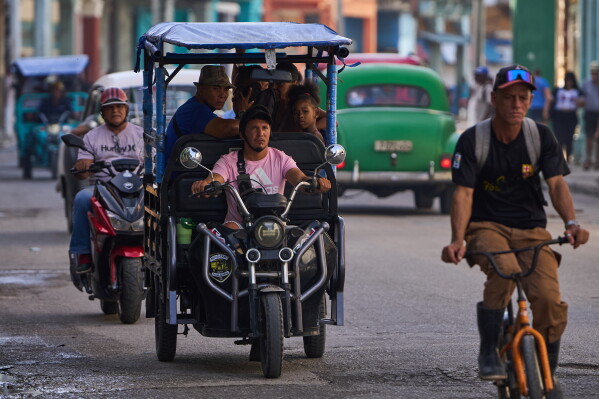
New buses would also arrive and travel the clean streets, on time, and equipped with air conditioning, with visible and reliable schedules. What a scandalous luxury.
The subway might take a little longer, because first they would have to decide where to build it and who was to blame for not having built it before. But nothing would prevent them from announcing it enthusiastically, and people would celebrate, although some might ask whether the internet connection would also be underground.
Families could cook without calculating what time it was, students could study without flashlights, and workers would arrive on time, motivated by decent wages.
And then the real miracle would occur: Cuba would discover that investing in infrastructure is not a capitalist luxury but a rather practical way to live.
Unfortunately, however, we have to come back down to earth, because here we have no oil or anything else that interests Trump and his clique. All we have left is the hope that his colossal ego will prevent him from leaving the presidential chair without scoring another point—one that, politically, would indeed be very valuable.
Read more from Cuba here on Havana Times.