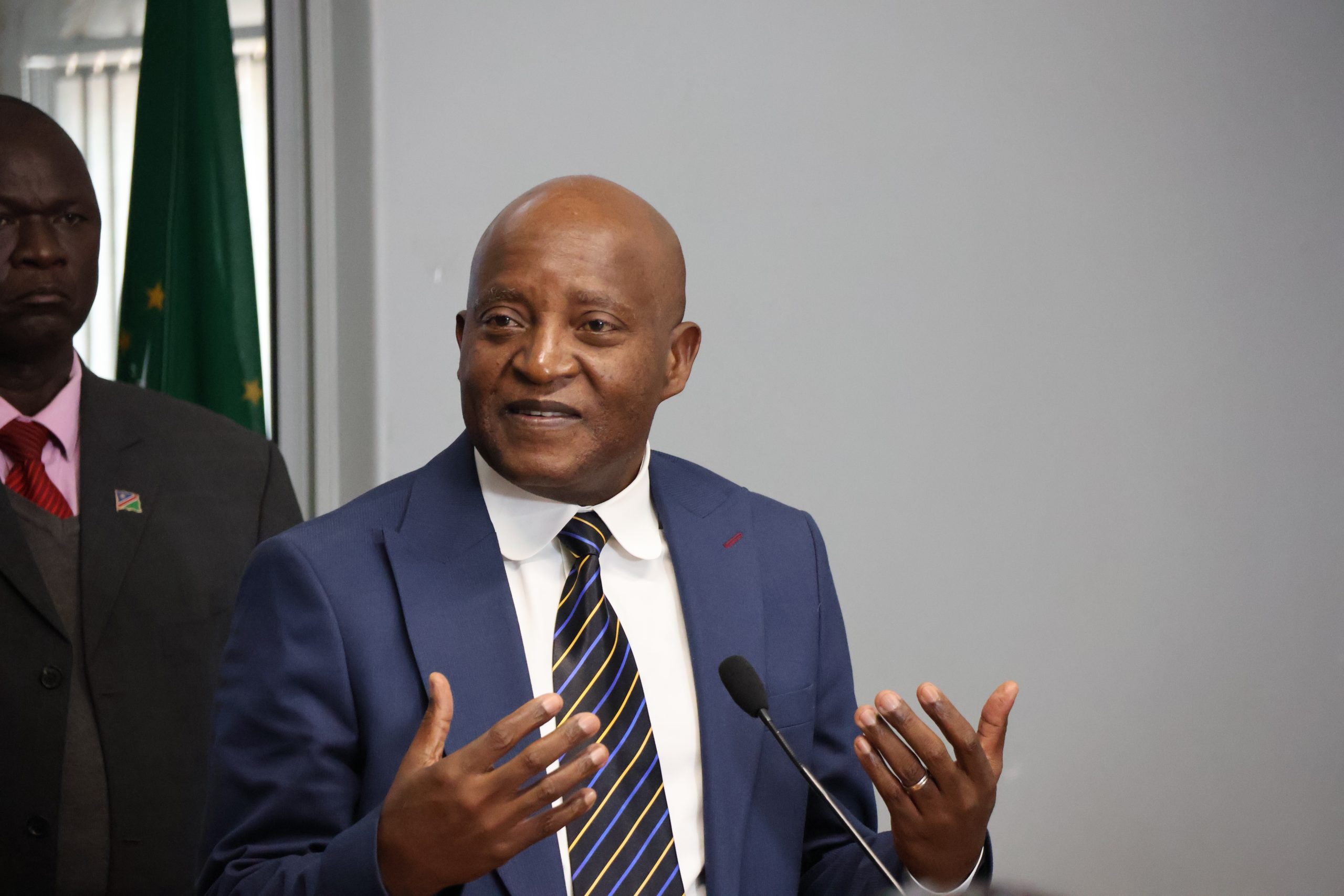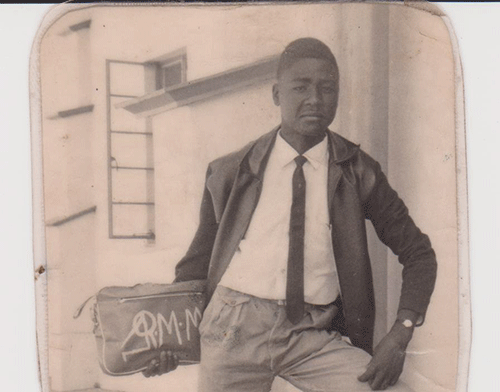
KATIMA MULILO – Recognised liberation struggle veteran and former Zambezi Regional Council political leader Raphael Mbala has recounted the arrests, torture, intimidation and hardships he endured during Namibia’s struggle for independence, saying these experiences strengthened his commitment to the liberation cause.
Mbala, now 78, said his political consciousness began during his school years in the Zambezi region, where he was influenced by teachers and community members involved in political activities.
He said the killing of liberation activist Tobias Hainyeko in 1967 further fuelled his opposition to South African rule.
“That’s where we started hating them. We no longer wanted these South Africans here because they had come here to arrest us and to kill SWAPO,” Mbala told New Era in an interview.
In 1968, Mbala travelled to Zambia with the intention of joining the liberation struggle. “I went to Zambia with the idea of becoming a freedom fighter,” he recalled.
However, after returning to the Zambezi region, he became a target of South African security forces, who suspected him of being involved with SWAPO.
Mbala vividly recalled an incident in which he was arrested and subjected to severe interrogation and beatings after being mistaken for another person whom the authorities were looking for.
He said he was taken to a police station, where he was accused of being a “terrorist” and repeatedly assaulted.
“I was talking while the blood was coming out of my nose, passing through my mouth and coming down. I could feel that this was blood, but I was told to put my hands behind my back,” he said. Mbala said the security officers questioned him about people he had known during his school years and accused him of having undergone military training outside the country. He maintained that although he knew some of the people they mentioned, he had not travelled with them for military training.
“I told them that, yes, this one I know. We were with him at school in 1963 and 1964 before they left,” he said.
He said the interrogation was accompanied by threats and further beatings, leaving his clothes covered in blood.
Mbala said he was eventually released late at night and forced to walk home through what was then largely undeveloped bushland.
“I could feel even my hair rising. That showed that there were people looking at me as I was passing,” he recalled.
Continued harassment
Mbala said his harassment by the security forces did not end with his arrest.
After becoming a teacher, he said, he continued to face interrogation and beatings whenever learners from his schools left the country to join SWAPO in exile. He recalled that in one instance, out of about 39 learners at his school, only 17 remained after a large number went into exile.
“They used to come and pick me. They asked me, ‘Where are these boys going? You know about them.’ I used to be beaten,” he said. According to Mbala, security officers accused him of encouraging learners to join SWAPO and demanded that he stop them from leaving.
“I told them, how can I tell the children not to go to SWAPO? They usually don’t go during school hours. They usually go during the night when they are with their parents. How can I be responsible?” he said.
He said the beatings continued, including the use of a sjambok, as authorities sought information about young people who had gone into exile. Despite the intimidation, Mbala said he continued listening to SWAPO broadcasts, including Radio Freedom, with other young people.
“We used to listen to SWAPO songs and so on. That continued motivating us,” he said.
A teacher and activist
Mbala said his political activities continued alongside his teaching career. He taught at several schools in the Zambezi area and became involved in efforts to mobilise communities and teachers.
He recalled being labelled a radical because of his political views and said he was repeatedly questioned about the activities of young people in his community.
He also described an incident in which security forces arrested and tortured a young man suspected of possessing a firearm after deserting from a military camp.
Mbala said he refused to join a search for the man, arguing that he was a teacher and not a police officer.
“I told them that I cannot go and look for somebody. I’m not a policeman. These policemen are insured. Even when they are killed, they are killed in their work. I am a teacher,” he said.
He said he was subsequently arrested and beaten again.
Standing up to apartheid authorities
Mbala also recalled being detained after refusing to participate in the 1978 elections, which he regarded as illegitimate.
He said the death of his infant child occurred shortly before the election, and his family chose to remain at home to mourn.
“When they came, they said, ‘How come you refuse people to come and vote?’ That was the question, and I was also beaten simply because of that,” he said.
Mbala said the repeated arrests and assaults were the price many ordinary Namibians paid for their opposition to colonial rule.
“Those are the prices you had to pay for freedom,” he said.
His involvement in political and community activities continued into the 1980s, when he became increasingly active in political mobilisation and education.
He later served in leadership positions within SWAPO, eventually becoming its information and mobilisation secretary.
Mbala also served as a councillor and chairperson of the regional council in the former Caprivi region. He said he was involved in efforts that contributed to the renaming of Caprivi to the Zambezi region, as well as the renaming of Shokometsbeke to Honono.
He currently serves as the Ngambela of the Masubia tribe.
Contribution beyond politics
With deep roots from his birth area of Kabbe, Mbala said his contribution to the country extended beyond political activism.
He became an author and wrote several books in Silozi, some of which he said continue to be used in schools.
“I wrote a number of books. All these books which I wrote, they are still being used in schools,” he said.
Despite his age, Mbala remains a farmer. He said he harvested about 170 bags of cassava last year, although the floods affected this year’s harvest.
Fruits of independence
Reflecting on his life more than three decades after Namibia attained independence in 1990, Mbala said he considers those who sacrificed during the liberation struggle his heroes.
He said he has been recognised as a liberation struggle veteran and receives various forms of support, including veteran benefits, education-related assistance, a pension and the social grant.
“I’m not worried. I get my veteran funds. I get my education funds as well, plus the pension,” he said.
For Mbala, however, his story is ultimately about more than personal recognition.
His recollections offer a window into the risks faced by teachers, learners, political activists and ordinary communities in the Zambezi region during the liberation struggle, when arrests, surveillance, torture and intimidation were part of everyday life.
At 78, Mbala, who is a farmer while serving as a Ngambela for the Masubia Traditional Authority, says he remains grateful for the independence for which he and many others sacrificed, while preserving his memories of a period when freedom came at a high personal cost.
–[email protected]