That never reached the artist while imprisoned in Cuba for five years
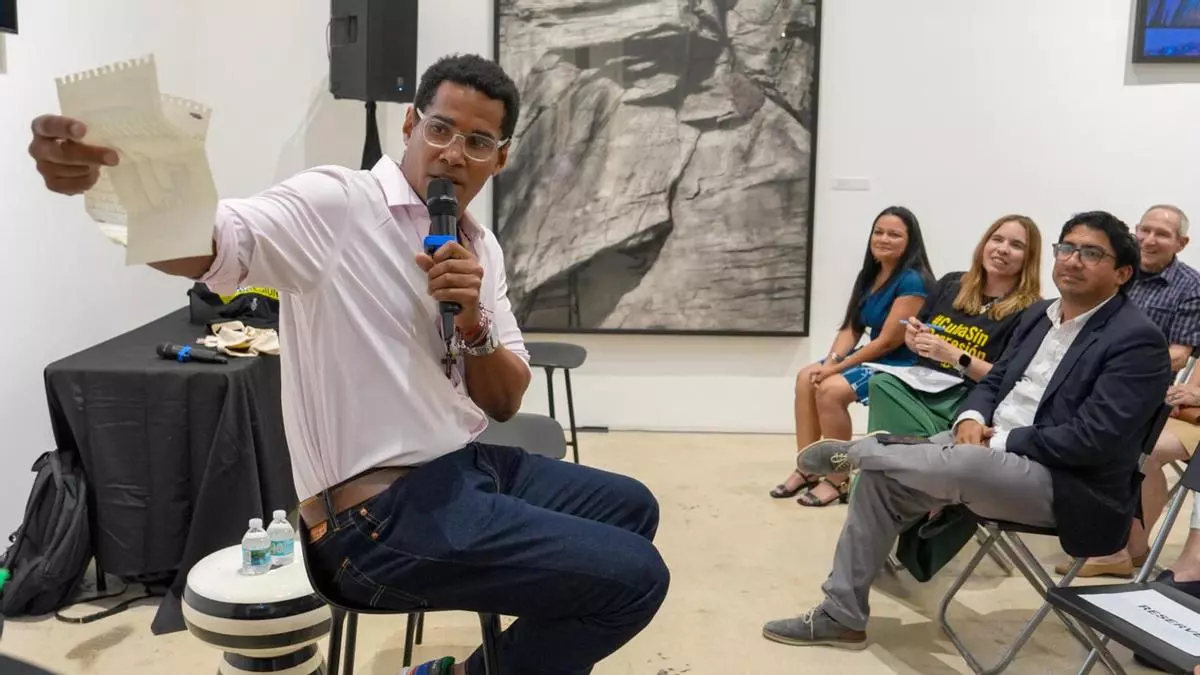
Cuban artist Luis Manuel Otero Alcántara at the Letters of Freedom and Solidarity event this Tuesday in Miami. / EFE/Alberto Boal
“Even though I did not physically have the letters, during those moments of anguish, the energy and love from all of you reached me behind bars.”
By Pablo Urbon (EFE/14ymedio)
HAVANA TIMES – Cuban artist Luis Manuel Otero Alcantara received more than 27,000 letters and messages of support from Amnesty International this Tuesday in Miami, Florida. They had been sent by people around the world during the five years he was imprisoned in Cuba and, he said, he never got to read them. The presentation took place at an event called Letters of Freedom and Solidarity, held at El Espacio 23, the Miami art center where the Cuban artist is an artist-in-residence through September after arriving in the US city in exile on July 18.
“Even though I did not physically have the letters, during those moments of anguish, the energy and love from all of you reached me behind bars. And they nourished the beating of my heart and helped me keep faith that a better future is possible,” the artist wrote in a response letter, dated August 22, which he read to the audience. “I thank you all for so much love. You saved my life,” he said.
The letters and postcards came from Write for Rights, Amnesty International’s annual campaign that selects around ten cases of people in need of solidarity from around the world. Otero Alcantara was one of those selected in 2022, while serving his sentence on the island, and the organization declared him a prisoner of conscience.
“A letter may seem like something small, a simple gesture, but when a person is unjustly imprisoned, a letter can mean much more than a sheet of paper,” said Astrid Valencia, Amnesty International’s deputy director of research for the Americas, who presented the letters to him along with two colleagues from the organization.
“Each letter represents a person who decided to reaffirm human dignity, who decided to refuse to accept injustice as something normal,” she added.
In prison, the artist said, inmates keep letters for years and read them over and over again. “Giving someone a photo, giving them a letter, writing something by hand meant reaffirming one person’s concern for another,” he recalled. It was, he added, a pact of friendship in a place where no one is anyone’s friend.
“I was literally convinced that if my works didn’t get out, I wasn’t getting out,” he said of the drawings he made in his cell but was unable to get outside during his imprisonment. He would describe them by phone to artist friends, who would interpret them outside the prison. That exercise in communication and resistance, he said, was the true work of art.
As a gesture of gratitude, he gave Amnesty International a drawing of a door that he made in prison, one of the ways, he explained, that he sought a way out. “They are light in the darkness,” Otero concluded, referring to the organization.
Otero Alcántara, who in 2018 co-founded the San Isidro Movement, a collective of artists and intellectuals opposed to cultural censorship in Cuba, arrived in Miami after being released from prison along with his prison artwork on the condition that he leave the island.
Published in Spanish by 14ymedio and translated and posted in English by Havana Times.
Read more from Cuba here on Havana Times.