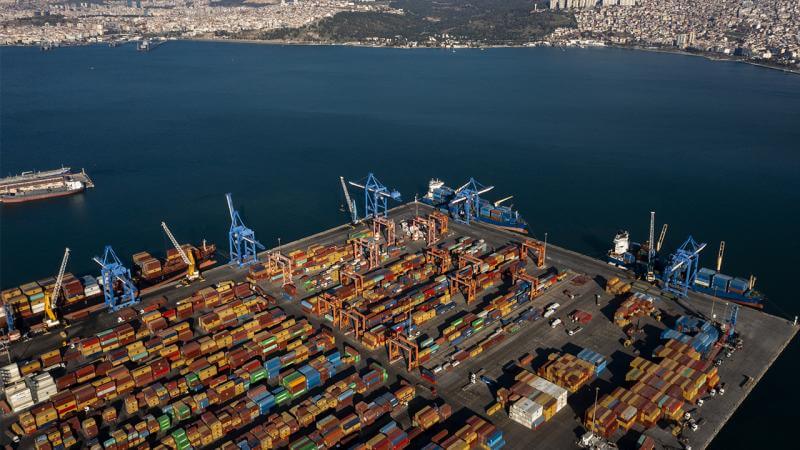
Turkey was the European Union’s fifth-largest goods trading partner in the second quarter of 2026, with two-way trade totaling €52.8 billion ($61.5 billion), according to data released by Eurostat on Wednesday.
From April through June, the EU imported €25.5 billion ($29.7 billion) in goods from Turkey and exported €27.3 billion ($31.8 billion) to the country, giving the bloc a trade surplus of €1.8 billion.
Turkey ranked fifth among both the EU’s largest sources of imports and its biggest export markets. It accounted for 3.6 percent of the bloc’s imports from non-EU countries and 4 percent of its exports outside the bloc.
China was the EU’s largest supplier, with exports to the bloc totaling €153.6 billion, followed by the United States at €98.7 billion, the United Kingdom at €43.4 billion and Switzerland at €36.9 billion.
The United States was the leading destination for EU goods, receiving €127.7 billion in exports. It was followed by the United Kingdom at €92.7 billion, Switzerland at €60.5 billion and China at €50.3 billion.
Despite Turkey’s prominent position, trade weakened from a year earlier. EU imports from Turkey declined 0.6 percent from the second quarter of 2025, while exports to Turkey fell by 4.9 percent.
The EU recorded an overall goods trade deficit of €21.8 billion during the quarter, its first since the second quarter of 2023. Imports from outside the bloc rose 11.7 percent year on year to €701.8 billion, while exports increased 4.5 percent to €680 billion.
The deficit was driven largely by a widening gap in energy products, according to separate Eurostat data.
The EU is Turkey’s largest import and export market by a large margin. Two-way goods trade reached a record €217.6 billion in 2025, when Turkey was also the bloc’s fifth-largest goods trading partner, according to the European Commission.
Turkey and the EU have been linked by a customs union since it entered into force on December 31, 1995, allowing most industrial goods to circulate tariff-free. The arrangement does not cover services, public procurement or most agricultural products.
Ankara has sought for years to modernize the more than three-decade-old customs union. The EU and Turkey agreed in February to continue working toward an updated framework following talks in Ankara between European Commissioner for Enlargement Marta Kos and Turkish Foreign Minister Hakan Fidan.
Although Turkey’s EU accession talks have been largely frozen for years amid concerns about democracy and the rule of law, economic ties between the two sides remain extensive.