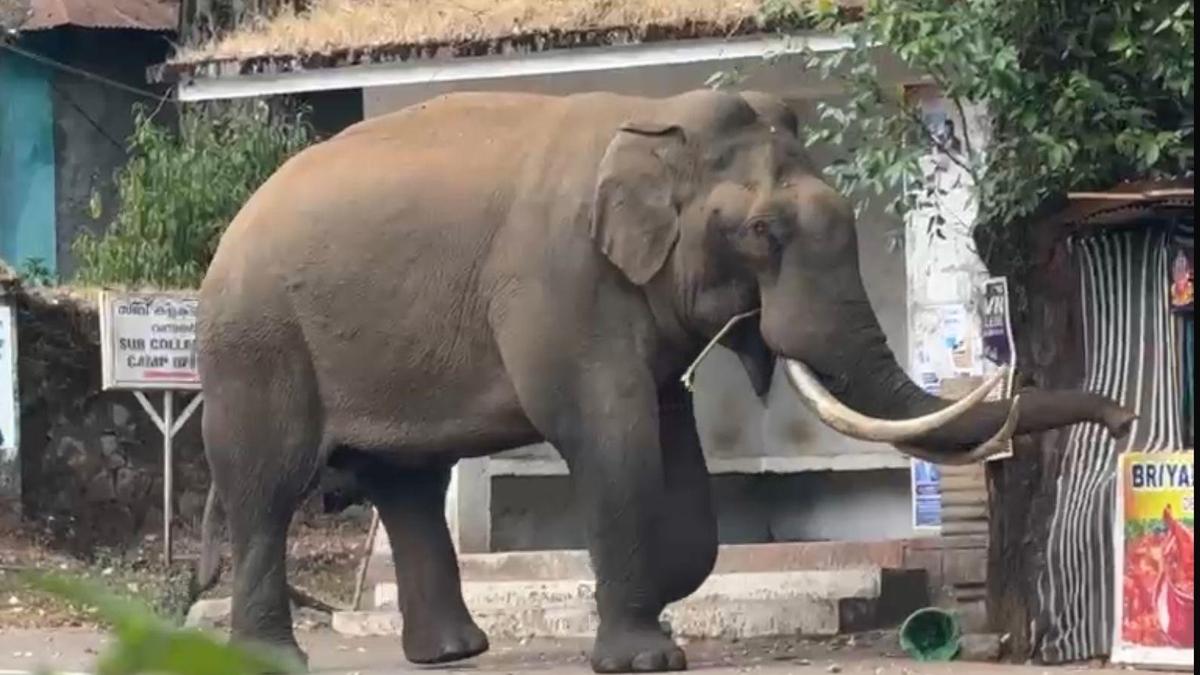
A wild tusker locally called Padayappa at Devikulam near Munnar in Idukki. (File photo)
| Photo Credit: SPECIAL ARRANGEMENT
The Munnar landscape recorded the highest number of human fatalities caused by wild elephant attacks in Keralam, with 103 people losing life in such attacks in the last 18 years, according to a recent study by the Wildlife Institute of India (WII). The report was prepared with the support of the Union Ministry of Environment, Forest and Climate Change.
Covering the period between 2008 and 2025, the study recorded 581 human deaths, 1,200 injuries, and a total of 1,781 human-elephant conflict (HEC) incidents resulting in death or injury across Keralam. The report primarily examined the seasonal patterns behind these casualties. As per the Synchronised All India Elephant Estimation (SAIEE), the State has 2,785 wild elephants.
Among specific regions, the Munnar landscape topped the list with 103 human deaths, followed by the Kottayam forest division with 88 deaths and the Nilambur division with 75 human fatalities. The study also highlighted that males formed the majority of victims among both humans and elephants.
Seasonal analysis
“Seasonal analysis revealed that the monsoon season accounted for the highest number of conflict incidents, followed by the post-monsoon, pre-monsoon, and winter seasons. Male victims were significantly more numerous than female victims across all seasons (sic),” the report noted.
A wild tusker trying to attack a two-wheeler passenger near Chinnar on the Munnar-Udumalpet interstate highway. (File photo)
| Photo Credit:
SPECIAL ARRANGEMENT
The report further stated: “Human-elephant conflict (HEC) in Keralam has emerged as a major conservation and management challenge, resulting in substantial losses of both human and elephant lives. Rapid land-use changes, habitat fragmentation, expanding agriculture and plantations, and the development of roads, railways, and other infrastructure have intensified interactions between humans and elephants, increasing the frequency of conflict.”
695 wild elephant deaths
The study also tracked 695 wild elephant deaths over the same 18-year period. Of these, 226 were attributed to anthropogenic (human-induced) causes and 469 to natural causes. Electrocution emerged as the primary human-induced threat, claiming 154 elephant lives, while train collisions accounted for 17 deaths. In total, 88 tuskers and 59 sub-adult males died due to unnatural causes during this timeframe.
Additionally, the report highlighted that wild elephants regularly damage around 45 species of edible and commercial crops in Keralam, including paddy, coconut, areca nut, rubber, banana, plantain, tapioca, sweet potato, coffee, oil palm, pepper, cardamom, ginger, jackfruit, mulberry, mango, and pineapple. Crops such as banana, coconut, and jackfruit are particularly palatable to elephants, significantly driving conflict incidents.
The report recommends strengthening landscape-level planning, securing elephant corridors, developing elephant-friendly infrastructure, and enhancing community-based early-warning systems to foster long-term coexistence across Keralam and the broader Western Ghats.
Published – August 25, 2026 05:12 pm IST