1
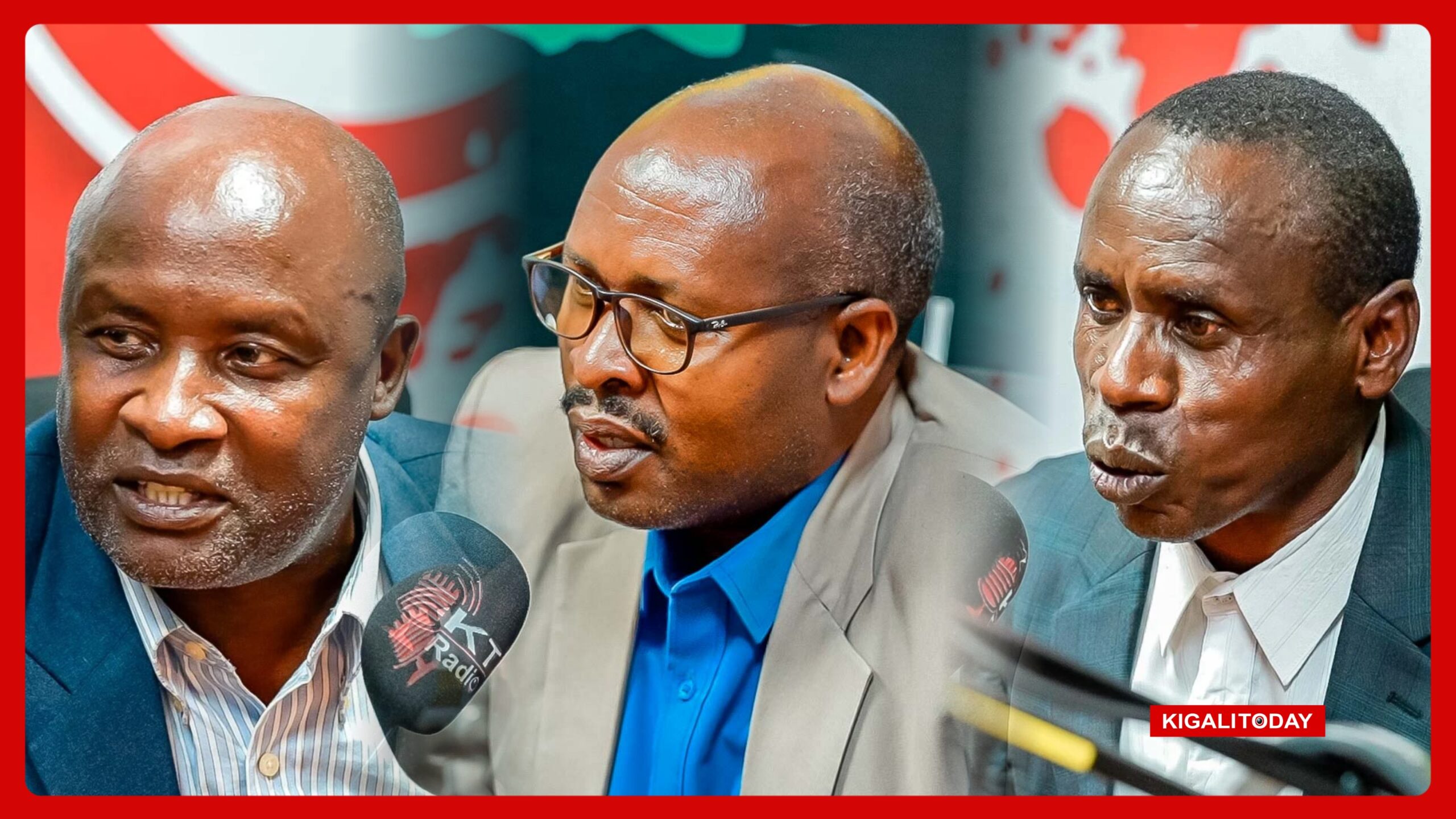
For more than three decades, the FDLR has survived repeated military defeats, the deaths of its commanders, and the loss of territory — yet it has never fully disappeared from eastern DRC. This week, a wave of testimony from former senior FDLR commanders across Rwandan media has offered a rare insider account of how. Their answer isn’t just guns and geography: it’s belief.
Leaders built an elaborate system of manufactured prophecy, mandatory prayer, and religious authority to keep fighters loyal through defeat after defeat — while quietly running mining rackets, embedding allies in Congo’s army, parliament and security services, and rebranding génocidaires as “prophets” to hold the movement together. Here’s what they revealed.
Key revelations
FDLR is growing younger, not dying out Maj (Demob) Makuza Anastase (“Mbaga”) said FDLR’s founders have largely died off, but the group has spent over three decades raising and indoctrinating children born or brought up in DRC with inherited genocide ideology. He rejected the “FDLR is just old men” narrative, saying the group today is made up mostly of youth.
“God had given us Rwanda” — prophecy engineered as military strategy Pastor Jean Damascène Niyonzima said FDLR leadership didn’t just fabricate prophecy, they deliberately outsourced it to a real, community-trusted figure — “prophetess” Taciana Nyiraruvugo of Masisi — because a message from her carried more authority than an order from a commander. His own words: “We told her to tell the soldiers that God had given us Rwanda, that we should attack and that we would win. We even told her to say that although we lacked equipment, we would find what we needed once we reached Rwanda.” Military operations stopped being presented as strategic decisions — they became missions with divine pre-approval.
A named, failed attack rebranded after defeat: “the fighters had failed God” The 2001 offensive codenamed Oracle du Seigneur (“God’s Miracle”) sent roughly 2,000 fighters to attack on the promise the Gisenyi–Ruhengeri road was already theirs; only about 50 returned. Rather than abandon the prophecy system, leadership pivoted the narrative — Niyonzima: “We were defeated and returned to Congo. We then prepared other prophets… The new message was that God had not failed the fighters. The fighters had failed God.” Drinking, adultery, and theft were blamed for the loss, with repentance set as the condition for the next promised breakthrough — a self-reinforcing cycle where every defeat simply produced the next prophecy.
Génocidaires recast as “prophets,” not fugitives Makuza said FDLR members wanted for the 1994 Genocide who fled to DRC were deliberately rebranded internally as “prophets” rather than refugees, touring fighters with fabricated testimony to discourage returns to Rwanda.
Standing religious infrastructure inside FDLR Makuza described designated internal “chaplains” (aumôniers) who organize prayer, brief the prophets on messaging, and report results up the chain, plus a mandatory Friday fasting/prayer schedule for fighters and Saturday sessions for civilians. (No numeric count or full org chart was given.)
A former bodyguard who doubled as an internal evangelist Lt Col (Rtd) Emilien Mpakaniye (“Che Guevara Jacob”) guarded senior FDLR leadership for years while also preaching within the group, and says he hopes to continue evangelizing in Rwanda “if ADEPR allows him.”
FDLR bankrolled itself through more than 100 mining sites Mpakaniye said the group controlled or taxed over 100 mining sites across eastern Congo, extracting payments from miners, traders and local businesses — a parallel economic engine alongside its ideological control.
“They move at night” — invisibility mistaken for defeat Retired Col. Gad Augustin Nshimiyimana (“Johari Bora Manasseh”) pushed back on claims the group has vanished: “People say the FDLR no longer exists because they do not see the rebels. But they move at night and operate where ordinary people cannot easily see them.” He said survival came from combining false religious conviction, mobility, underground networks, and forest cover across Virunga, Masisi, Walikale and Rutshuru — terrain fighters know intimately after decades there.
Origins traced through a specific organizational lineage The movement’s transformation began after the 1996 refugee-camp collapses, when ex-FAR soldiers regrouped under the RDR (Rassemblement pour le Retour des Réfugiés Rwandais), which later merged with its military wing to become FDLR.
FDLR has fused operationally with FARDC and Wazalendo militias Lt Col (Rtd) Idrissa Bizimana (“Idrissa Kanza Muradadi”) said FDLR indoctrinated a Congolese group called “Abatabwa” and Rwandan-origin Katanga miners; after the 2002 Sun City accords, demoralized fighters joined FARDC and Wazalendo, taking their ideology with them. He said the groups now share weapons, salaries, medevac flights and hospitals.
Direct allegation that Tshisekedi personally arms and shields FDLR Bizimana and Niyonzima both said Tshisekedi treats FDLR as “his own children,” supplying it the same way he supplies FARDC — wounded fighters from both are evacuated by the same aircraft and treated in the same hospitals.
A shadow “FDLR presidency” parallel to the Congolese state Niyonzima described an internal governance structure mirroring a government — a “President” and “Commissioners” covering foreign affairs, media, and intelligence — with no fixed headquarters, moving for security.
FDLR’s core objective is armed return to Rwanda, not survival in Congo Makuza said Brazzaville and Uganda were never real destinations — the stated goal has always been fighting back into Rwanda, which he said is why Tshisekedi values the group as a military proxy.
Alleged FDLR political representatives inside DRC’s National Assembly Maj (Rtd) Peter Kubwayo named four sitting Congolese MPs — Jean Bosco Sebishyimbo, Safari Nyagatare, Jacques Nganizi, and Justin Bitakwira — he alleges were elected with FDLR backing and act as its voice in Kinshasa.
Alleged FDLR-linked officers inside Congo’s security services Kubwayo named Col. Karateka (Masisi), Col. Nsengiyumva Anaclet (said to work for DEMIAP intelligence in Kinshasa), Col. Rucyahana Jean Baptiste (police, Lubumbashi), and Col. Mbango Mbau (commander, Beni) — and claimed FDLR members have been sent for drone-operator training, undercutting the “harmless old men” narrative.
Past “disarmament” exercises dismissed as theater Kubwayo said a 2001 handover to MONUSCO at Kamina saw fighters surrender some weapons while hiding others, later used against FARDC before fleeing to Masisi. Mpakaniye said a 2014 relocation only removed elderly/sick members while the group kept real capability intact: “Dismantling the FDLR is possible, but the DRC government cannot do it.”
Visited 1 times, 1 visit(s) today