OPINION: Sullivan, Trump and the price of political loyalty
Published 5:30 am Saturday, August 22, 2026
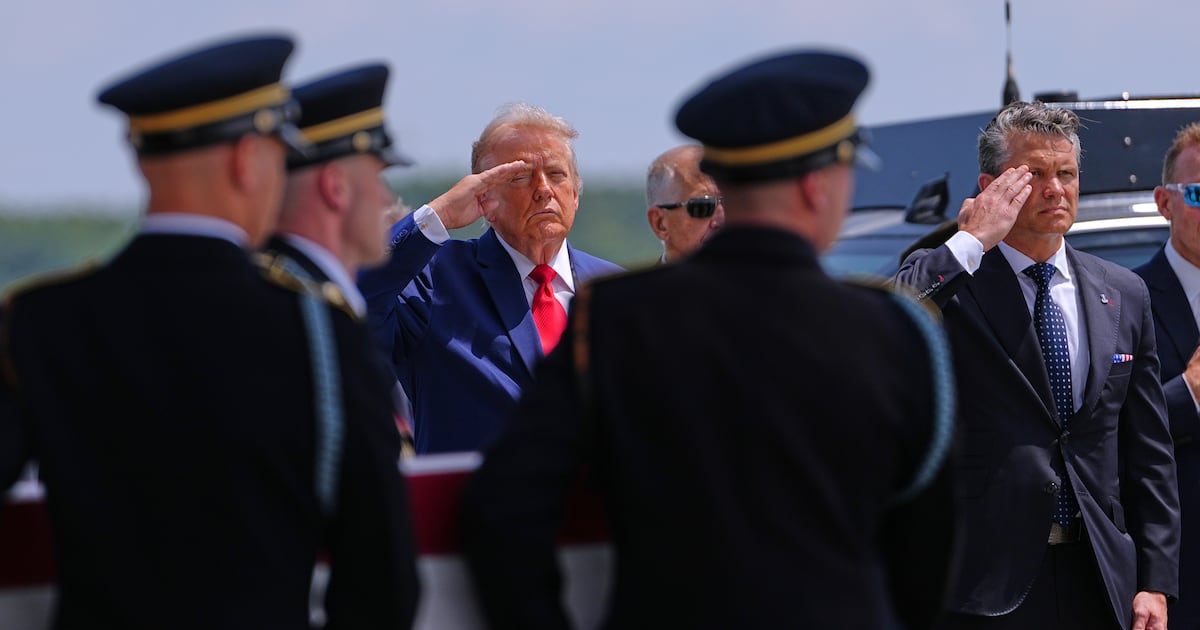
Dan Sullivan has hitched Alaska’s political wagon to Donald Trump as Trump’s presidency is showing its deepest cracks.
Trump’s approval rating has fallen to 33 percent, the lowest of his presidency, according to a Reuters/Ipsos poll released Aug. 17. Yet Sullivan continues to align himself closely with a president whose political standing has weakened sharply.
That raises a pointed question: Does Sullivan really represent Alaska in Washington?
A senator can support conservative policies without surrendering independent judgment. He can work with a president without becoming a presidential echo. He can defend Alaska’s interests when doing so means confronting his own party.
Sullivan has shown he can disagree with Trump. The question is when he chooses to do so.
The Iran war provides the clearest test. The United States entered the conflict on Feb. 28, observed a ceasefire that began, and then resumed hostilities on July 7. Congress has repeatedly debated whether Trump can continue military action without congressional authorization. On June 23, the Senate approved a war powers resolution directing an end to unauthorized hostilities, with Lisa Murkowski voting for it and Sullivan voting against it. In July, Sullivan again voted against advancing a measure to restrict the president’s war powers.
The constitutional issue is contested. Congress has a central role in decisions involving war, especially when military action becomes prolonged. Sullivan argues that keeping force available strengthens diplomacy. Critics argue that leaving the president broad authority weakens Congress’s constitutional check.
For Alaska, this is not an academic dispute. The state’s strategic location makes it central to America’s defense posture, while its economy remains heavily exposed to energy prices, transportation costs and federal spending. When a president commits American forces to another conflict, Alaskans have a direct stake in whether Congress exercises its constitutional responsibility or simply defers to the White House.
No objective. No strategy. No exit.
The same tension appears in trade.
In April 2025, Sullivan voted against ending the national emergency that provided the authority for tariffs on Canadian imports. Murkowski voted to end the emergency, and the Senate resolution passed 51-48 but failed in the House.
That contrast matters. Canada is not an abstract trading partner to Alaska. It is our neighbor, our transportation link and part of the state’s economic geography. The Alaska Highway, Canadian ports, cross-border commerce and access to markets in the Pacific Northwest tie Alaska directly to its northern neighbor. When Washington imposes tariffs on Canadian goods, Alaska cannot simply shop elsewhere.
Tariffs raise costs, disrupt supply chains and complicate business decisions. For an expensive state dependent on imported goods and long-distance transportation, those consequences are not theoretical.
Fishing hits even closer to home.
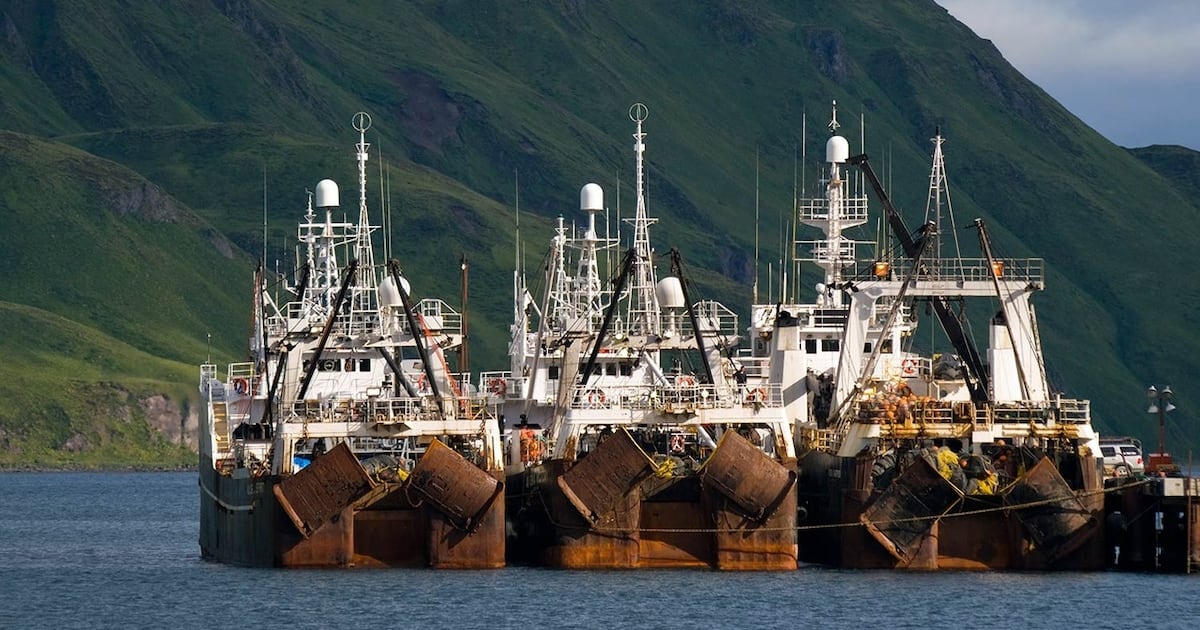
Sullivan has portrayed himself as a defender of Alaska’s fishing industry while most factory trawlers remain a major source of conflict between Alaska communities and large commercial operations. Critics contend that some offshore trawl fisheries generate substantial economic benefits outside Alaska, even when the fish are harvested in Alaskan waters.
For many Alaska communities, fisheries are not an abstract economic sector. They are the foundation of local economies and family livelihoods. When large factory trawlers harvest fish in Alaska waters, the question is not simply how much fish is caught. It is who captures the economic value.
Sullivan has recently introduced legislation aimed at reducing bycatch, limiting some trawl impacts and increasing fisheries monitoring. But supporting Alaska fishermen requires more than defending the industry in speeches. It requires deciding whether federal fisheries policy leaves more fish, more opportunity and more economic value in Alaska.
Then there is voting.
Alaska adopted its open-primary and ranked-choice general-election system through a 2020 ballot initiative. Sullivan has supported efforts to repeal it, and Trump has also called for repeal. Reasonable people can disagree about ranked-choice voting. But a system adopted directly by Alaska voters deserves a debate grounded in Alaska’s interests.
Taken together, these are not isolated votes. They describe a governing choice.
When Trump demands loyalty, Sullivan has repeatedly demonstrated that he understands the assignment. The harder question is whether Alaska is getting the independent senator it needs.
A senator’s first responsibility is not loyalty to a president. It is loyalty to the people who sent him to Washington.
That is the price of being hitched. When the wagon moves toward the ditch, the passenger does not get to claim he was merely along for the ride.
The wagon is already moving. Alaska should decide whether it wants to keep riding.
Van Abbott is a 36-year resident of Alaska having worked in Ketchikan, Fairbanks and Anchorage as a municipal, financial and utility manager. He resides in Ketchikan and is currently a freelance writer. He served as a Peace Corps teacher in the 1960s. See his website: politicalwinds.org.