China has launched the world’s first regular Arctic shipping route linking Asia and Europe, marking a major milestone in global logistics.
Traveling along Russia’s Northern Sea Route, the new service can cut the journey from Ningbo to Felixstowe in Britain by half to about 20 days.
The first voyage to be deployed on the route was carrying energy-storage units, photovoltaic modules, solar equipment and other high-value, temperature-sensitive goods as well as new-energy vehicle components, mainly from cities in the Yangtze River Delta.
However, due to seasonal ice conditions, the route operates mainly from July to October, with at least eight voyages planned for the year 2026.
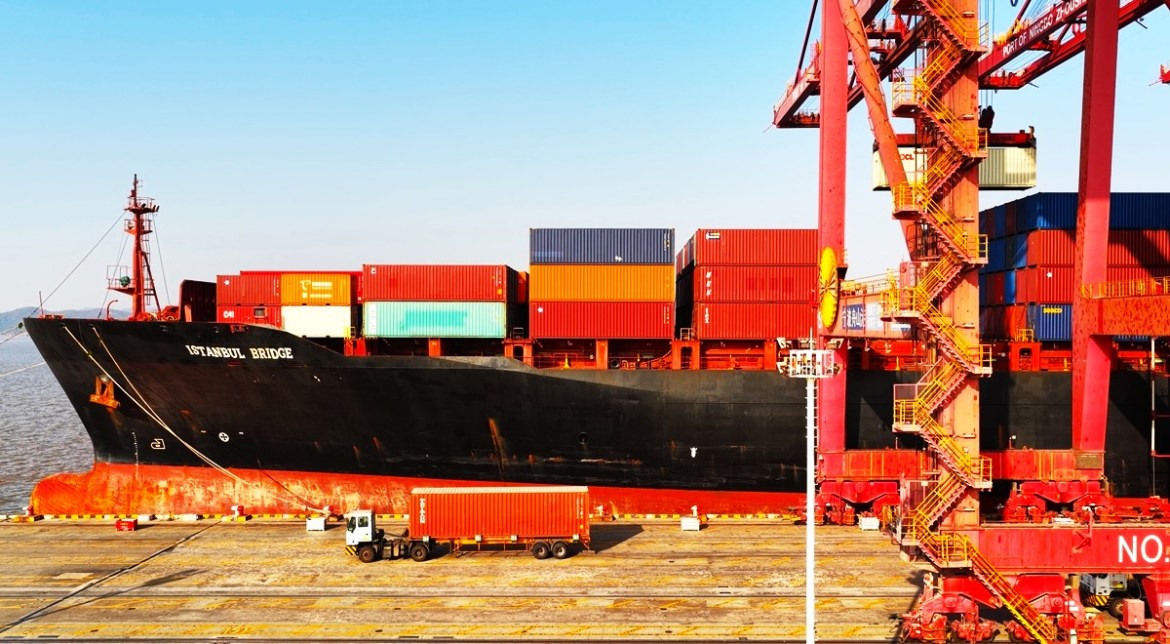
On August 15, 2026 the container ship Dubai Tower departed Ningbo-Zhoushan Port in east China’s Zhejiang Province sailing for Europe via the Northeast Passage, initiating weekly summer operations that build on a successful maiden trial voyage undertaken in December 2025.
The sailing marked the start of regular summer operations on the China-Europe Arctic Express following a trial voyage last year.
The China-Europe Arctic Express cuts transit time in about half, slashing the usual 40-day journey via the Suez Canal.
“The route stands out for its advantages in transit time and supply chain security,” said Xin Jianning, general manager of Zhejiang Seaport Logistics Group Company, Limited.
The new shipping corridor underscores China’s growing role as the world’s largest trading nation, with China-EU goods trade reaching US$447.8 billion in the first half of 2026, up 14.2 percent from the previous year.
More than just a new shipping lane, the route reflects China’s ability to transform geographic opportunities into channels for trade, connectivity and global cooperation, aligning with its 2018 Arctic Policy white paper aiming to jointly build a “Polar Silk Road.”
China is the world’s largest trading nation in goods and has enormous trade volumes with Europe.
This, according to observers has directly generated commercial demand for an Arctic shipping route.
At the same time, cooperation between China and Russia in areas such as route management, icebreaking services, and port connectivity has further improved the accumulation of navigation safety data and the level of operational support, reducing risks for participating partners.
It is therefore no surprising that the route has attracted strong interest.
Demand for bookings this year has exceeded expectations, the first two voyages were fully loaded, while orders for subsequent sailings have continued to pour in.
Most of the cargo consists of high-value-added exports from the “new three” industries.
Meanwhile, container freight rates have risen sharply, with this year’s rates roughly twice those of last year’s maiden voyage.
In 2025, there were 206 voyages carrying Liquified Nitrogen Gas from the Yamal LNG project to Europe, compared with just 50 from the Chinese mainland.
The Arctic is a shared region of the world. As long as they comply with international law, including the United Nations Convention on the Law of the Sea (UNCLOS), respect the legitimate jurisdiction of Arctic coastal states, and take the protection of the Arctic environment into account, all countries have a legitimate right to participate in the development and commercial operation of Arctic shipping routes.