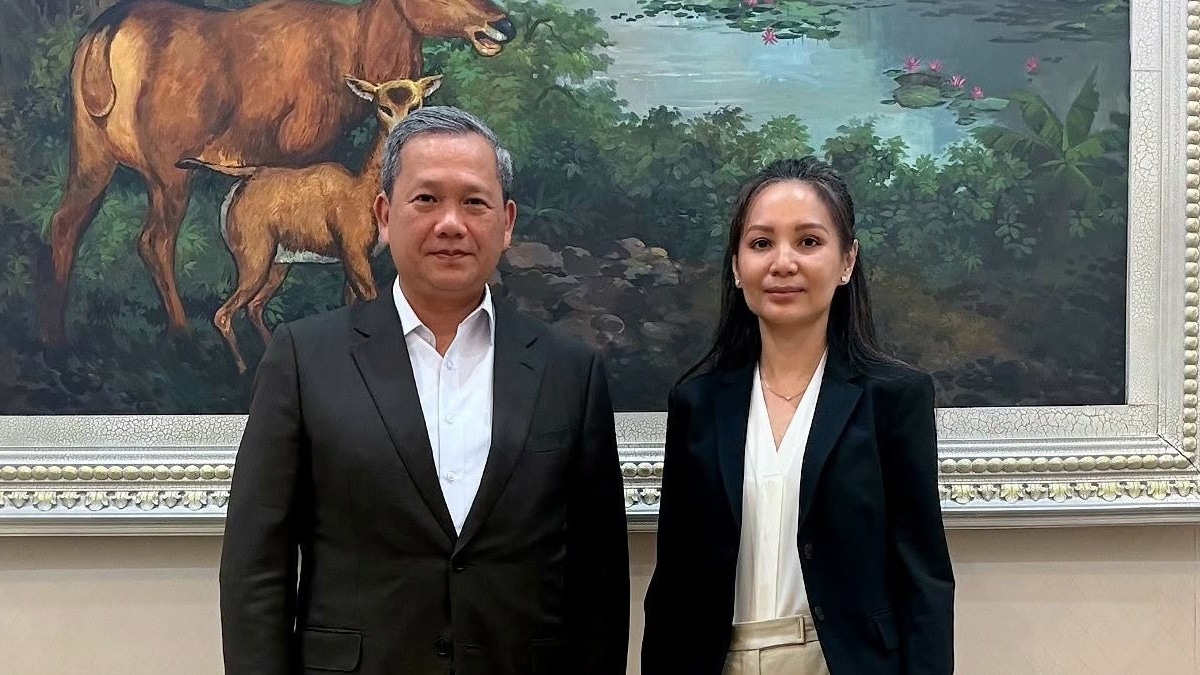
The appointment of Kem Monovithya, daughter of Kem Sokha, as a special envoy to Prime Minister Hun Manet has drawn differing assessments from Cambodian analysts. Some view the appointment as an opportunity for her to contribute to society, while others see deeper political implications behind the move.
Sek Socheat, executive director of the Mindset Development Organization, said the appointment represents a sensitive development for Kem Sokha’s political life and his family. He said some supporters might criticize the family for becoming involved in politics alongside the ruling party, or speculate that an undisclosed political agreement may have been reached.
It is worth recalling that when the last Khmer Rouge forces defected and were integrated into the government between 1998 and 1999, the process was described as “integration” and was also portrayed as national reconciliation and unity among Cambodians for the purpose of serving and rebuilding the country, even though the Khmer Rouge had for years denounced the Phnom Penh authorities as puppets of Hanoi.
Sek Socheat said that deciding to serve society or the nation is an individual right of every Cambodian citizen and should not automatically be regarded as surrender or the abandonment of one’s political principles. In democratic countries, he said, politicians may switch parties or work with different political groups if they believe doing so can help advance social and national objectives.
He added that Cambodia’s highly polarized political culture may cause some people to fear criticism and hesitate to accept public positions, even when their participation could benefit society. Other observers, however, have questioned why, if unity and solidarity among Cambodians are considered beneficial to the nation, such reconciliation has taken so long. They also ask why political actors repeatedly alternate between calls for unity and periods of division, insults, and accusations of treason.
By contrast, Seng Vannly, a geopolitical affairs observer, offered a different assessment. He described Kem Monovithya’s appointment as special envoy to Hun Manet as potentially part of a political strategy by the ruling party. He argued that the appointment could be intended to weaken the influence of opposition figures and divert public attention from fundamental concerns over democracy.
Seng Vannly also said the appointment should not be interpreted as evidence of genuine national reconciliation. Instead, he argued, it could represent an attempt to use Kem Sokha’s family circumstances to serve the government’s political interests and improve its image internationally.
He strongly criticized the acceptance of an official government position, saying it could be perceived as abandoning a previous political stance and could undermine confidence among Kem Sokha’s supporters.
Years ago, Kem Sokha’s daughter, Kem Monovithya, lobbied U.S. officials in Washington against policies pursued by the Cambodian government under the Cambodian People’s Party. She was also involved in fundraising efforts connected with a complaint against the government of then-Prime Minister Hun Sen before the International Criminal Court, alleging crimes against humanity related to the displacement of residents from their land and homes and the granting of land concessions to foreign companies.
Seng Vannly said the latest development could lead to perceptions that Kem Sokha, once a prominent opposition leader, is now operating in a new political context more closely aligned with the agenda of the ruling Cambodian People’s Party. He added that appointing a single individual, without formally dropping charges, restoring political rights to other politicians and activists, or expanding space for the media and civil society, should not be regarded as a broad restoration of democracy.
Regarding Cambodia’s democratic development, Will Brehm, a professor at the University of Canberra in Australia, wrote in an article published by East Asia Forum in late January 2026 that the border crisis had exposed what he described as Cambodia’s opaque political economy.
Brehm wrote that Cambodia’s leadership faced two major economic pressures in 2025. First, U.S. President Donald Trump raised tariffs on imports into the United States, creating concerns about possible factory closures in Cambodia’s export-oriented garment sector, which generates roughly US$1.3 billion annually, according to the account cited in the article.
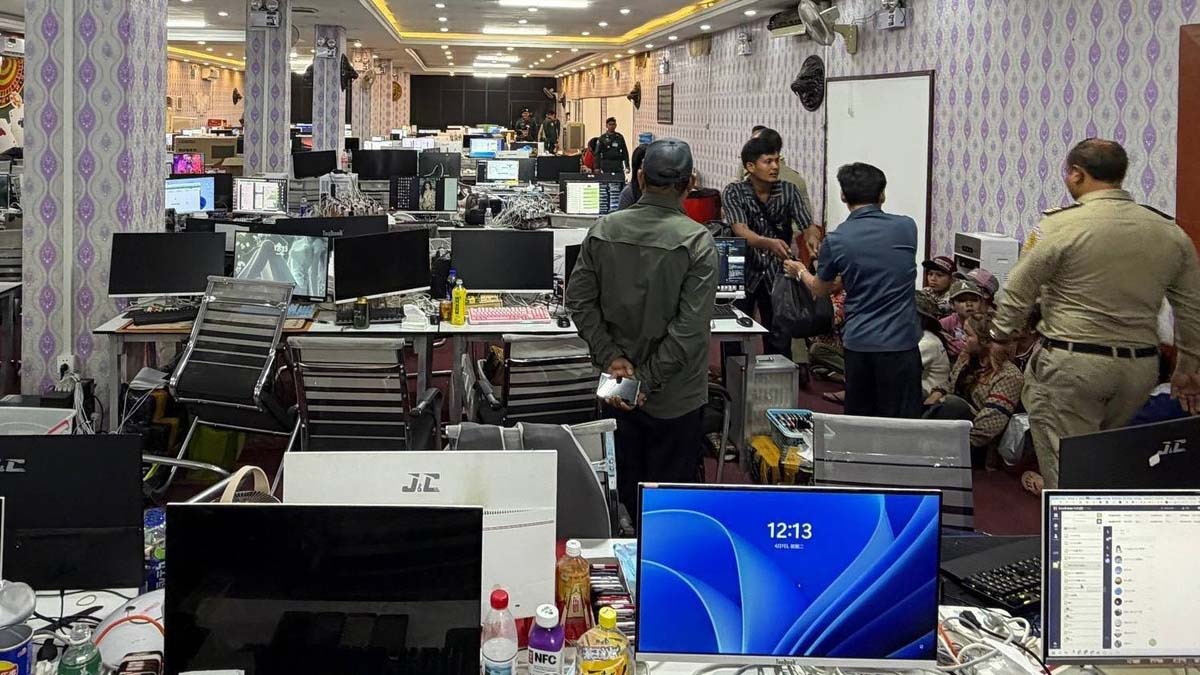
Second, at around the same time, the Thai government was preparing to crack down on illegal economic activities along the Cambodian border, including networks of scam compounds and fraudulent operations. A May 2025 report by Jacob Sims of the Humanity Research Consultancy, published about two months before armed clashes broke out along the Cambodia-Thailand border, estimated that Cambodia’s online scam industry generated approximately US$19 billion.
The article argued that because of alleged links between technology-enabled scam operations and figures connected to Cambodia’s ruling establishment, the Cambodian government responded aggressively and helped create or intensify the border crisis. According to that argument, the crisis further weakened Thailand’s civilian government while increasing the Thai military’s political influence.
Kem Sokha, the former leader of the Cambodia National Rescue Party, which was dissolved by a Cambodian court in 2017, was convicted in a treason case. He has denied all allegations against him. For years, he has also lived under political and legal restrictions, remaining confined largely to his residence as his status changed from defendant to convicted prisoner.