EVERETT — The city of Edmonds officially intends to pursue annexation of Esperance, according to a resolution the City Council passed Tuesday.
While the resolution is non-binding, it directs city staff to start working with Snohomish County to develop an annexation agreement.
“This resolution is really primarily intended to make sure the City Council wants staff to proceed and that the staff isn’t wasting time by engaging with Snohomish County,” City Attorney Jeff Taraday said.
At a special meeting Tuesday afternoon, the council voted 6-0 to advance the resolution. Council member Will Chen abstained because he owns an office building in Esperance for his business.
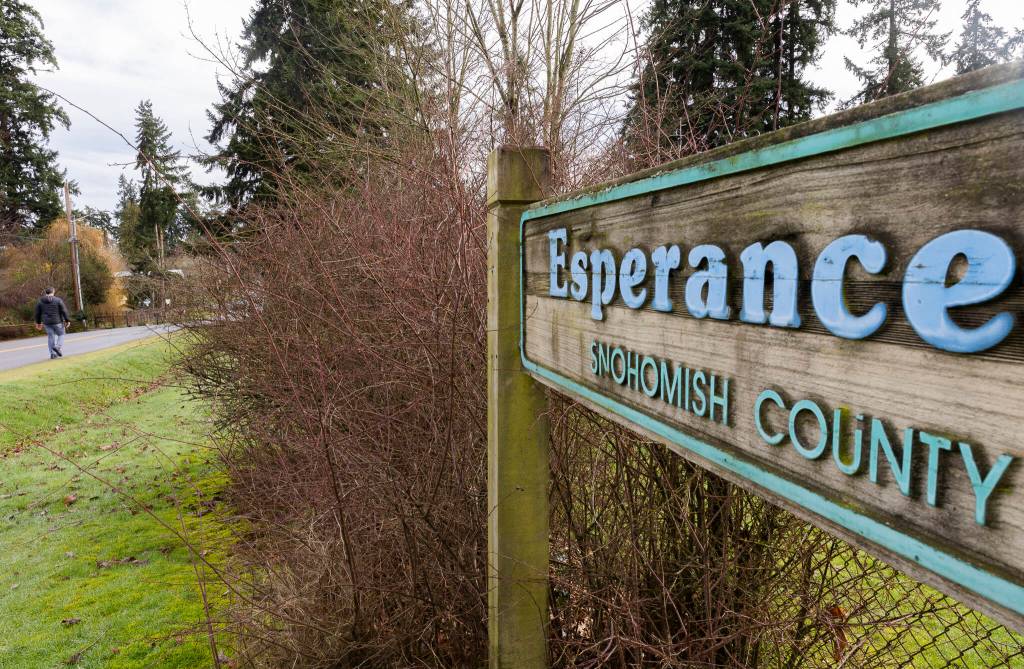
The 464-acre unincorporated neighborhood is completely surrounded by the city of Edmonds and has a population of about 4,500. The resolution specifies that the city intends to annex the area in two phases. First, the city would the eastern and southern portions of the area, including Esperance Park. The area has a population of just over 2,000.
The city may move forward with the northwestern and north-central portions at a later date. The area has a slightly larger population of about 2,400. The delay will give the city time to investigate the condition of the 84th Avenue bridge that crosses Chase Lake and how much potential improvements would cost. Currently, the county rates the bridge, which was built in 1968, as being in “fair” condition, meaning it does not currently qualify for county replacement or repair funding. The city does not yet know how much the bridge study will cost, according to council documents.
“I do think that this is a good way to go, if we can make the study of the bridge a top priority,” council member Susan Paine said. “Then, we can look at starting a second process for area two.”
Since the 1960s, Esperance voters have struck down annexation five times, with the most recent vote in 2005. But last year, a group of Esperance residents began advocating for annexation after raising concerns over zoning changes at the county level. Since then, some residents have said annexation could improve emergency response times, drinking water quality and pedestrian safety.
While the city previously had to put annexation to a vote, a law passed in the 2000s makes it possible for the city to annex Esperance without a vote from its residents and instead through an interlocal agreement with the county. The law applies to “unincorporated islands,” or areas that have at least 80% of its boundaries contiguous with one city.
Annexing through an interlocal agreement would allow for the city to receive a sales tax credit from the state. If costs exceed revenues — which could happen with additional staffing costs and future capital projects, such as upgrades to the 84th Avenue bridge and Esperance Park — the city would receive a 0.1% sales tax credit, which would go toward providing services to Esperance. The law is in place for annexation areas with populations between 2,000 and 10,000. However, the city cannot impose the tax after July 1, 2028. If it submits an application to the state before then, it can continue to receive the credit for up to 10 years, or as long as costs exceed revenues.
By annexing in two phases, the city could potentially receive the tax credit twice. The city is working on finding out whether the credit could go toward repair of the 84th Avenue bridge.
“Because of the infrastructure, we just have to be really mindful of not putting ourselves in a real bind if the funding is not there, and that puts us in a real deficit,” Council President Michelle Dotsch said.
Since the tax must be imposed in 2028 at the latest, Taraday said the second area would likely not be deferred for too long.
On Tuesday, council members said they received concerns from Esperance residents living in the second annexation area about the lack of a clear timeline.
In response, the council passed an amendment to the resolution that says the city will request that the county not make any zoning changes to area two that would take effect before July 1, 2028.
“One of the things that I heard from residents of Esperance, and especially if this is split in two, is their concern about Snohomish County having deferred any changes to zoning because of our intent,” Dotsch said. “While this initial resolution doesn’t describe it, this will add that assurance in there that we are understanding that this is a concern.”
On Aug. 12, a consulting firm presented two potential scenarios for how annexation could affect the city’s finances. Both scenarios predicted a positive impact to the city’s general fund, which is struggling amid the city’s third year of a declared fiscal emergency.
The first scenario does not account for any staff increases due to annexation. Staffing at the same level would result in a net general fund impact of about $3.8 million in the first year and $48.9 million in years six through 15, according to the report.
The second scenario includes a limited staff increase, including five positions in the police department; 1.75 in the parks, recreation and human services department; and one in the public works department. That would result in a net general fund impact of about $2 million in the first year and $25.4 million in years six through 15.
For Esperance residents, annexation would increase taxes by $364 to $480 per year for the median home valued at $821,700, according to the consultant report. The largest increases would come from stormwater charges and utility costs.
At the Aug. 12 meeting, consultant Jeff Linden said there could be a “very slight” property tax increase for Edmonds residents.
Council President Pro Tem Jenna Nand said that, since the city is not planning on putting annexation to a vote, she’d like to see a survey of Esperance residents to see if there’s majority support for annexation.
“I think that this would help us bypass a lot of difficulty if organized opposition to annexation does emerge within the community, which it has previously,” Nand said.
The resolution directs staff to establish a public participation process that includes public meetings and opportunities for written comment.
“We can’t, I don’t think, overly communicate,” council member Chris Eck said. “… This doesn’t bind us to this particular plan, and, in fact, it just helps us move to the next step, and I think it’s a very important statement for us to make.”
Jenna Peterson: 425-339-3486; jenna.peterson@heraldnet.com; X: @jennarpetersonn.