Ester Hakaala
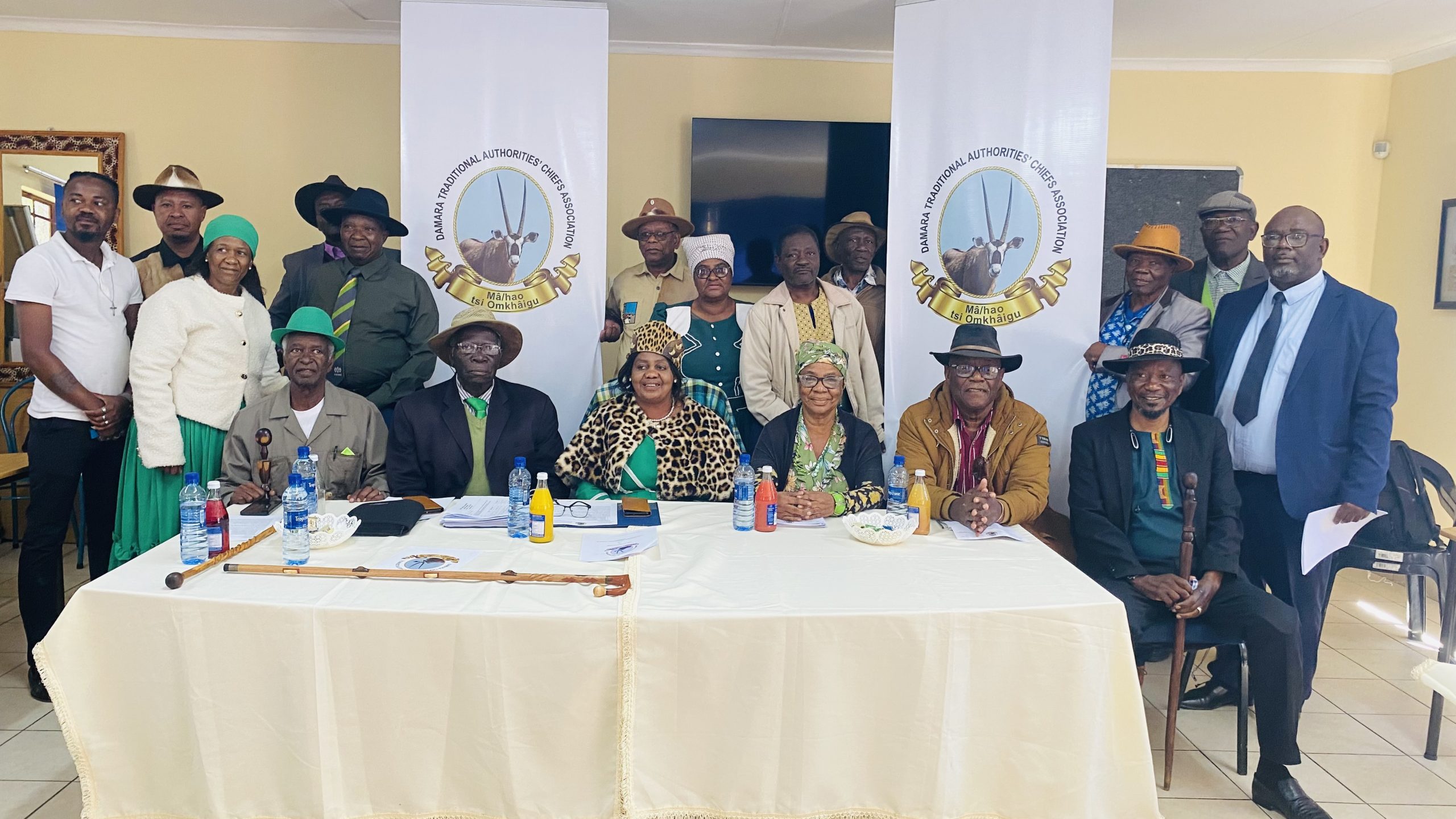
The eight recognised Damara traditional authorities have established the Damara Traditional Authorities Chiefs’ Association.
This is to strengthen their collective representation on issues affecting traditional leadership and the socio-economic welfare of Damara communities.
The decision was taken following deliberations held in Windhoek from 11 to 13 August 2026, where representatives of the eight authorities agreed to establish the association as an umbrella body to coordinate and advocate for matters of common concern.
Speaking at a media conference in Windhoek yesterday, Secretary General of the association, Walter /Hâseb, said the formation of the body would allow the traditional authorities to speak with a stronger and more coordinated voice when engaging government and other stakeholders.
“The establishment of the association is founded on the understanding that the eight traditional authorities, while retaining their respective identities, customs, traditions, authority and jurisdiction, can achieve greater effectiveness through unity, cooperation, collective representation and coordinated action,” /Hâseb said.
He said the association would focus on issues including traditional leadership recognition and representation, land and resettlement, access to basic services and infrastructure, water and sanitation, education, youth development, employment and economic empowerment as well protection of traditional knowledge and indigenous practices.
According to /Hâseb, the association would not replace or interfere with the individual traditional authorities but would provide a common platform through which they could collectively engage government, parliament, private-sector institutions, development partners and civil society.
“Nothing in the establishment or operation of the association shall be interpreted as dissolving any traditional authority, transferring the traditional jurisdiction of one traditional authority to another, creating a superior traditional authority over the eight participating authorities, interfering with the customs or internal affairs of an individual traditional authority, replacing the statutory functions of an individual traditional authority or diminishing the identity or dignity of any participating traditional authority,” he said.
The association’s objectives include advocating for improved infrastructure and essential services, promoting economic opportunities and youth development, engaging authorities on land and natural resources, and protecting Damara culture, language, history, heritage and indigenous knowledge.
The association was also established to strengthen the participation of Damara traditional leadership in national policy and legislative processes affecting traditional authorities and their communities.
The eight traditional authorities first met in Otjiwarongo in June 2023 to deliberate on the establishment of a collective representative forum. The latest Windhoek meeting resulted in a formal resolution to establish the association.
/Hâseb said the association would seek to translate collective representation into tangible benefits for communities through partnerships, advocacy for government services, education and skills development, economic opportunities and community initiatives.
The association will operate on the principle that the eight traditional authorities remain equal and independent institutions, with no authority being created over the others.
The founding resolution commits the traditional authorities to unity, collective representation, strengthening Damara traditional leadership, socio-economic development, cultural preservation, youth development and equitable access to land, services, infrastructure and development.
[email protected]