Saving the humanities the right way
Published 2:44 pm Friday, August 14, 2026
The humanities are the collection of academic subjects focused on human culture and creative expression. In my opinion, these are the core of a good education. History, literature, philosophy, theology, and the arts help us understand what it means to be human and how to pursue and achieve a life worth living.
They ask students to pursue and ponder questions like, what is real? What is good? How should a human life be lived? And they are predicated on the idea that there are objective answers to these questions discernible to human reason.
These subjects are personal to me in that I earned a bachelor’s degree in philosophy and religion and a master’s in history. I’ve been shaped by these subjects, and I’m professionally committed to advancing their place in K-12 and higher education.
That’s why a recent report by a commission of distinguished scholars from Vanderbilt, Princeton, and other leading universities deserves more attention than it has received outside academic circles.
The report was commissioned by the chancellors of Vanderbilt and Washington Universities and was authored by a group of scholars chaired by New York University philosopher Paul Boghossian. The team was charged with assessing the state of scholarship in the humanities and humanistic social sciences.
Their findings are sobering. While affirming that serious scholarship still exists in every field they studied, the commission concluded that every discipline showed signs of a troubling pathology. Scholars in these fields have for many years now substituted political criteria for scholarly ones in the evaluation of academic work. In the most extreme cases (anthropology was singled out for especially harsh critique), the field’s professional leadership has essentially declared that the discipline exists to advance a left-wing political program.
Email newsletter signup
The president of the American Anthropological Association told her colleagues in 2021 that the field’s “political project” is to challenge the dominant culture of capitalist consumerism. That’s not scholarship. That is activism wearing scholarship’s clothing.
The deeper problem, as the commission identifies it, is philosophical. Much of the contemporary humanities has absorbed a postmodern skepticism about truth itself.
Since so many modern secular scholars assert that all knowledge claims simply reflect someone’s perspective, it is legitimate to evaluate scholarship on political rather than evidential grounds. Once that move is made, the humanities ceased to be a truth-seeking enterprise and became an ideological one, enforcing acceptable conclusions
rather than pursuing contested ones.
This is not a conservative complaint about liberal professors. The commission itself is careful to note that political commitments have always inspired excellent scholarship, and that the current moment’s right-wing political intrusions into curriculum have the potential to be equally corrosive. The problem is not who holds the politics. The problem is that politics has displaced the pursuit of truth as the organizing purpose of these disciplines.
What the commission does not say, but the evidence suggests, is that there is substantial unmet demand for something better. The K-12 classical education movement, which emphasizes the great texts of Western civilization, genuine formation in virtue and civic life, and the unembarrassed pursuit of truth and beauty, has grown explosively in recent years. Parents are seeking for their children exactly what the university humanities once promised and increasingly fail to deliver: an honest encounter with the permanent questions.
The humanities are worth saving. They form human beings in ways that no other discipline can. But they will not be saved by doubling down on the ideological program that is driving students away, nor by submitting to political pressure from outside the academy. They will be saved by recovering what they were always supposed to be: a disciplined, rigorous, humble pursuit of what is true about the human condition.
That is a mission worth fighting for, if universities are willing to recommit to what was once their core purpose.
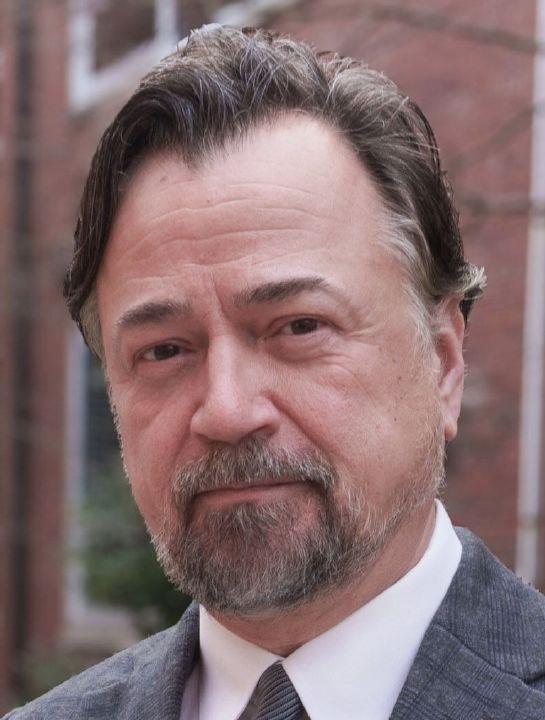
— Gary Houchens, PhD, is professor and director of the Educational Leadership doctoral program at Western Kentucky University.