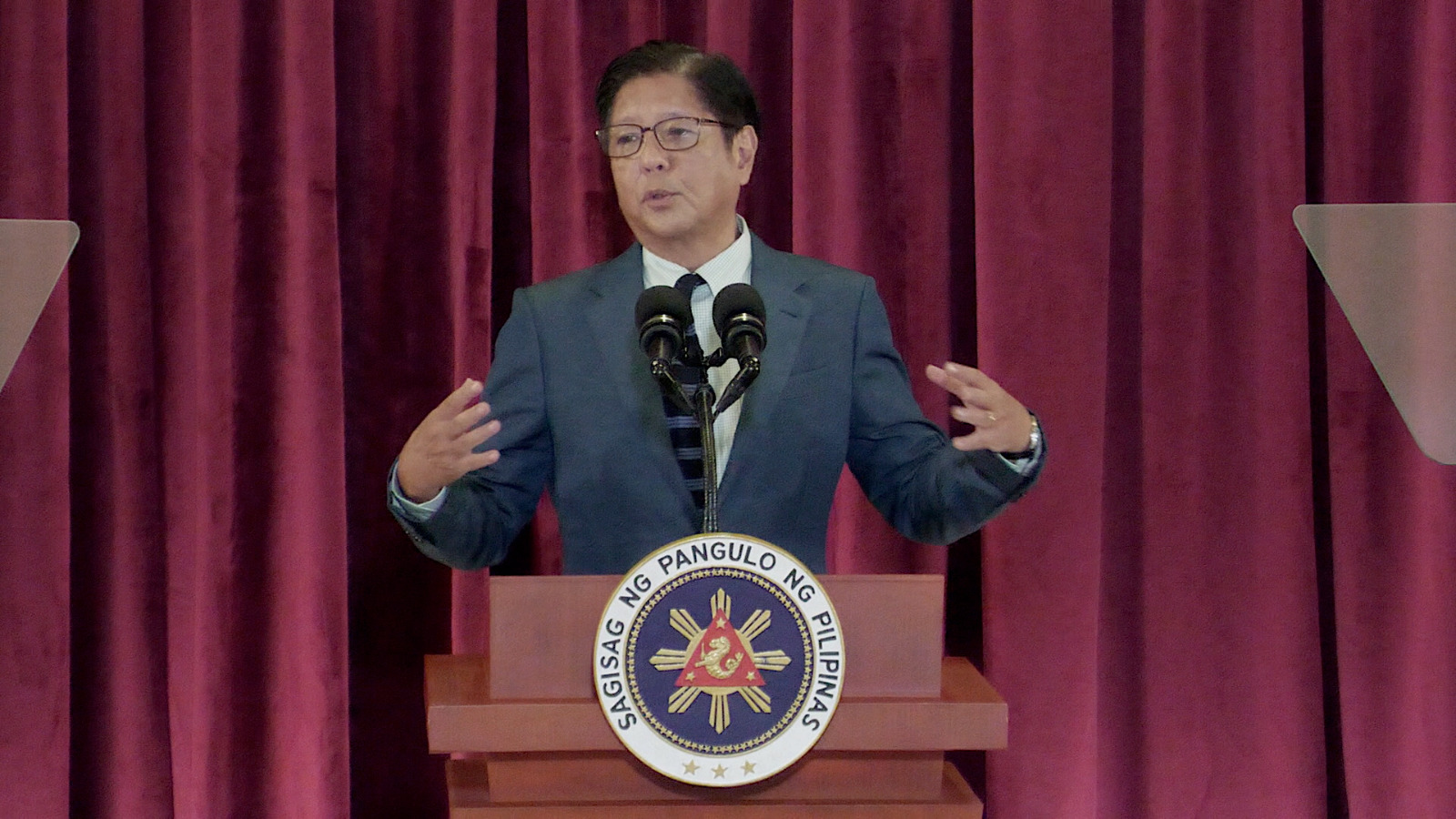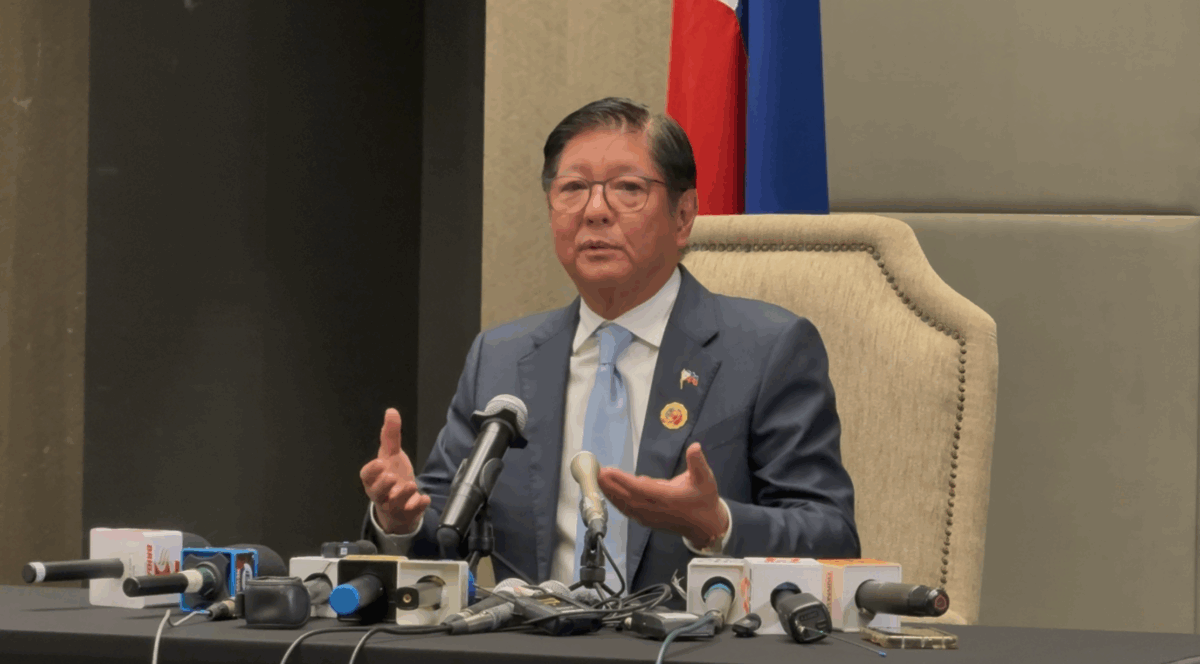
President Ferdinand Marcos Jr. — File photo by Dexter Cabalza/INQUIRER
MANILA, Philippines — President Ferdinand Marcos Jr. on Friday assured the public that the so-called “provisional understanding” between the Philippines and China on resupply missions to Ayungin Shoal does not weaken the country’s sovereign rights “in any way, shape, or form.”
During the question-and-answer portion of his attendance at the Foreign Correspondents Association of the Philippines Presidential Luncheon, Marcos explained that such arrangements are intended to prevent miscalculations or mistakes that could lead to conflict in the country’s territorial waters.
READ: West PH Sea: Hontiveros seeks Senate probe into PH-China Ayungin deal
Article continues after this advertisement
“What the Philippines does is that when we are going to conduct a resupply mission, we issue what is… known as a NOTA, which is just a notice of your maritime movements,” he said.
“And that is the extent of it. That does not somehow make you more vulnerable or give up any of our sovereign rights or any of our territorial claims or our recognized territory, especially under the (United Nations Convention on the Law of the Sea or) Unclos and the arbitral awards. Nothing of that has been weakened in any way, shape, or form,” he asserted.
The president stressed that issuing such a notice is a standard practice and is not limited to Chinese vessels.
Marcos’ explanation follows a June 2024 confrontation that resulted in a Filipino sailor losing his thumb, a March 2026 incident in which fire-control radar was directed at the Philippine Navy frigate BRP Miguel Malvar, and a July 2026 incident at Ayungin Shoal in which a Philippine Navy personnel was struck with a wooden baton.
In relation to these incidents, Sen. Risa Hontiveros has filed Senate Resolution No. 589 seeking an inquiry into the effectiveness of the Philippines-China “provisional understanding.”
Article continues after this advertisement
She said the Senate needs to determine exactly what was agreed upon and whether the Philippines is actually benefiting from the understanding.
PH-China ‘reset’
Meanwhile, Marcos reiterated that the “reset” he wants in the Philippines’ relations with China focuses on de-escalating tensions in the West Philippine Sea.
Article continues after this advertisement
“It’s a reset in the sense that if we are beginning to detect or to feel an increase in tensions or an escalation in tensions, then we have to once again go back and talk to our friends in China and say, ‘Look this is not headed in the right direction. Let’s find ways to bring the tension, the levels of tension down, to de-escalate, and so that we do not get to the point where one of our forces, your your vessels, our vessels, the sailors that sail upon the… make a mistake or there’s a misunderstanding,’” he explained.
“We try to bring the level of tensions, we try to bring the…even sometimes the language that is being exchanged, down a notch. So that’s the reset,” he also said.
Marcos floated the idea of a “reset” in relations with China during a closed-door meeting with Chinese Ambassador Jing Quan at Malacañang on July 21.
Your subscription could not be saved. Please try again.
Your subscription has been successful.
Palace press officer Claire Castro said in a briefing two days later that Marcos’ objective in summoning Jing was to use the dialogue as an opportunity to improve relations despite the ongoing disputes between the two countries. /das/gsg
For comprehensive coverage, in-depth analysis, visit our special page for West Philippine Sea updates. Stay informed with articles, videos, and expert opinions.