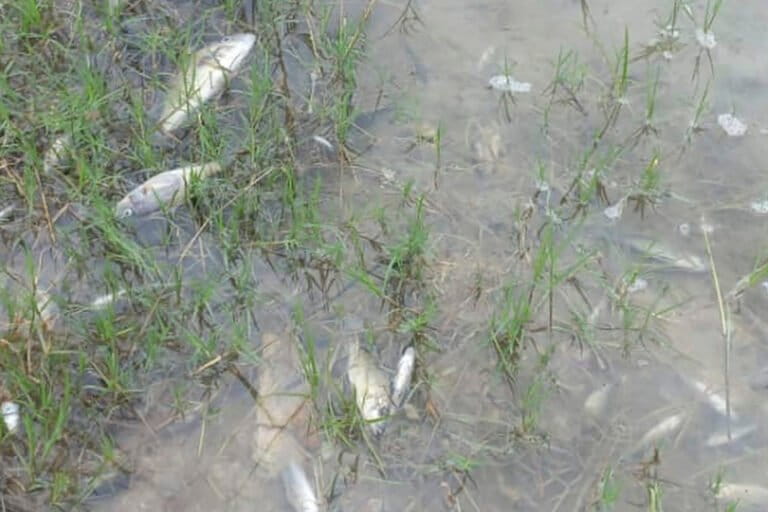
One and a half years after the collapse of a large tailings dam in Zambia’s Copperbelt Province, the environmental and human impacts of the toxic spill continue to affect residents, civil society members have told Mongabay. The dam, which is used to store mining waste and is owned by Chinese copper company Sino-Metals Leach Zambia, failed on Feb. 18, 2025, in the town of Chambishi in north-central Zambia. It released millions of liters of acidic mining waste into waterways connected to the Kafue River. Stretching 1,576 kilometers (979 miles), the Kafue is the longest river lying entirely within Zambia and a lifeline for millions of people in the country. A study by researchers at Zambia’s Copperbelt University published in the Journal of Hazardous Materials Advances in May 2026 is the first independent scientific assessment of the ecological impacts of the incident. The researchers found severely compromised water quality, high concentrations of heavy metals in water, fish, sediments and pastures, and evidence that toxic substances had entered the food chain. The larger Kafue River system provides water to around half of Zambia’s population. It feeds into the Zambezi River and sustains biodiverse wetland ecosystems including the Lukanga Swamp and the Kafue Flats. For the study, the scientists collected water samples from five sites in the affected area and one in the unaffected area as a control in the days following the accident. Their analysis of the samples showed that heavy metal concentrations, including of copper, iron, zinc, lead and arsenic, exceeded…This article was originally published on Mongabay