Overview:
Ngaraard State’s traditional and elected leaders are demanding answers after heavy rains triggered mudslides and runoff near the TACMOR project, raising concerns over mangroves, seagrass beds, marine life, local livelihoods and compliance with environmental permit requirements.
By: L.N. Reklai
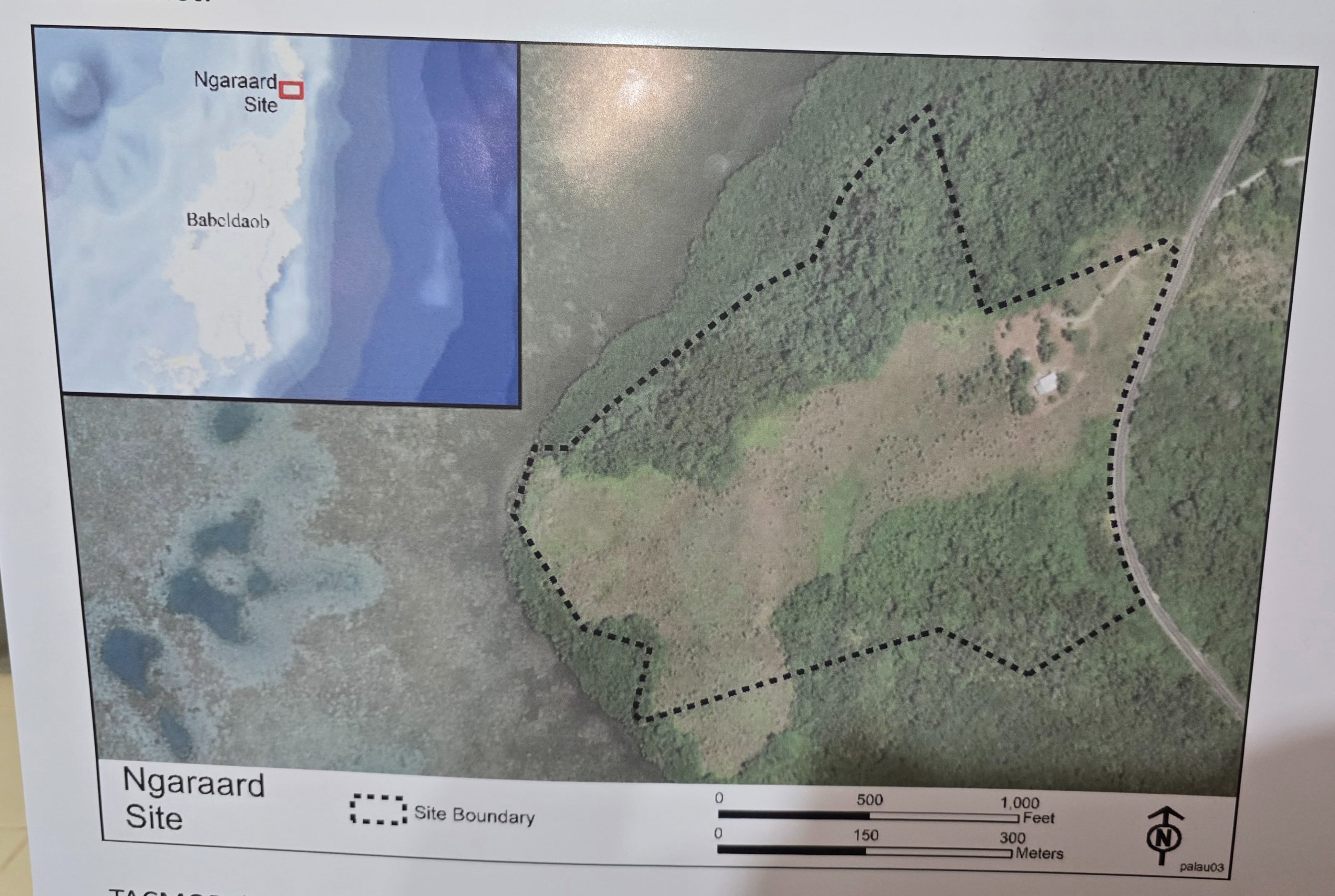
NGARAARD, Palau (August 10, 2026) — Ngaraard State’s traditional leaders and elected officials are calling for an urgent meeting with the Ministry of Public Infrastructure and Industries and the Environmental Quality Protection Board after heavy rains triggered mudslides and runoff near the TACMOR project, raising concerns about impacts on mangroves, seagrass beds and nearby marine habitats.
In an Aug. 6 letter to Infrastructure Minister Charles Obichang and EQPB Chairman Florencio Yamada and board members, the Ngaraard State leadership said work on the TACMOR project had resumed following a brief suspension prompted by major rainfall.
The state said the rainfall resulted in several mudslides affecting mangrove areas and surrounding seagrass and marine habitats — impacts it said its leaders had warned about before the project began.
“The destructive runoff and mudslides being deposited to the mangroves and sea beds of our marine environment are the very concern we had voiced out from the very beginning,” the letter said.
Ngaraard officials said neighboring Ngarchelong and Ngardmau also have expressed concern over the situation.
The state is seeking answers on why the landslides occurred, what erosion-control measures failed or were not implemented and what steps will be taken to prevent similar incidents as work continues.
The leaders also asked for a formal assessment of the damage and whether the affected environment can be restored to its pre-project condition.
Of particular concern is the health of marine life within and around the affected mangroves, seagrass areas and adjacent fishing grounds. Ngaraard officials noted that legally established Protected Areas Network sites are located near the project area and asked whether those sites have been affected.
The state also requested a detailed description of mitigation measures required under the project’s Final Environmental Impact Statement and questioned whether a required erosion and sedimentation control plan was prepared, reviewed and approved before earthmoving began.
Questions over permit compliance
Ngaraard State specifically raised concerns about compliance with EQPB Permit No. 188-23, pointing to special conditions it says may have been triggered by the runoff event.
The state cited Special Condition 1.3, which requires erosion-control structures to be installed, inspected and formally approved by EQPB before ground-disturbing work begins.
Ngaraard said it was not aware of documentation showing that EQPB conducted a pre-construction inspection or issued written approval before earthmoving started.
The state also cited Special Condition II.11, which requires the permit holder to conduct an immediate field assessment and coordinate with EQPB within 24 hours if monitoring shows that erosion-control measures are ineffective. The permit holder must then implement revised measures and submit an updated verification plan.
Ngaraard said the documented runoff event indicates that erosion-control measures in place, “to the extent any exist beyond the ‘TBD’ designation in the Final EIS,” may not be effective.
The state asked EQPB to confirm whether the adaptive management protocol under Special Condition II.11 had been activated and to provide copies of the required field assessment and notification to the board.
Ngaraard also raised questions about EQPB’s enforcement authority, citing provisions of Palau’s National Code that it said could allow the board to issue a stop-work order when permit conditions are violated.
The state urged the ministry, EQPB and TACMOR contractors to meet with its leadership to determine what corrective measures are needed.
Livelihoods and roads also affected
Beyond environmental concerns, Ngaraard leaders said the impacts are being felt by people whose livelihoods depend on the affected marine areas.
The letter cited mangrove clam harvesters, fishermen and others whose activities have been disrupted, and asked whether penalties imposed for environmental violations could contribute to an “impact fund” to address unforeseen consequences.
The state called for consideration of short-, medium- and long-term impacts, including potential permanent damage to marine and natural resources.
Ngaraard also pointed to damage to paved roads from the heavy truck traffic associated with the project, asking that repairs be addressed promptly.
Despite the concerns, the state leadership emphasized that it supports the TACMOR project and views it as part of Palau’s relationship with the United States under the Compact of Free Association.
The leaders said their request is ultimately about respect for Ngaraard State and its people, as well as ensuring that development proceeds without damaging the environment.
“We can do a good thing without destroying something,” the letter said.
The letter was signed by Ngaraard Gov. Sharp Sakuma, traditional leaders and members of the state Legislature, including Delegate Speaker Gibson Kanai and Speaker Marcy Andrew.
The Ngaraard leadership asked for a timely response from the ministry and EQPB and said it wants to resolve the concerns through communication rather than litigation.