Keep our news free from ads and paywalls by making a donation to support our work!
Notes from Poland is run by a small editorial team and is published by an independent, non-profit foundation that is funded through donations from our readers. We cannot do what we do without your support.
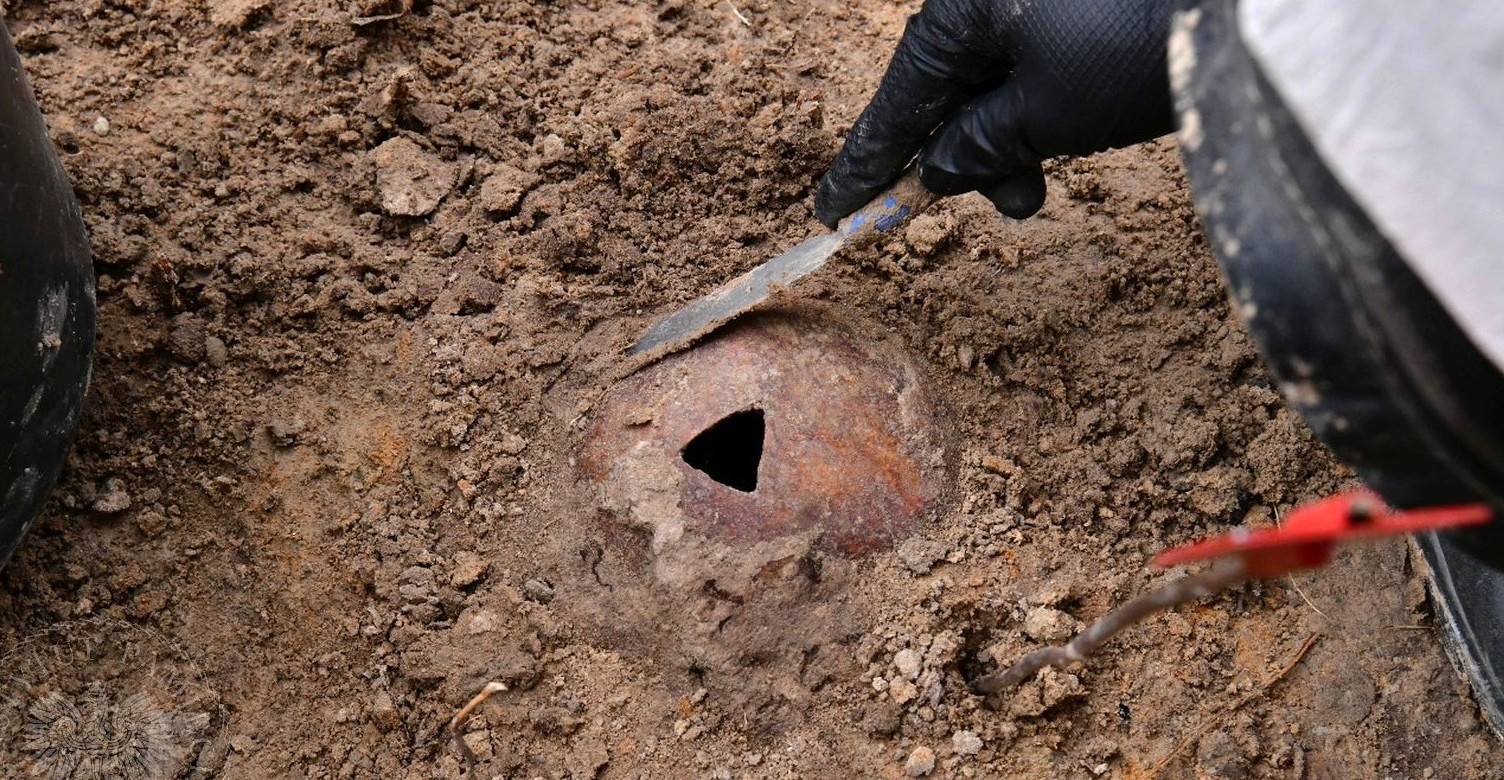
The remains of a further 55 victims of massacres by Ukrainian nationalists during World War Two have been exhumed in Ukraine. Around half were children, and most show signs of brutal deaths, including skulls pierced with farming tools (as pictured above).
The announcement comes amid ongoing tensions between Poland and Ukraine over the so-called Volhynia massacres, sparked by President Volodymyr Zelensky’s recent decision to name a military unit after the Ukrainian Insurgent Army (UPA), which was responsible for leading the killings of around 100,000 Poles.
However, both sides have expressed hope that continued exhumations of victims – most of which are believed to still remain buried in unmarked mass graves in Ukraine – can ease that path towards reconciliation.
📣 Zakończenie tegorocznych prac ekshumacyjnych ofiar Zbrodni Wołyńskiej w Ostrówkach i Woli Ostrowieckiej
❗ Od 13 lipca do 7 sierpnia br. pracownicy Instytutu Pamięci Narodowej, przedsiębiorstwa „Wołyńskie Starożytności” oraz specjalista z zakresu medycyny sądowej z… pic.twitter.com/iDJR5NmdEn
— Instytut Pamięci Narodowej (@ipngovpl) August 7, 2026
The new findings were made in Ostrówki and Wola Ostrowiecka, two neighbouring former villages, now depopulated, that were previously part of Poland but, after postwar border changes, are now located in western Ukraine.
There, on 30 August 1943, the UPA massacred over 1,000 Poles and razed the villages to the ground. Similar massacres took place in many other villages, as part of an ethnic cleansing operation by the UPA to remove Poles and other minorities from what they saw as Ukrainian territory.
Exhumations previously took place in Ostrówki and Wola Ostrowiecka in the 1990s, and again in 2011 and 2015, uncovering the remains of hundreds of victims. However, hundreds more are believed to remain buried.
In 2017, Ukraine imposed a ban on searches for victims on its territory in response to the dismantlement of a monument to the UPA in Poland. However, in a diplomatic breakthrough last year, it allowed them to resume, including granting permission in December for work in Ostrówki and Wola Ostrowiecka.
In April this year, mass graves were discovered there, with exhumations then beginning in July. Poland’s state Institute of National Remembrance (IPN) has now announced the result of that work.
They have uncovered the remains of 55 victims, 26 of them children (mostly under 12 years of age, with the youngest a few months old) and 20 women. In the Volhynia massacres as a whole, the majority of victims were women and children.
The locations and conditions of the remains reveal much about the manner of their death. Most were buried “at random” without coffins, which is consistent with contemporary accounts that they were killed in a barn and then thrown into a mass burial pit, notes the IPN
Most of the remains, in particular skulls, show signs of injuries that are also consistent with contemporary accounts, which said that victims were ordered to lie on the ground before being killed with farm tools, including hammers for slaughtering cattle.
Material from the bones has been secured for genetic testing, which was recently used for the first time to identify massacre victims exhumed at another location in Ukraine last year.
Around 300 personal items, including rosaries, crosses and clothing, were also found during the recent excavations in Ostrówki and Wola Ostrowiecka.
On 30 August, the 83rd anniversary of the massacre, the newly found remains will be buried in a funeral ceremony at the cemetery in Ostrówki. The IPN believes that over 300 further victims still remain buried at unknown locations in the two former villages.
Poland has for the first time used DNA testing to identify the remains of Poles massacred by Ukrainian nationalists in WWII.
“After more than 80 years, families are receiving the answer they have awaited for generations,” says the culture minister https://t.co/c1gM3kQ83s
— Notes from Poland 🇵🇱 (@notesfrompoland) July 14, 2026
The Volhynia massacres have long been a point of tension between Poland, which recognises them as a genocide, and Ukraine, which rejects that label. The decision by Kyiv to allow exhumations to resume last year was regarded as a major step towards reconciliation.
However, that process was undermined in May this year, when Zelensky decided to name a military unit after the “heroes of the UPA”. That prompted an angry response from Warsaw, where President Karol Nawrocki stripped Zelensky of Poland’s highest honour.
There have since been efforts to reach a diplomatic solution. Last month, Zelensky pointed specifically to the exhumation work in Ostrówki and Wola Ostrowiecka as evidence that “Ukraine is doing its part to fairly establish the facts about those who were killed in those years”.
Subsequently, he announced a five-point plan to alleviate the crisis, including allowing more exhumations and opening up historical archives. Poland welcomed the move but said that it would wait to see how it was implemented in practice.
Poland has cautiously welcomed President @ZelenskyyUa’s announcement of a five-point plan to alleviate the diplomatic crisis triggered by his earlier decision to name a military unit after a group that led massacres of Poles during WWII https://t.co/M3GXD9vtAr
— Notes from Poland 🇵🇱 (@notesfrompoland) July 18, 2026
Notes from Poland is run by a small editorial team and published by an independent, non-profit foundation that is funded through donations from our readers. We cannot do what we do without your support.
Image credits: Tomasz Trzaska/IPN (under CC BY-SA 4.0)
Daniel Tilles is editor-in-chief of Notes from Poland. He has written on Polish affairs for a wide range of publications, including Foreign Policy, POLITICO Europe, EUobserver and Dziennik Gazeta Prawna.