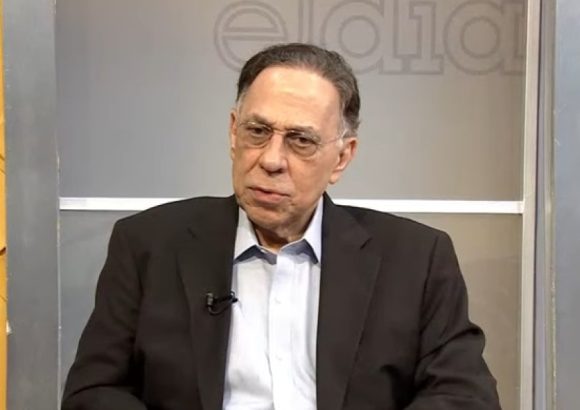
Amid the intense heat the country has experienced this summer, power outages have once again become a topic of conversation. Celso Marranzini, president of the Unified Council of Electricity Distribution Companies (CUED), explained that the interruptions are due to maintenance and spoke about the investments and changes being prepared to improve the electricity service.
“We are going through an extremely hot period. It’s something we’ve never seen before. Consumption is skyrocketing. We also have the (Central American) Games, which is a significant consumption factor, although it’s not directly related to that,” he said in an interview on the program El Día.
The official indicated that the distribution companies have 169 substations and that, by the end of this year, they expect to install new substations or upgrade some of the existing ones.
“We agree that power outages, no matter how they occur, are odious. Especially with this heat, it’s unbearable,” he acknowledged.
However, he explained that suspending service to carry out maintenance work helps prevent longer interruptions caused by breakdowns.
“ But ifmaintenance isn’t done, then it’s not the maintenance that comes, it’s the breakdown, and it’s worse,” he argued.
“When there are power outages at night, it’s a breakdown, because we don’t have power outages at night,” he said.
What’s next for the electrical system?
Among the measures being implemented, Marranzini mentioned pruning work to prevent trees from coming into contact with power lines. He announced that next year they will implement “hot pruning,” which will allow this work to be done without suspending service.
He also highlighted the progress in the installation of smart meters which, he explained, allow detection when a meter stops measuring and help combat irregularities in the service.
“It’s a system that needs eight more years to become a truly developed system,” he stated.
The president of CUED also announced that this year will be marked by investments in the electrical system and that financing of projects with international banks is planned for next year.
Among these projects, he mentioned one that, he explained, could benefit some 324,000 families.
In addition, he indicated that they are working with the Ministry of Energy and Mines on a public lighting project that will allow distributors to monitor the lamps and know if they are on or off, as well as adjust their intensity depending on the time of day.
In addition, there is an upcoming tender to install 200 megawatts of batteries linked to existing solar installations, with the aim of storing energy during the day and making it available at night.
The president of the Unified Council of Electricity Distributors (EDEs), Celso Marranzini, breaks his silence and offers an uncensored analysis of the energy crisis affecting the country, which he attributes to the extreme heat that triggered a record-breaking demand of 4,330 megawatts, coupled with two decades of neglect in preventive maintenance. Marranzini details how scheduled power outages are being managed to avoid major gridlock, announces the implementation of “live pruning” without service interruptions next year, and exposes the severe damage in the East EDE area—the most neglected zone, with a shocking 54% loss—in contrast to the stability of the Central Polygon. This segment addresses the thorny financial issue: an annual electricity subsidy of $930 million and a real operating deficit of $500 million; the frontal assault on the “meter mafia” through the mass installation of smart meters; clarification regarding the controversial increase in tariff scales during the summer; and the viral case of the baker with accumulated debt. It also covers future plans to integrate 200 MW of battery storage capacity to store solar energy for nighttime use.